StateDefenseForce.com Apologizes to Florida State Guard, Announces Expanded Coverage
By Director Jean Marciniak This article is the view of one of the Directors of The State Guard & Defense Force Council and does not represent the views of the other Directors on The Council.
As of September 8, 2026, StateDefenseForce.com will begin regularly covering the Florida State Guard (State Defense Force), including its training, missions, activations, capabilities and accomplishments. We will also begin encouraging Floridians who are interested in serving their state and their fellow citizens to consider joining its ranks.
When the modern Florida State Guard was reactivated, StateDefenseForce.com made the decision not to actively cover the organization or advocate for individuals to join it. Our objection was not directed toward the men and women who volunteered to serve. Rather, it centered on the command structure chosen for the new force. While the Division of the State Guard is legally established within the Florida Department of Military Affairs, Florida law makes it a separate budget entity and specifically provides that it is not subject to the control, supervision or direction of the Department of Military Affairs. Its director is appointed by and serves at the pleasure of the Governor.
At the time, we strongly believed that every newly established State Guard or State Defense Force should follow this traditional model of being placed under its state’s military department and Adjutant General. We no longer hold that belief.
In fact, developments around the country have forced us to reconsider it.
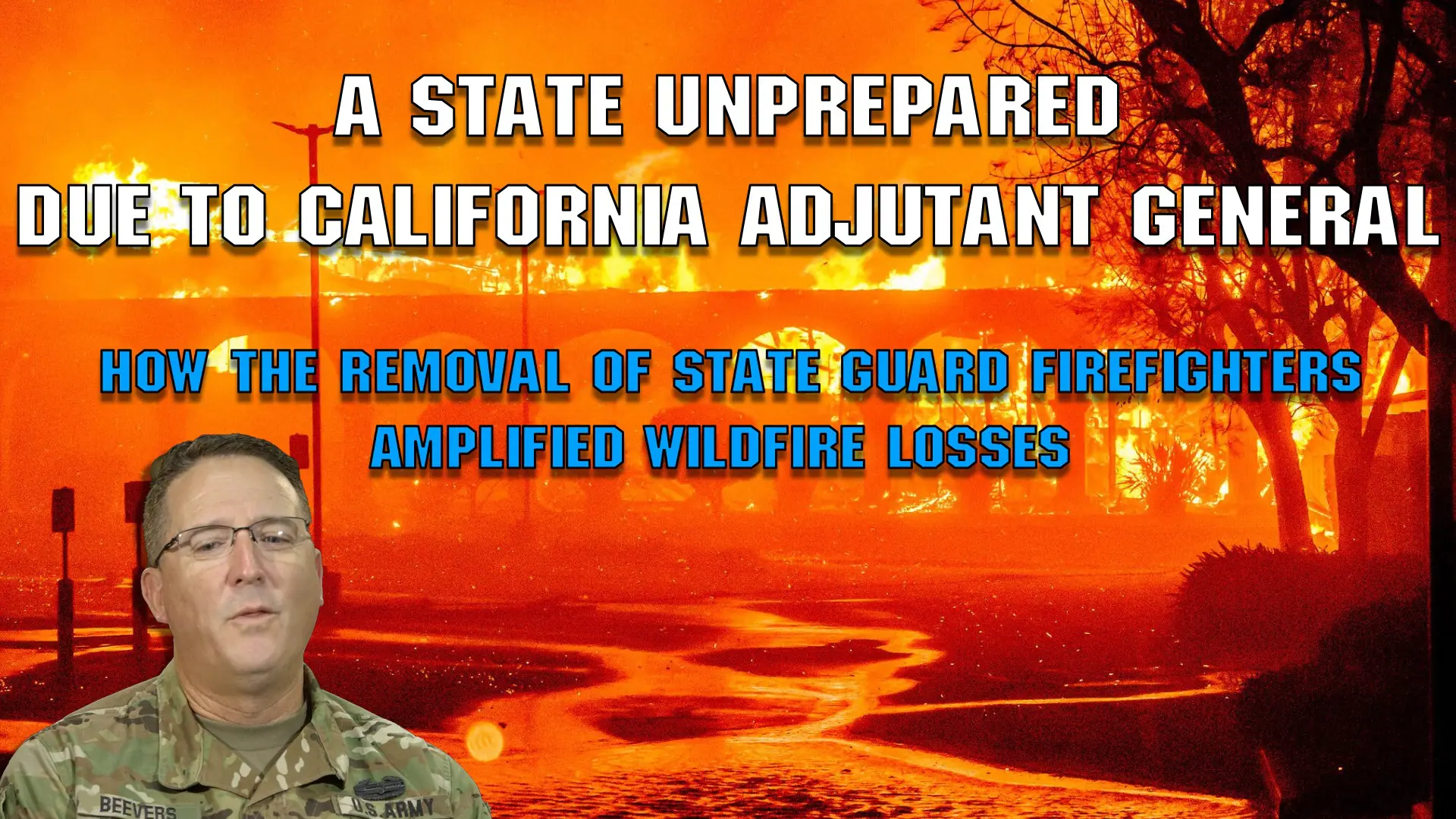
Over the past several years, StateDefenseForce.com has watched State Guards in multiple states struggle against reductions in manpower, restrictions on their missions, loss of resources, questionable and dangerous uniform policies, organizational downgrades and, in some cases, efforts that we believe threaten the long-term viability of the forces themselves. Too often, in our opinion, State Defense Forces have become victims of petty and juvenile actions because they wore slightly similar uniforms to some senior military leaders at Military Departments throughout the country. Some of these leaders who fail to recognize the enormous value State Defense Forces provide to their Governor and their citizens.
That is not merely an internal military disagreement. When a state deliberately weakens a trained emergency military reserve because of some in senior leadership positions have animosity over trivial items like a uniform color, institutional jealousy or petty disputes over status and authority, the consequences of the policies they enact not only endanger the lives of State Defense Force soldiers but the Americans they are tasked to serve.
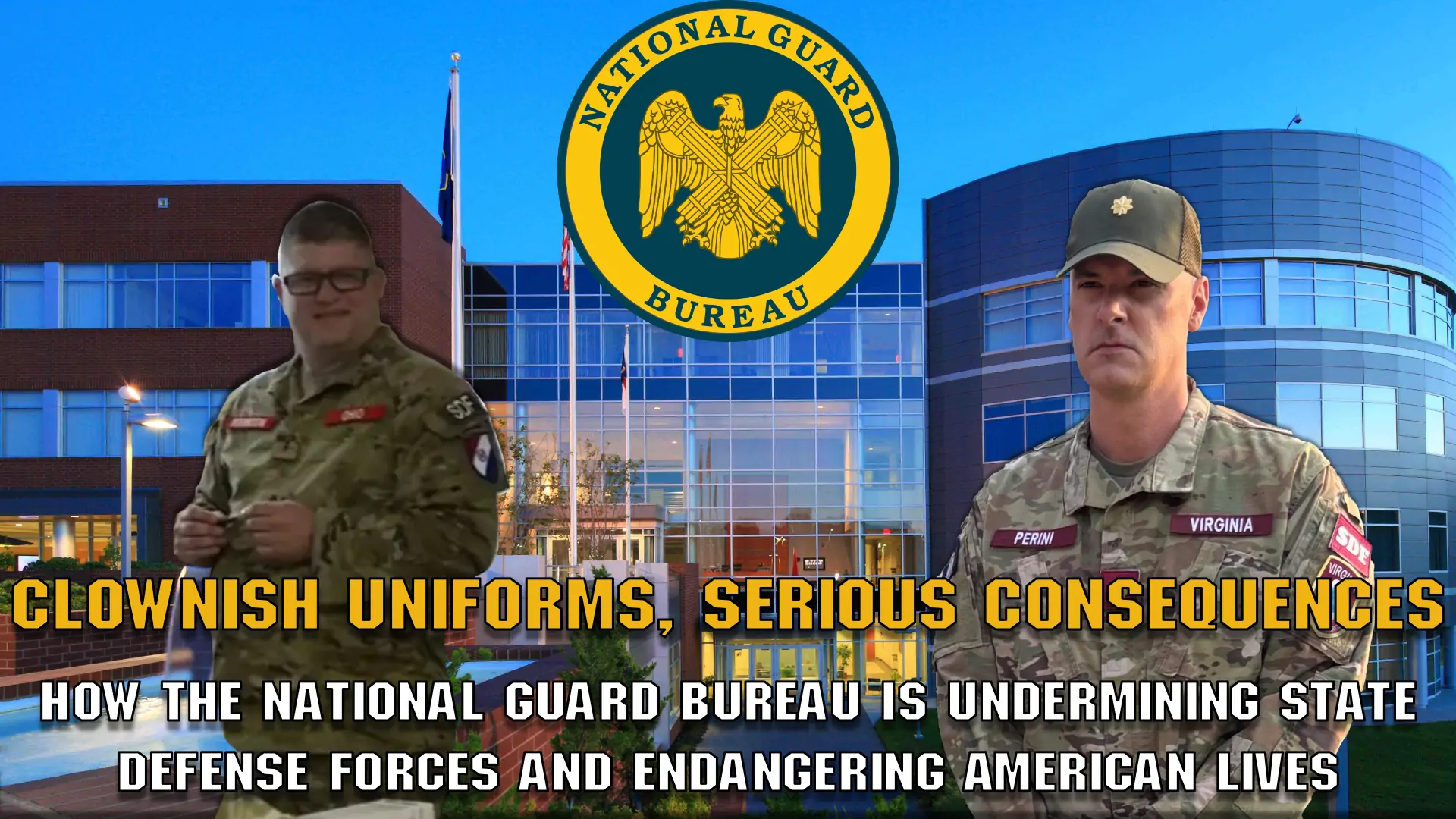
When a state experiences a catastrophic hurricane, flood, wildfire, terrorist attack or other large-scale emergency with fewer trained personnel, fewer specialized capabilities and fewer available military resources has fewer options with which to protect the public. StateDefenseForce.com believes that unnecessarily dismantling or marginalizing a capable State Defense Force, or imposing clownish, deliberately abnormal uniform policies that demoralize its troops, diminish their professionalism, and make a mockery of the sacrifices they make to serve their state and country, can become not only an insult to those who volunteer to serve.
Florida has caused us to seriously reconsider whether placing a State Defense Force beneath the Adjutant General & Military Department, should be regarded as the default model.
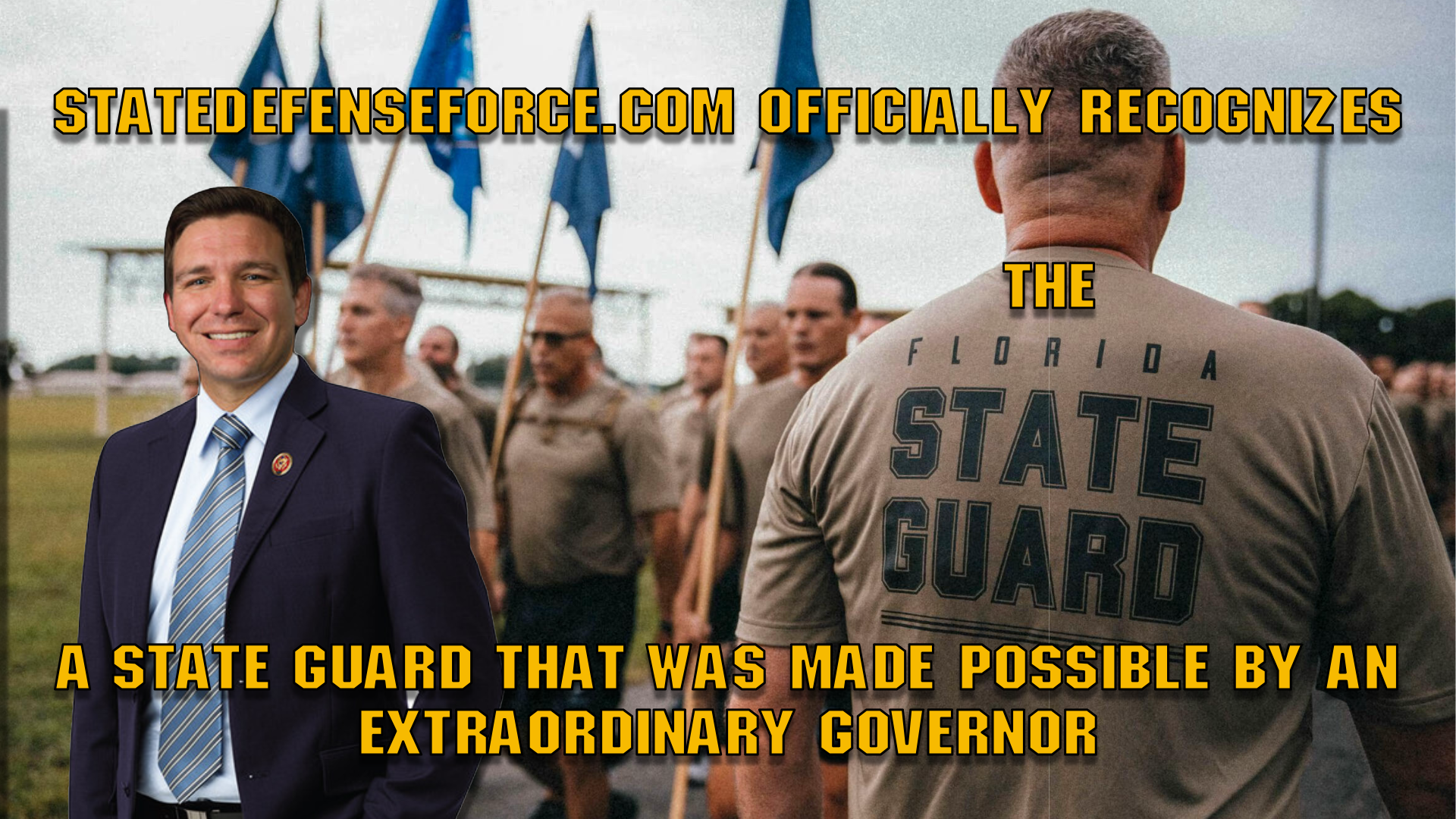
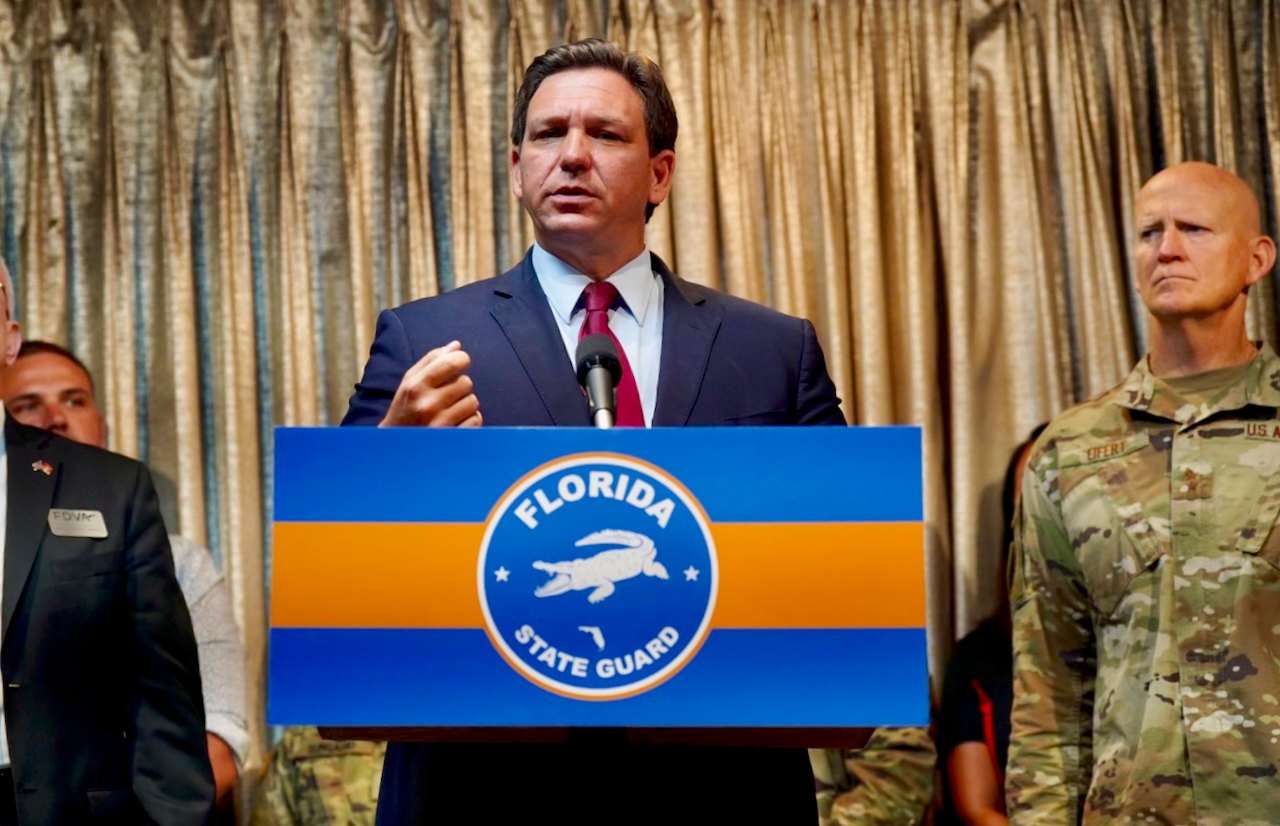
Governor Ron DeSantis chose a different path. Rather than allowing the Florida State Guard to become simply another small subordinate organization pleading for funding, resources and uniforms within a bureaucracy that has distain for them, Governor DeSantis foresaw such roadblocks and instead wanted a State Guard that he could rely on, when the next major Florida National Guard deployment takes place.
Having established a structure in which the Guard’s director answers directly to the Governor, and not The Adjutant General, has clearly shown how a properly funded, properly equipped, and not shackled by arbitrary restrictions on the missions they are fully capable of performing such as land, maritime, or aerial search and rescue, augmentation of local and state law enforcement during natural disaster and state emergencies, disaster response, communications, logistics, or other critical missions in support of their state and its citizens.
And in just a few years, what Governor DeSantis and the men and women of the Florida State Guard have built is extraordinary.
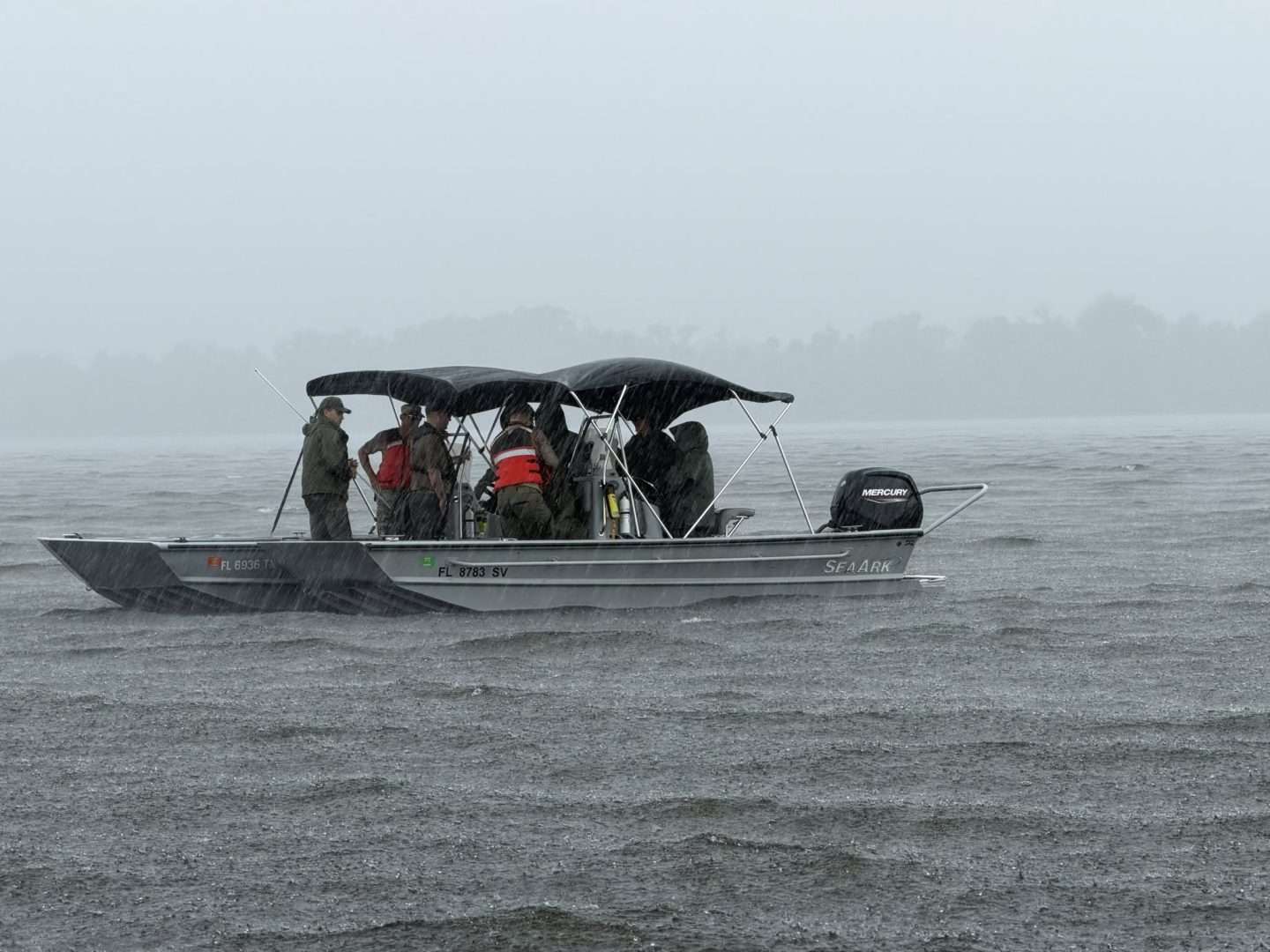
Florida has developed aviation, maritime, crisis-response, specialized search-and-rescue and unmanned aircraft capabilities that many much older State Defense Forces are only beginning to explore. During Hurricane Milton, nearly 200 Florida State Guard personnel were mobilized and deployed with Crisis Response Battalion, Aviation Response Squadron, Maritime Response Squadron and Search & Rescue teams. This amazing force was able to utilize the vehicles and gear such as specialized motor boats, amphibious rescue vehicles, high-water vehicles four UAS teams all to ensure their troops can accomplish any mission The Governor sets for them. Florida subsequently reported that State Guard personnel had completed more than 267 rescues following the hurricane, including a joint operation in which more than 200 civilians stranded by rising floodwaters were rescued.
This is where the Florida State Guard’s approach becomes particularly important for the future of State Defense Forces nationwide.
Across the country, State Guards are beginning to incorporate Unmanned Aircraft Systems into their emergency-response capabilities. The potential applications during a disaster are enormous. Following a catastrophic hurricane or flood, drones can search isolated neighborhoods for stranded Americans, examine areas inaccessible to conventional vehicles, identify washed-out or obstructed roads, survey bridges, provide preliminary assessments of damaged structures and relay live imagery to emergency operations centers.
Imagine a major hurricane crossing Florida. Roads are flooded. Trees and power lines have fallen across transportation routes. Bridges may be damaged. Entire neighborhoods may be inaccessible. All this information is critical for emergency managers who need to determine where limited rescue resources should be sent first.
Instead of sending a rescue team blindly down an unknown roadway, a UAS can move ahead.
It can identify the obstruction. It can locate stranded residents. It can survey alternate routes. It can provide imagery of damaged infrastructure and give commanders a better understanding of whether rescue crews can safely enter an area. Those few minutes of information can protect not only the people waiting to be rescued, but the State Guardsmen and other emergency personnel being sent to reach them.
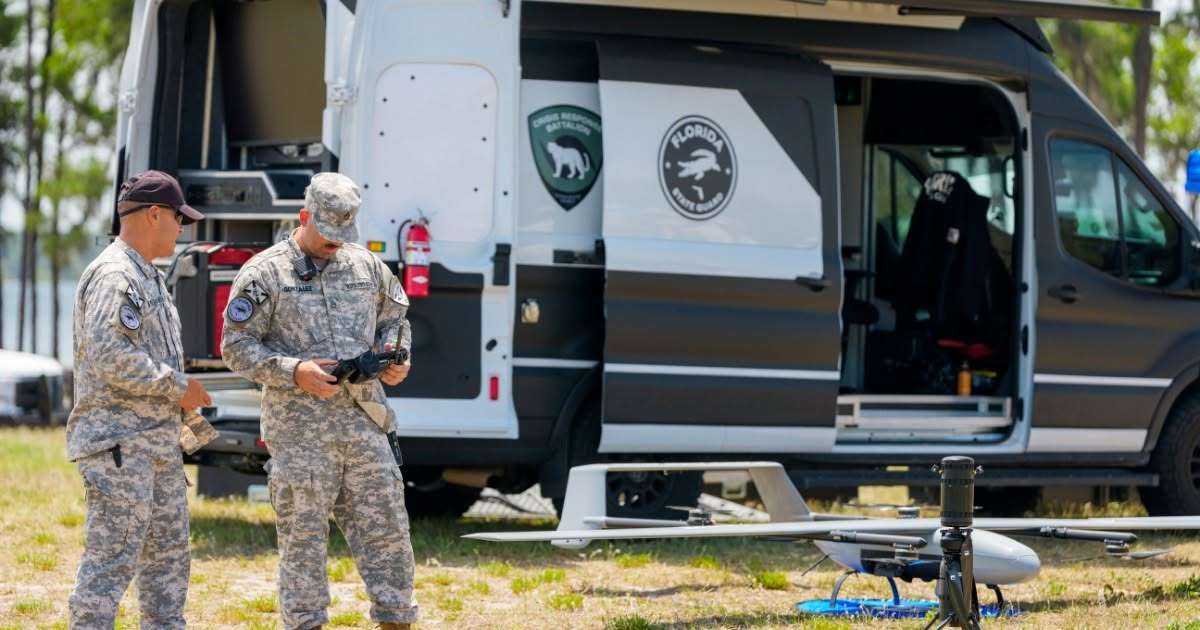
The Florida State Guard is already translating that concept into operational capability. During Hurricane Milton, Florida State Guard UAS teams conducted aerial reconnaissance across numerous affected counties. State reporting specifically noted that Aviation Response Squadron aerial assessments helped direct search-and-rescue efforts being conducted by other Florida State Guard units.
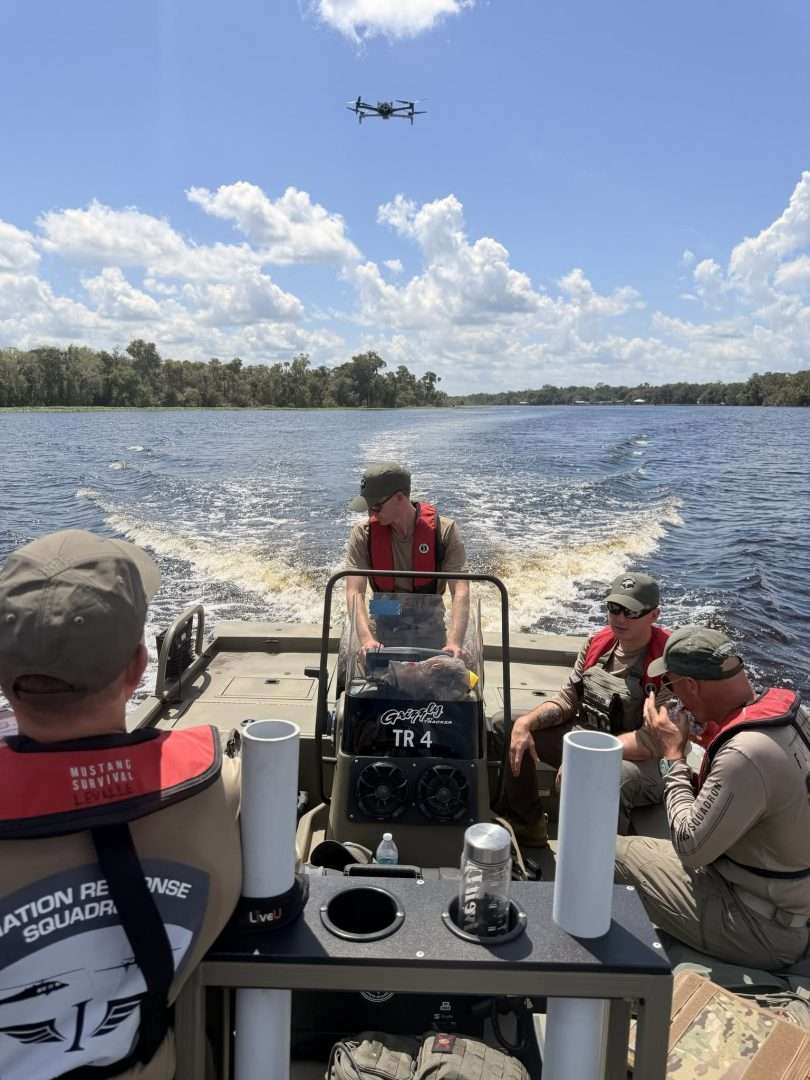
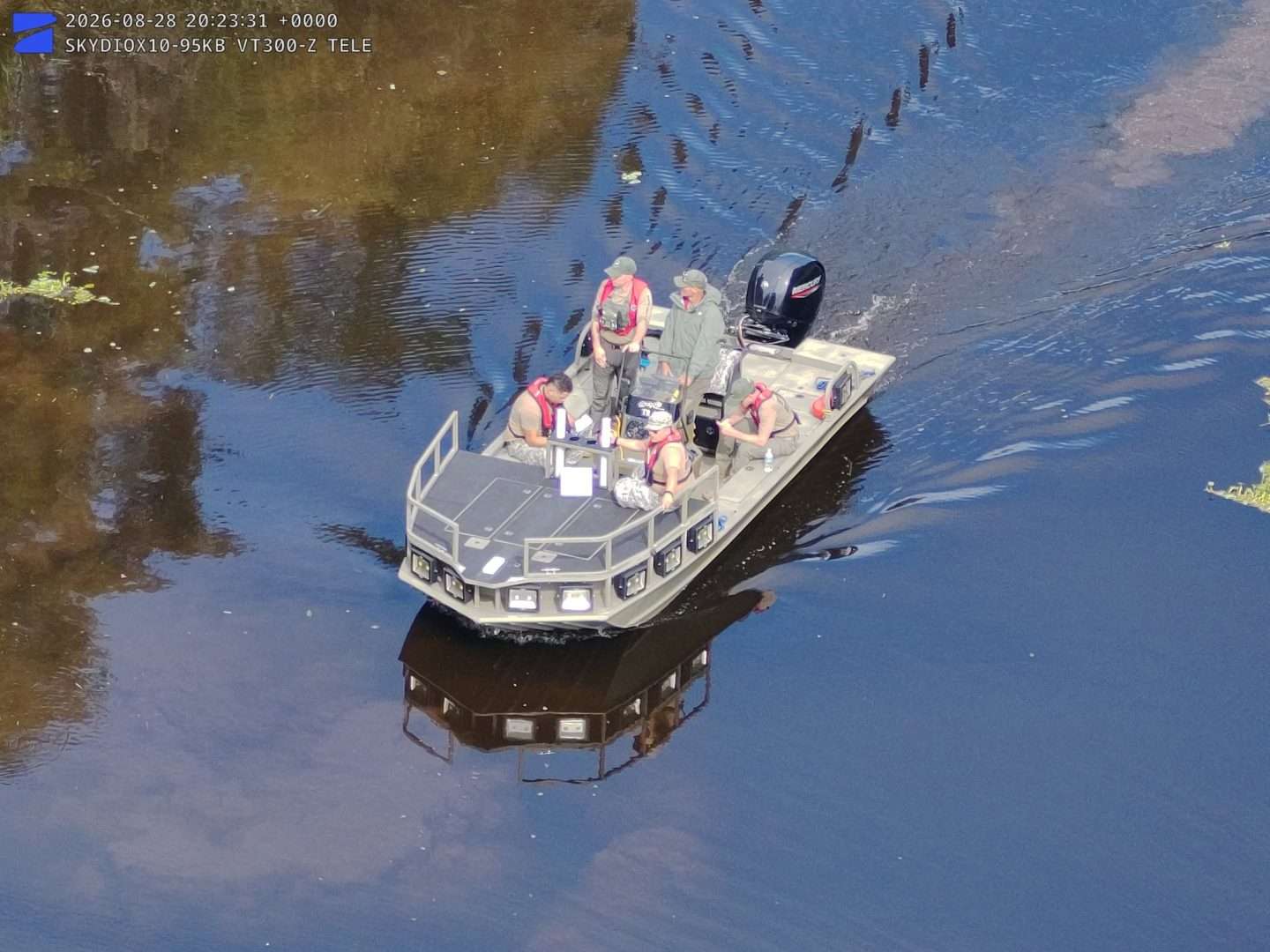
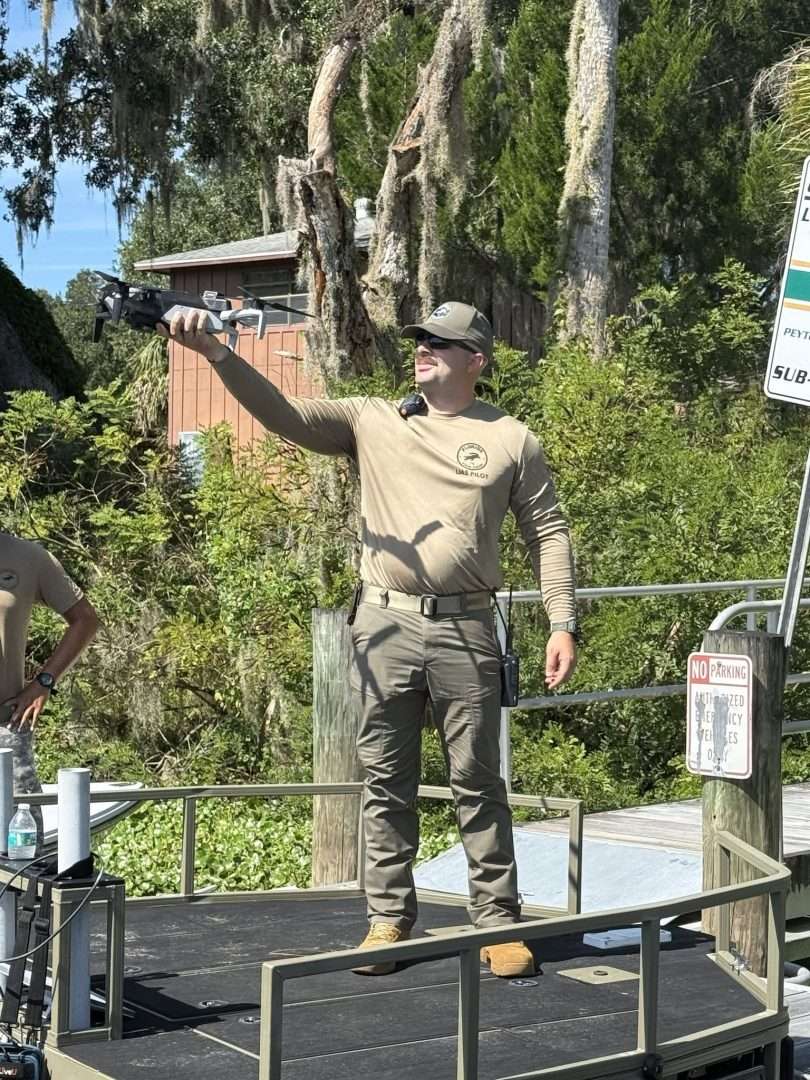
More recently, the Florida State Guard’s Unmanned Aircraft Systems Team and Maritime Response Squadron recently trained together to integrate aerial reconnaissance directly into maritime operations. Exercises included live man-overboard spotting, real-time Digital Terrain Elevation Data depth checks and other drills designed to increase situational awareness aboard Maritime Response Squadron vessels. UAS operators also practiced hand-launching and recovering aircraft aboard a moving vessel while operating within confined maritime airspace.
That combination has tremendous possibilities during an actual emergency. A Florida State Guard vessel moving into a flooded community or disaster area could launch a UAS ahead of itself, locate victims, examine waterways, identify debris or other hazards and provide the vessel crew with a picture of conditions before they arrive. Rather than treating drones as a novelty or isolated specialty, Florida is demonstrating how unmanned aviation can be integrated into traditional ground and maritime rescue operations.
That is the kind of innovation StateDefenseForce.com wants to see throughout the State Defense Force community.
It is also why we believe Governor DeSantis deserves our utmost credit and recognition. Regardless of one’s political affiliation or opinion of the Governor on unrelated issues, his administration made a decision to invest in a State Guard and develop it into a serious operational military force. The result is not like other State Defense Forces, who’s Adjutant General or State Military HQ ensured they are only capable of the most basic mission sets such as Point Of Distribution Missions or having a backup communication network ready to deploy in the small likelihood the phone system is affected.
Instead, the Governor formed the Florida State Guard and gave it a broad and meaningful mission set, including ground search and rescue, maritime and aerial search and rescue, augmentation of local and state law enforcement, having a specialized corps of medically certified physicians and healthcare professionals who may be your local doctor when out of uniform, but when called to duty can quickly be the doctor saving your life.
There is also a larger national-security reason why this capability matters.
Over the past decade, global tensions have accelerated dramatically, in many cases reaching a boiling point. Europe is now experiencing its first major war since World War II following Russia’s invasion of Ukraine, a conflict that has pushed tensions between Russia and NATO to levels not seen in generations and raised serious concerns about the possibility of a broader confrontation. Elsewhere, a new conflict has erupted in the Middle East, while tensions between China and Taiwan continue to intensify, with some senior U.S. military leaders warning that the risk of a confrontation involving the United States and China is becoming increasingly inevitable.
Taken together, these crises make the possibility of a large-scale National Guard mobilization and overseas deployment more conceivable by the day. History has repeatedly demonstrated that, from World War I through the wars in Afghanistan and Iraq, National Guard units have been among the most important military forces relied upon by the United States to sustain major operations overseas.
This is why State Defense Forces exist. They assume the roles and responsibilities of The National Guard when they get deployed overseas. They ensure every Governor has a military reserve they can call upon to respond to natural disasters, state emergencies, and defend critical state & utility infrastructure from enemy agents who in past wars have attempted to disrupt the electrical, water and supply grid.
Under 32 U.S.C. §109, states may maintain defense forces in addition to their National Guard, and those defense forces may not be called, ordered or drafted into the Armed Forces of the United States. Florida law similarly provides that the Florida State Guard cannot be called, ordered or drafted into federal military service.
That distinction becomes extraordinarily important in an increasingly unstable world. When thousands of Florida National Guard Soldiers and Airmen become activated again for overseas duties or other federal missions, the Governor will still possess another organized military force that could respond to hurricanes, flooding, civil emergencies and other disasters here at home. The Florida State Guard does not replace the Florida National Guard, nor should it. It supplements it and gives the Governor an additional layer of military capability that remains available to Florida.
For years, StateDefenseForce.com believed the safest way to build such a force was to place it beneath the state’s Adjutant General. What we have witnessed around the country the last few years has convinced this director that there cannot be a single organizational model appropriate for every state. In some states, a strong Adjutant General can be the greatest advocate a State Defense Force could have. In others, insulating the State Defense Force from an indifferent or hostile Adjutant General and/or Military leaders at The State Military HQ, may ultimately be what allows the organization to grow and save lives.
The Florida State Guard’s organizational structure should serve as the model by which all State Defense Forces across the nation reorganize, modernize, and prepare for the missions of the future.
And for that, we are incredibly thankful of Governor Ron DeSantis, he deserves special recognition for foreseeing the roadblocks that would have arisen had The Florida State Guard been put under the command of the States’ Adjutant General or Senior Military Officials at The Florida National Guard or at the National Guard Bureau. As we see nationwide many State Defense Forces (SDF) have been struggling due to recent radical policy changes from some Senior leaders at their States Military HQ that not only affects the SDF’s capabilities but also risk the lives of the men and women serving.
Governor DeSantis had the vision to reactivate a force that had disappeared for generations and, rather than resurrecting it merely on paper, he pushed the State Guard to develop into an organization that is capable of implementing any mission the Governor needs fulfilled. He has helped ensure that Florida possesses a military force that is professionally trained and capable whenever they are called called upon when Floridians need it most.
One Governor foresaw the shifting atmosphere in the world, with conflicts breaking out throughout the globe, and asked the most important question every Governor should be asking themselves: “What happens when my National Guard is fully deployed overseas?”
We wish we had more governors like Governor DeSantis throughout the country, because we at StateDefenseForce.com have been working for months, even years, to develop State Guards in Arizona, Oklahoma, West Virginia, and other states, only to run into roadblock after roadblock from either The Adjutants General or Senior Military Officials of those states. It becomes ever more difficult and demoralizing when you begin to see these efforts as hopeless as year by year goes by. However, since we have now partnered with the largest U.S. national defense non-governmental organization in the nation, we are far more hopeful going into the 2027 Legislative Session.
To the men and women of the Florida State Guard, however, we owe something more personal.
We owe you an apology.
Our disagreement with the organizational structure of your force should never have prevented us from recognizing your accomplishments or encouraging qualified Floridians to serve beside you. While we debated organizational charts and command relationships, you were training. You were building units. You were learning new technologies. You were operating aircraft and vessels. You were responding to disasters. And when Floridians were stranded by floodwaters following Hurricane Milton, members of your organization were the first to go out and bring them to safety.
That service deserved our attention.
Your Public Affairs Office (PAO) has also done an exceptional job documenting the organization’s training and missions. In our opinion, your PAO is quickly becoming the best in the nation, they are now rivaling the top State Guards in the nation such as The Texas State Guard, South Carolina State Guard, Georgia State Defense Force, whose public-affairs operation we have long regarded as among the finest in the State Defense Force community.
StateDefenseForce.com will therefore be reaching out to the Florida State Guard in the coming days. We want to highlight its Soldiers, its units, its missions, its equipment, its emerging technologies and, most importantly, the Floridians who volunteered to serve their neighbors.
We also want to publicly recognize the brilliance and innovation of Governor Ron DeSantis.
We intend to make the Florida State Guard one of the organizations at the forefront of our coverage, the tip of the spear.
We will also be publishing a much more detailed examination of the Florida model with one of the nation’s leading defense-policy organizations in the coming weeks. That article will explore the broader lessons Florida’s experience may offer other states, including whether direct gubernatorial control may sometimes better protect a State Defense Force from the institutional problems that have weakened these organizations elsewhere.
For now, however, we simply want to say this:
To the Soldiers of the Florida State Guard, StateDefenseForce.com apologizes for not giving your service the recognition it deserved.
To Governor Ron DeSantis, we are unbelievably thankful for for having the vision to rebuild a State Guard and for giving it the resources and organizational freedom necessary to become one of the most, possibly the most capable and innovative State Defense Forces in the nation.
And to our readers: this is only the beginning.
We look forward to telling their story.
The Florida State Guard Unmanned Aircraft Systems (UAS) Team and Maritime Response Squadron (MRS) completed a training exercise focused on the integration of aerial support to bolster maritime operations.
Training exercises included live man‑overboard spotting, real-time Digital Terrain Elevation Data depth checks, and other drills focused on promoting situational awareness for MRS crews.
Likewise, UAS flight operators leveled up, executing hand launches and recoveries on a moving vessel and navigating tight maritime airspace with precision.
Collaboration, both internal and external, fosters stronger operational capabilities and readiness.
During a disaster scenario, the FSG Unmanned Aircraft Systems (UAS) team deploys drone technology to assess the scope and intensity of damages in real time. Having eyes in the sky provides critical information to responders on the ground, resulting in calculated response efforts.