
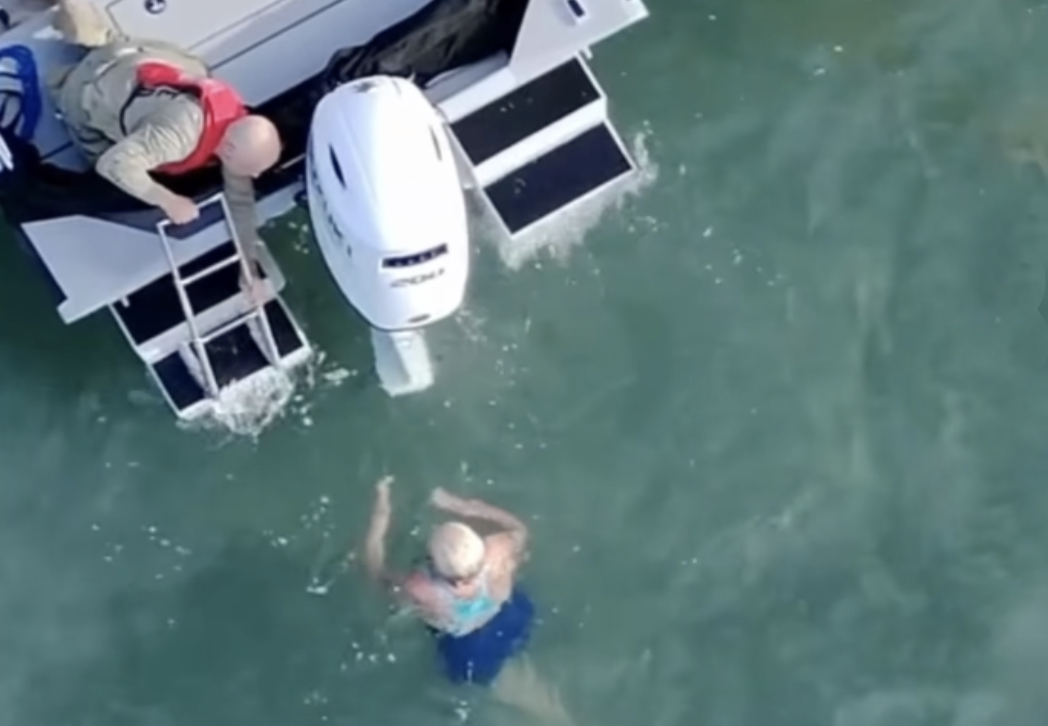
Florida has developed the most extensively equipped and professional State Guards in the nation, providing its force with aviation, maritime, unmanned aircraft and specialized emergency-response capabilities that remain uncommon among many State Defense Forces. Governor Ron DeSantis’ proposed Fiscal Year 2026–2027 budget called for approximately $61.8 million for Florida State Guard operations, training and response, including $22 million for aviation operations, $14 million for Soldier onboarding, training and equipment, $2 million for maritime equipment and operations, and $13.8 million for hangar and logistics facilities.
The final FY2026–27 Florida State Guard budget entity is currently listed by OPPAGA at approximately $28.8 million. Just as significant as Florida’s investment is the State Guard’s unusual command and administrative structure. Under Florida law, the Division of the State Guard is located within the Department of Military Affairs, but it is specifically established as a separate budget entity. The State Guard’s Director is appointed by and serves at the pleasure of the Governor, subject to Senate confirmation, and state law expressly provides that the Division is not subject to the Adjutant General (TAG), or The Department of Military Affairs’ control, supervision or direction in personnel, purchasing, property transactions or budgetary matters. The Florida State Guard ultimately remains under the final command and control of the Governor as Florida’s Commander in Chief, Governor Ron DeSantis.
The significance of that structure becomes apparent when examining the resources Florida has placed into the force. State Defense Force funding varies dramatically across the country. Some State Defense Forces like The Texas State Guard have a healthy budget but other State Guards have budgets less than 100,000, with a few even below 20,000. Other State Defense Forces have less than that as they are at the mercy of The Adjutant General and Military Department which as we have documented provide little to no funding to its State Guard. This simnifically hampers the response efforts of these State Guards.
Florida, by comparison, has developed dedicated aviation and maritime fleets as well as sophisticated Unmanned Aircraft Systems. The Florida State Guard’s Aviation Response Squadron currently operates an impressive mixture of rotary-wing and fixed-wing aircraft. They possess two UH-60 Black Hawk helicopters, two Bell 412 helicopters and two UH-1D helicopters, along with multiple fixed-wing aircraft. The force also fields multiple UAS platforms equipped for missions that include reconnaissance, thermal imaging, three-dimensional mapping and emergency response. These aviation resources provide Florida with additional capabilities for aerial reconnaissance, logistics, search and rescue, disaster assessment and operations in areas that may be difficult to reach from the ground.
However, surrounded by thousands of miles of coastline, rivers, lakes and inland waterways, Florida has also invested heavily in a specialized capability that is particularly valuable to the state, the Florida State Guard Maritime Response Squadron. The Maritime Response Squadron specializes in maritime search and rescue, security operations, waterway reconnaissance and humanitarian and disaster relief missions. State presentations describe a fleet that includes approximately 15 very-shallow-water vessels intended for a multitude of missions, especially Search & Rescue operations. Those shallow-water capabilities are particularly important following hurricanes and major flooding, when conventional vehicles and even traditional vessels may be unable to reach isolated communities.
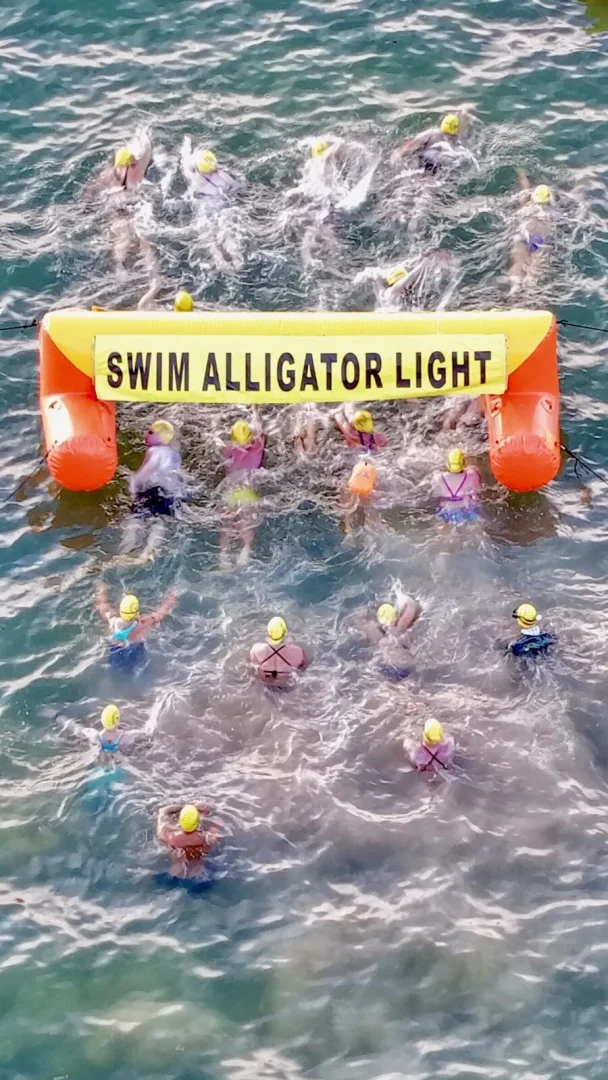
Recently, the value of having those trained personnel and specialized resources available was demonstrated not during a major hurricane, but during an ordinary day in the Florida Keys. On September 12, hundreds of swimmers gathered in Islamorada for the 2026 Swim for Alligator Lighthouse, an eight-mile open-water event from the Amara Cay Resort to Alligator Reef Lighthouse and back. Event organizers required extensive water-safety support throughout the course, including support vessels, personal watercraft and Coast Guard assets. Approximately 350 swimmers participated in this year’s event.
While supporting maritime operations during the event, members of the Florida State Guard Maritime Response Squadron and Unmanned Aircraft Systems team identified a female swimmer in distress.
Florida State Guard personnel immediately responded. Through coordinated action between the maritime and unmanned aircraft personnel, the distressed swimmer was located and safely recovered from the water. She was stabilized by State Guard personnel before being transferred to first responders for additional medical evaluation. Their work, however, was not finished. Later that same day, Florida State Guard personnel rescued a second distressed swimmer, again responding with the maritime capability, trained personnel and operational coordination necessary to safely remove the swimmer from danger.
These rescues provide an important example of what a properly trained and adequately equipped State Defense Forces can contribute to public safety.
Search and rescue capabilities cannot be created after an emergency has already begun. Boats must already be purchased and maintained, personnel must already know how to operate them, maritime crews must train together, communications procedures must be established and medical skills must be practiced. Unmanned Aircraft System teams must likewise understand how to search large areas, identify persons in distress and communicate that information to responders on the water. The same applies to drones more broadly. Unmanned Aircraft Systems should not be viewed solely as equipment reserved for catastrophic hurricanes. Their ability to rapidly search terrain or waterways, provide aerial situational awareness and help direct responders toward people requiring assistance can have enormous value during disasters, missing-person searches, public events and everyday emergency operations.
Most importantly, the events in the Florida Keys demonstrate that the value of these investments ultimately comes down to something far more important than equipment inventories or budget figures, whether trained personnel have the resources available to reach someone when that person’s life is in danger. Florida’s investment in specialized maritime personnel, shallow-water and offshore vessels, aviation assets and Unmanned Aircraft Systems means that when an emergency develops on Florida’s waterways, The Florida State Guard can bring capabilities to the response rather than simply manpower. During the Alligator Lighthouse Swim, those capabilities became needed and these soldiers immediately went into action to save lives.
That is precisely why State Guards need the training, equipment and resources necessary to perform the missions their states expect of them.
While supporting maritime operations in the Florida Keys during the Alligator Swim event, members of the FSG Maritime Response Squadron and Unmanned Aircraft Systems team identified a female swimmer in distress. Through rapid response and coordinated action, the swimmer was safely recovered, stabilized and turned over to first responders where she was further evaluated. This same day, a second distressed swimmer was rescued with the same operational professionalism as the first.
Sources: Florida Senate – Florida State Guard Act – Florida FY2026–27 Budget Presentation – Florida State Guard – Maritime Response Squadron – Florida State Guard – Aviation Response Squadron Information – Swim for Alligator Lighthouse – Keys Weekly