

For generations, physical fitness has been an essential part of military readiness. However, the way State Defense Forces approach physical training has varied considerably.
In previous decades, some State Defense Force units conducted organized physical training during monthly drills, while others placed greater responsibility on individual service members to exercise on their own time and maintain an acceptable level of fitness. With many State Defense Forces meeting only one weekend each month, commanders often had to balance physical training against limited time for classroom instruction, field exercises, military professional development and mission-specific training.
That approach is gradually changing.
Across the country, more State Defense Forces are incorporating organized physical training, wellness education and fitness assessments into monthly drills and annual training periods. Rather than treating physical fitness as an entirely individual responsibility, these forces are fostering a culture in which health, conditioning and operational readiness are reinforced at the unit level.
The objective is not simply to pass a test. It is to ensure that every service member is physically capable of performing demanding missions safely and effectively.
Fitness Must Reflect the Mission
State Defense Force personnel may be called upon with little warning to support search and rescue operations, engineering missions, internal security during Shelter management missions, debris clearance, and other disaster-response assignments. In some State Defense Force, some units have certified Law Enforcement Officers that support local, state and Federal law-enforcement and public-safety agencies during emergencies.
These missions can require a great deal from such personnel, from carrying heavy equipment, moving substantial supply loads, operating in extreme weather, navigating in extreme environmental conditionals so they can assist residents and bring them to safety.
Search and rescue teams may have to travel across difficult terrain while carrying communications equipment, medical supplies and rescue gear. Engineering units may be tasked with inspecting damaged infrastructure or clearing debris. Personnel assigned to shelters, distribution sites or security missions could remain on duty for long shifts while maintaining constant situational awareness.
Physical readiness is therefore not about appearance or competition. It is an operational requirement that protects the service member, the unit and the citizens depending on them.
The Army Fitness Test as a Readiness Benchmark
Many State Defense Forces have historically looked to U.S. Army doctrine and fitness standards when developing their own programs. The Army Fitness Test became the Army’s official physical fitness test of record on June 1, 2025, replacing the Army Combat Fitness Test.
The AFT consists of five events: the three-repetition maximum deadlift, hand-release push-up, sprint-drag-carry, plank and two-mile run. The Army describes the test as a means of improving unit readiness, reducing preventable injuries and strengthening the mental toughness and stamina needed for military service.
State Defense Forces are governed by their respective states and are not bound by federal Army fitness policy. Nevertheless, the AFT provides a valuable benchmark that state military leaders can use when evaluating strength, endurance, mobility and cardiovascular conditioning.
Fitness requirements must also recognize that military organizations include members with different medical conditions and physical capabilities. Soldiers can be provided waivers approved medical profiles, injuries or disabilities and be may be assigned alternative missions and assignments. These troops though not certified to Army standards are immensely important to have because State Defense Forces can utilize the expertise they attained during their civilian careers such as Cyber Security, disaster response planning, construction & engineer experience to better a States’ ability to respond to an emergency.
Under current Army policy, Soldiers with permanent profiles are evaluated and assessed to be medically qualified to perform in their required Military Occupational Specialty (MOS). State Defense Forces establish their own policies, but reasonable alternatives allow members to demonstrate readiness without worsening an injury or disregarding legitimate medical restrictions.
Virginia Defense Force Builds a Culture of Wellness
One of many State defense Forces that place such emphasis on physical readiness is the Virginia Defense Force.
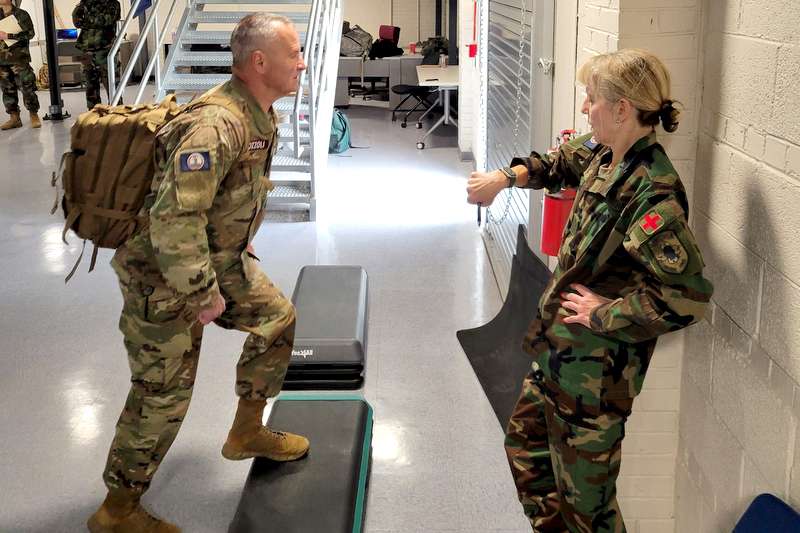
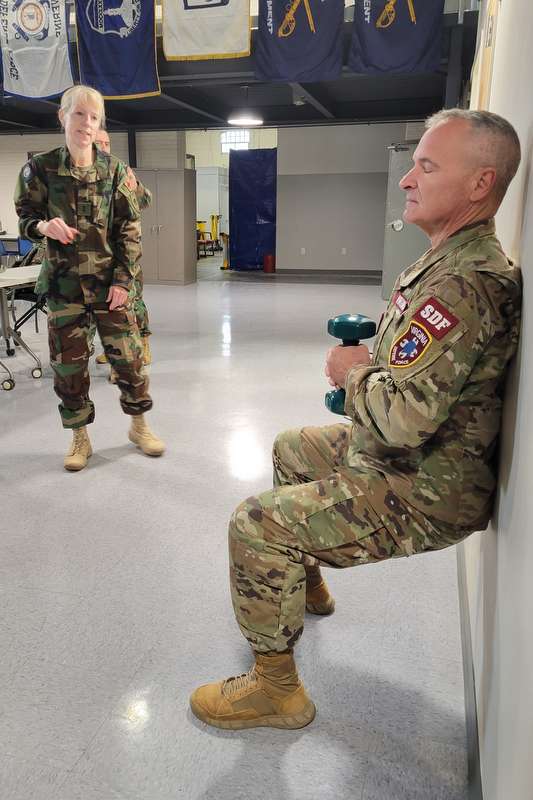
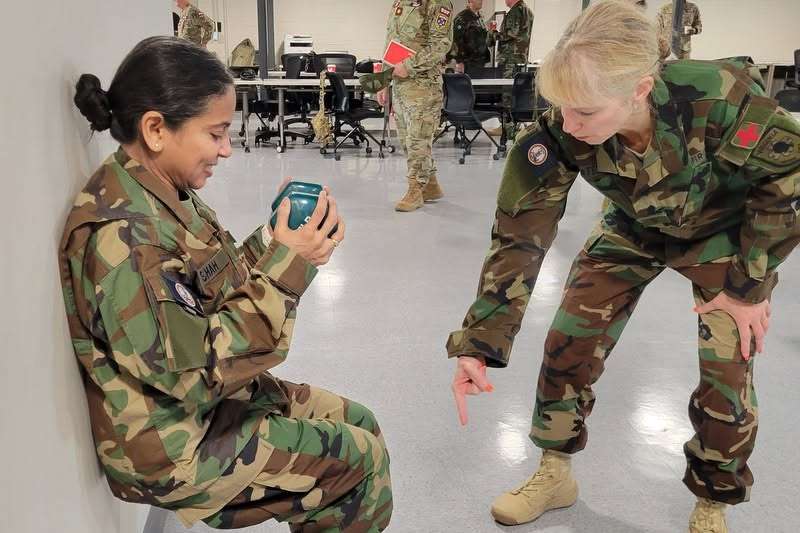
During its May 2, 2026, drill in Richmond, Virginia, the VDF continued developing its new health and fitness program by conducting fitness assessments for its members. The initiative is intended to improve readiness while promoting the overall physical, mental and spiritual wellness of the force.
VDF leadership views the wellness program as part of a broader modernization effort that also includes the force’s transition to the Operational Camouflage Pattern uniform.
“The readiness and well-being of our troopers are paramount,” said Brigadier General (Va.) Rich Diddams, commander of the Virginia Defense Force. “This fitness initiative is not just about meeting a standard; it’s about cultivating a culture of comprehensive wellness and resilience. A fit force is a capable force, ready to be a true force multiplier for the Virginia National Guard.”
The program is being developed and implemented by 1st Lieutenant. (Va.) Laurie LaTessa and 1st Lieutenant (Va.) Mark A. Chapman, who bring significant experience in physical fitness, wellness and mental health.
LaTessa previously served in the Kansas Army National Guard and is a certified personal trainer and group exercise instructor. She also completed the 50th anniversary Marine Corps Marathon. Chapman supported American forces in Iraq as a civilian contractor during Operation Iraqi Freedom and has experience in integrative medicine, leadership and community health programs.
“I am passionate about helping people get and stay fit,” LaTessa said. “We are creating a program that is accessible to everyone yet challenging enough to ensure our members are prepared for any mission. Our goal is to build a stronger, more resilient VDF, one step at a time.”
A Phased and Accessible Program
The Virginia Defense Force is introducing its program in two phases.
Phase I uses a basic assessment to establish an individual fitness baseline. This gives participants and program leaders an opportunity to identify strengths, areas needing improvement and safe goals for future development.
Phase II is expected to increase the intensity and physical load of the assessment as participating members improve their conditioning.
The program’s recommended guidelines include at least 30 minutes of moderate-intensity cardiovascular exercise each day or approximately 150 minutes each week. Activities can include jogging or rucking with a moderate load.
Members are also encouraged to conduct full-body resistance training twice each week. Recommended options include body-weight exercises, free weights, resistance bands and weight machines. The program’s developers advise members to consult their primary healthcare providers before beginning any significant new exercise routine.
VDF leaders are also considering a special award recognizing exceptional physical conditioning. The proposed challenge could require participants to achieve a score of at least 90 in every applicable event for their age group.
Such recognition could encourage members to do more than meet a minimum standard, establishing an aspirational goal for those capable of reaching a higher level of physical performance.
A More Modern and Mission-Ready Force
The wellness initiative complements the Virginia Defense Force’s transition to the Operational Camouflage Pattern uniform, which was authorized beginning September 1, 2025. According to the VDF, the uniform change improves integration with its Virginia National Guard partners and requires participating members to comply with established height and weight standards.
Together, the uniform transition and voluntary fitness program reflect the VDF’s effort to build a more professional, disciplined and operationally capable all-volunteer force.
State Defense Force members may not always know when the next hurricane, flood, wildfire, missing-person search or public emergency will occur. When that call comes, there may be little time to prepare. The force must already be ready.
It is therefore critical for every State Defense Force service member to maintain an appropriate level of physical readiness. Whether carrying supplies into a shelter, searching difficult terrain, supporting an emergency operations center or assisting public-safety personnel, these volunteers must be prepared to deploy immediately and serve their neighbors and fellow Americans when they are needed most.
Sources: Virginia Defense Force – Virginia Defense Force