

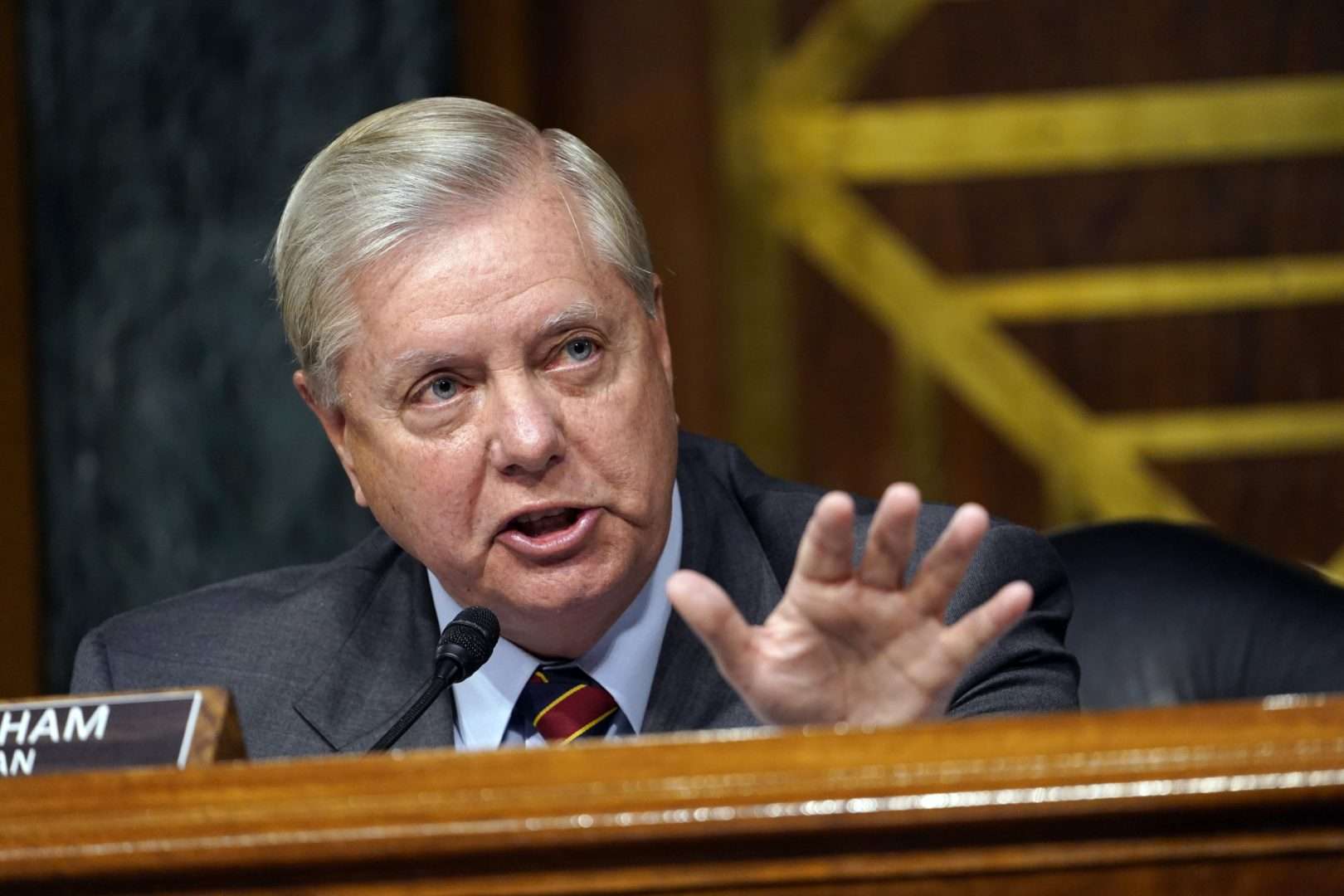
Tragically, U.S. Senator Lindsey Graham of South Carolina recently passed away at the age of 71. The longtime senator died unexpectedly on July 11, 2026, following an aortic dissection caused by cardiovascular disease. His passing brought an end to more than three decades of public service in Congress and a lifetime dedicated to South Carolina, the United States military, and the Nation.
Born and raised in Central, South Carolina, Graham rose from modest beginnings to become one of the state’s most influential political figures. After serving in the South Carolina House of Representatives, he represented South Carolina’s 3rd Congressional District in the U.S. House from 1995 until 2003. He was elected to the United States Senate in 2002, succeeding Senator Strom Thurmond, and went on to serve four terms. During his Senate career, Graham held prominent positions on the Judiciary and Budget committees and became a leading voice on National Defense, judicial nominations, foreign policy and Veterans’ Affairs.
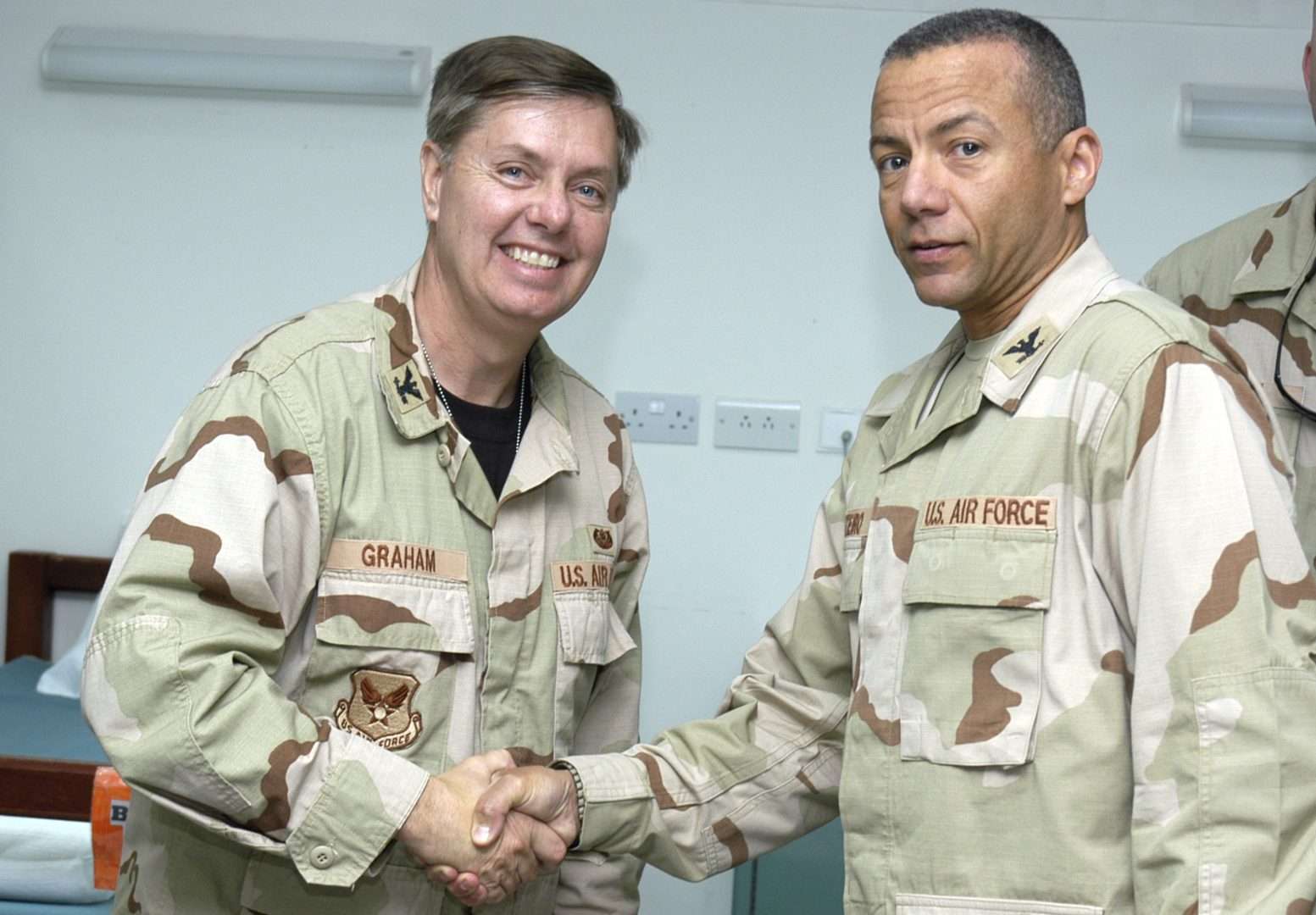
Senator Graham’s public service was deeply influenced by his own military career. He entered the U.S. Air Force Judge Advocate General’s Corps in 1982 and served more than six years on active duty as a military attorney. From 1984 to 1988, he was stationed at Rhein-Main Air Base in Germany, where he served as the Air Force’s Chief Prosecutor in Europe. After leaving Active Duty, he joined the South Carolina Air National Guard and later transferred to the Air Force Reserve.
During congressional recesses, Graham performed short periods of military duty connected to operations in Iraq and Afghanistan, applying his experience in military law to detention and rule-of-law matters. He retired from the Air Force Reserve as a Colonel in 2015 after 33 years of military service and received the Bronze Star Medal for his work as a senior legal adviser supporting military operations overseas.
Throughout his career, Graham was recognized as one of the Senate’s strongest advocates for the Armed Forces, the National Guard and American national security. As co-chair of the Senate National Guard Caucus, he worked across party lines on legislation that strengthened the Guard’s representation within the Nation’s Military Leadership Structure.
Graham also became a prominent supporter of Ukraine following Russia’s full-scale invasion. He repeatedly advocated for military and economic assistance to help Ukraine defend itself and supported efforts to hold Russian President Vladimir Putin and members of the Russian government accountable for acts committed during the war. Graham later helped introduce the Stand With Ukraine Act and legislation proposing extensive sanctions and secondary tariffs against nations continuing to finance Russia through energy purchases.
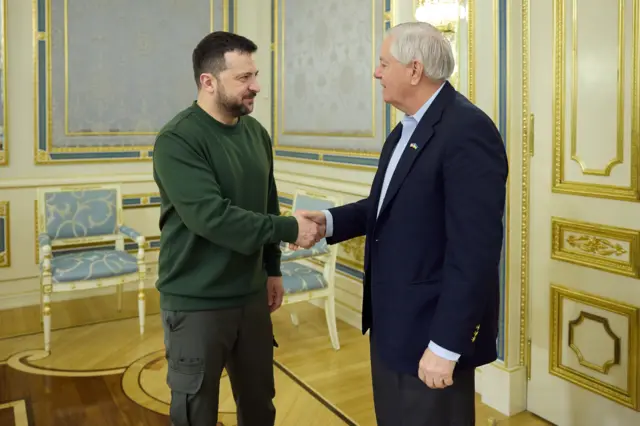
His dedication to Ukraine was reflected by the attendance of Ukrainian President Volodymyr Zelenskyy at Graham’s funeral service in Washington, D.C. Zelenskyy joined national leaders, military officials, foreign dignitaries and Graham’s congressional colleagues in remembering a senator whose influence extended far beyond South Carolina.
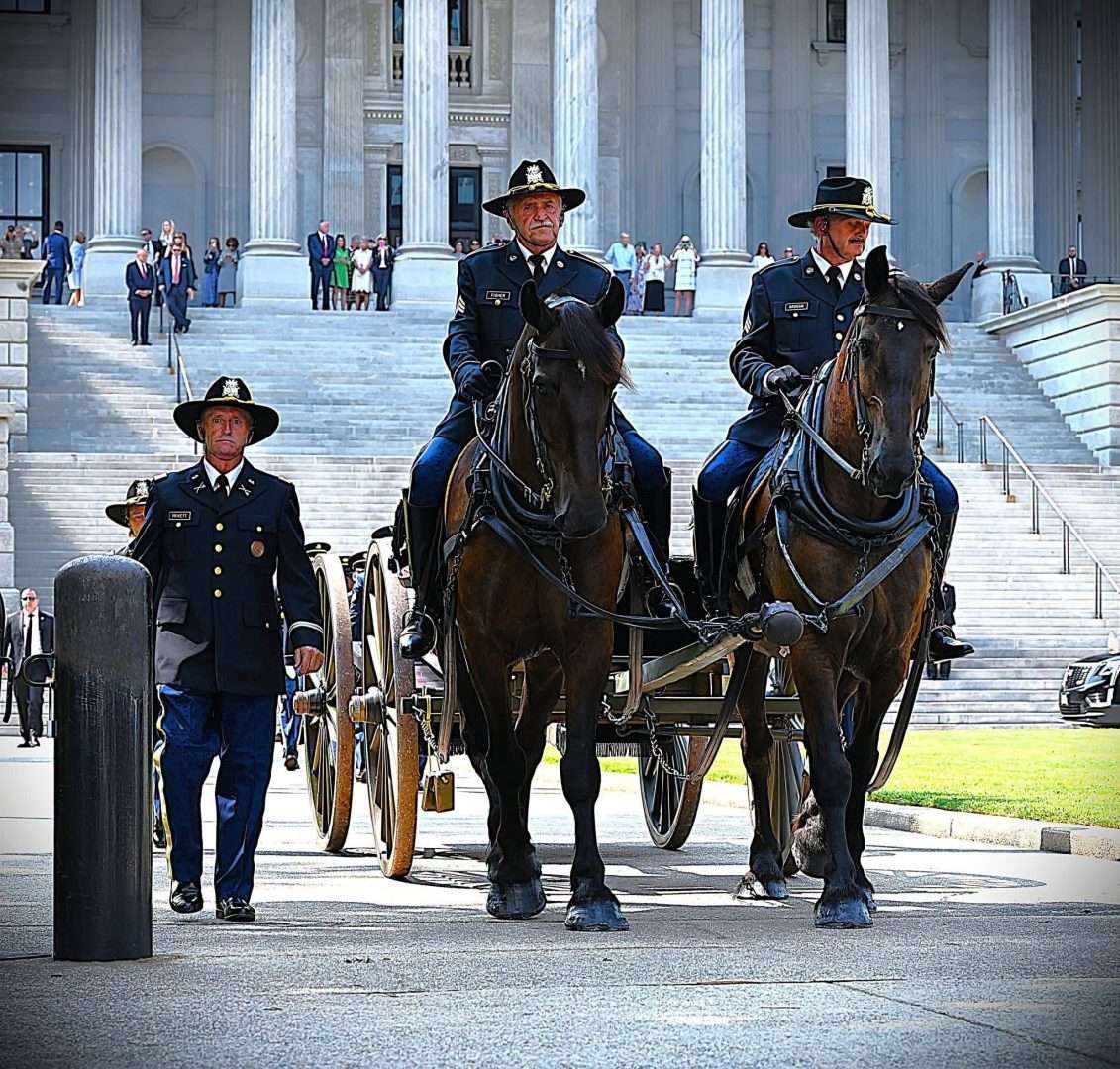
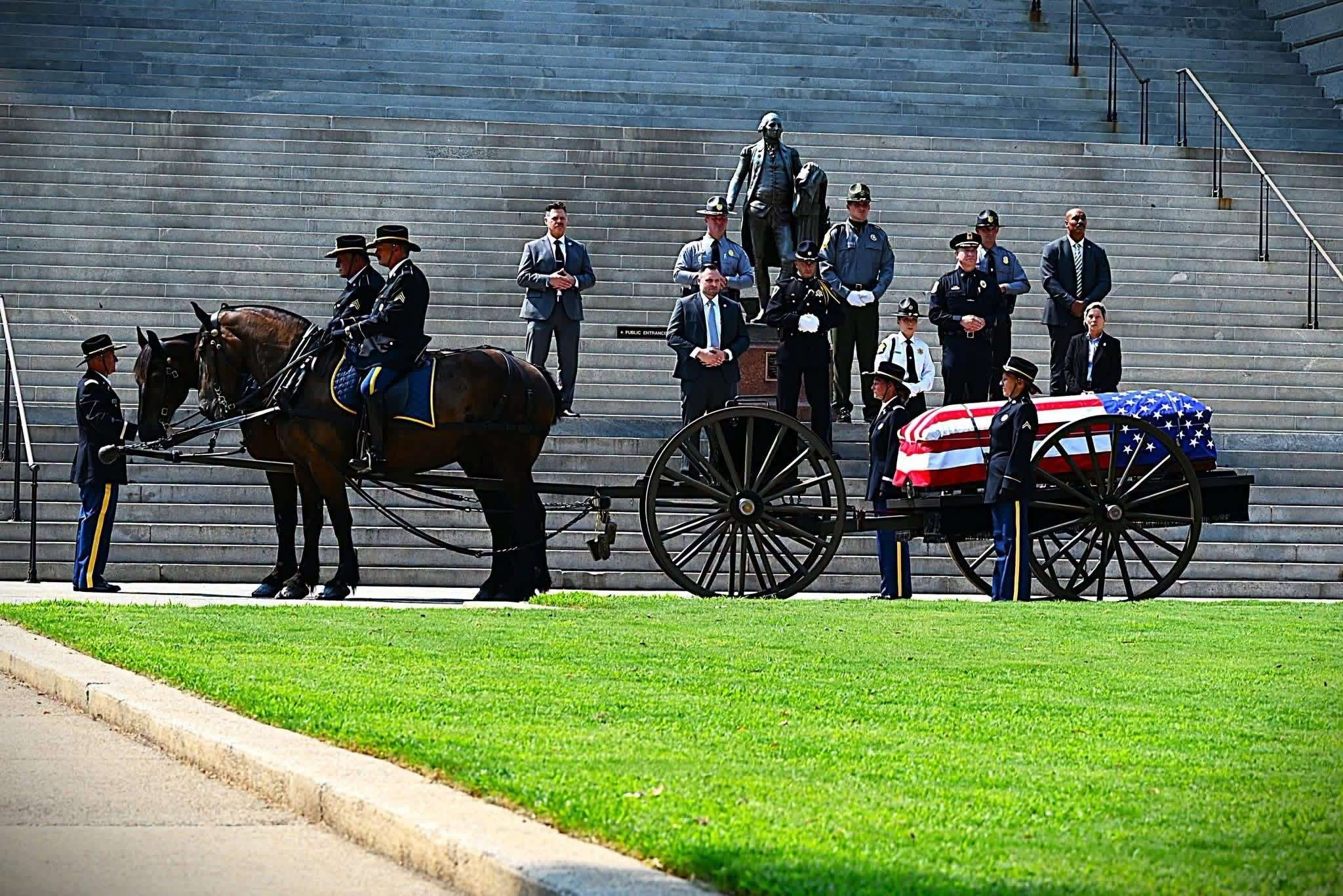
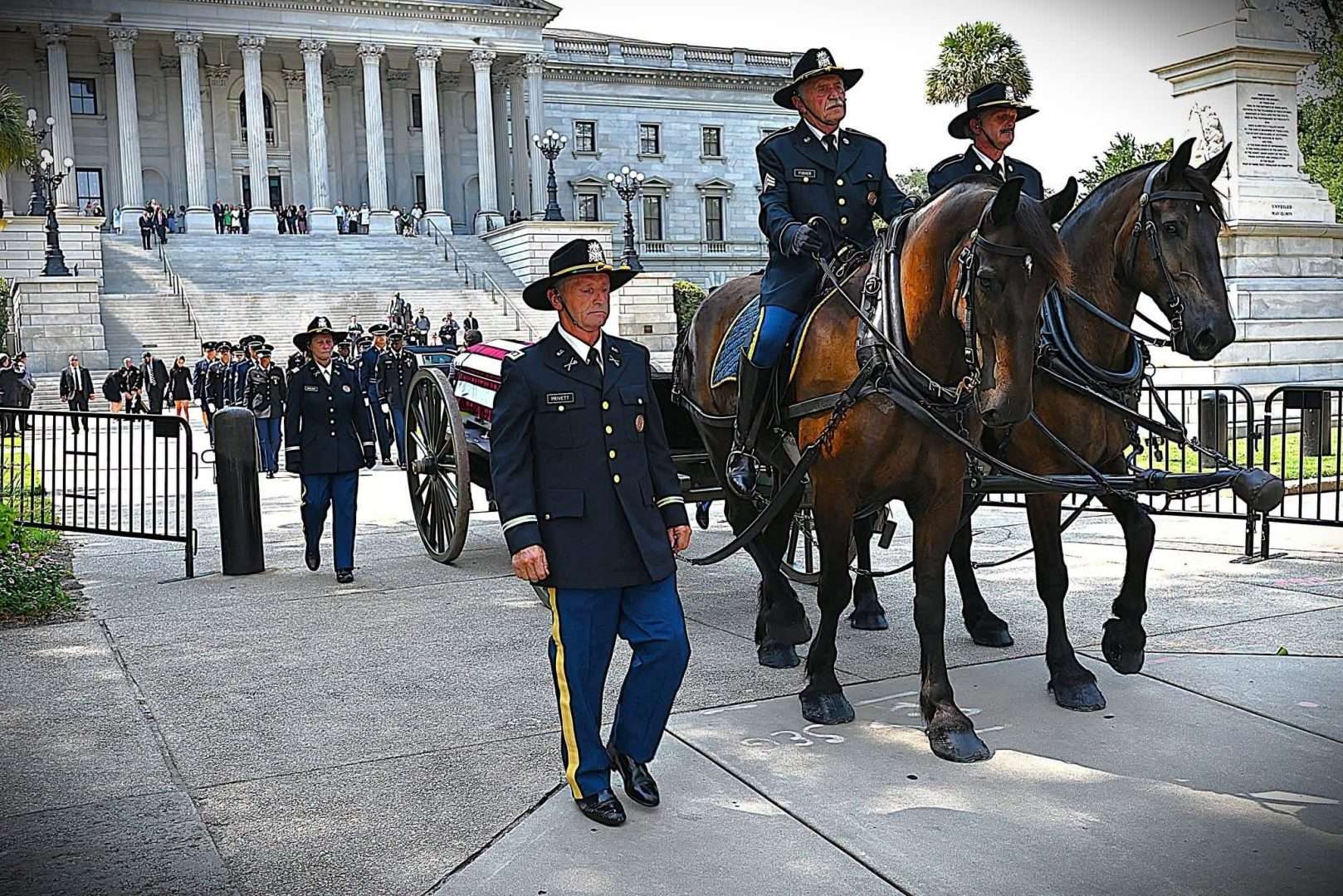
Following memorial ceremonies at the United States Capitol and Washington National Cathedral, Senator Graham returned home to South Carolina for one final journey. On July 29, the South Carolina State Guard had the profound honor of accompanying the senator’s remains through Columbia with full military respect.
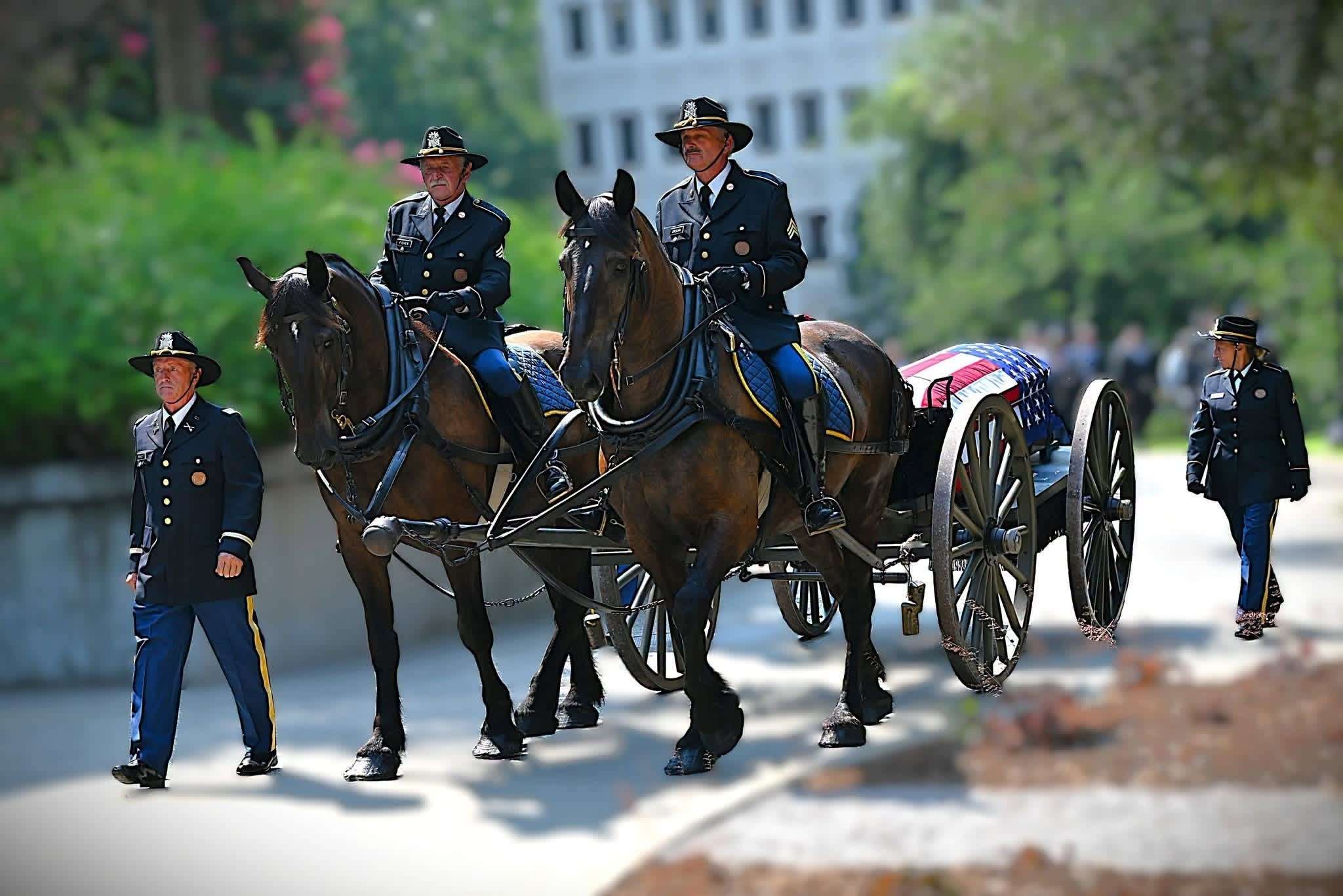
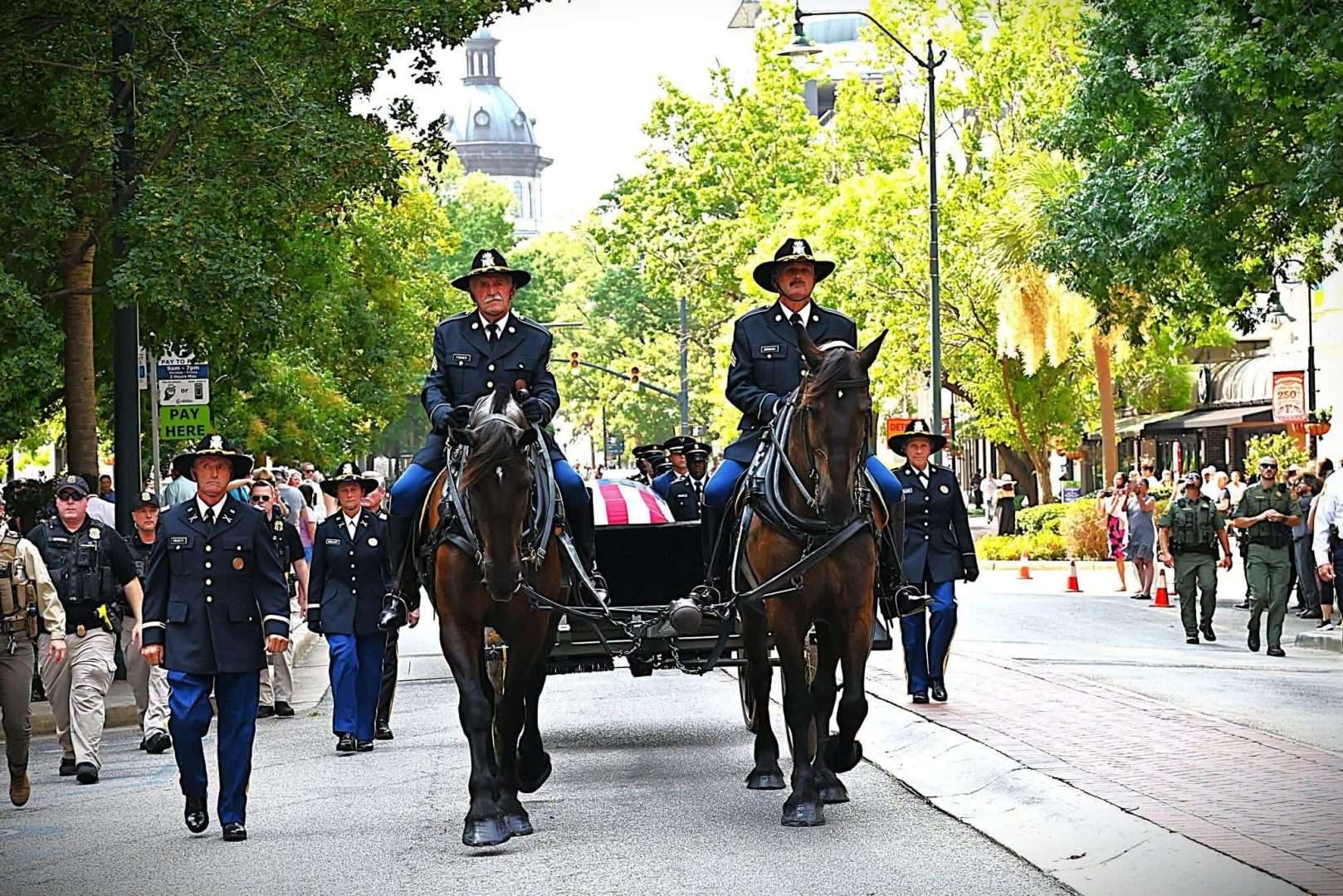
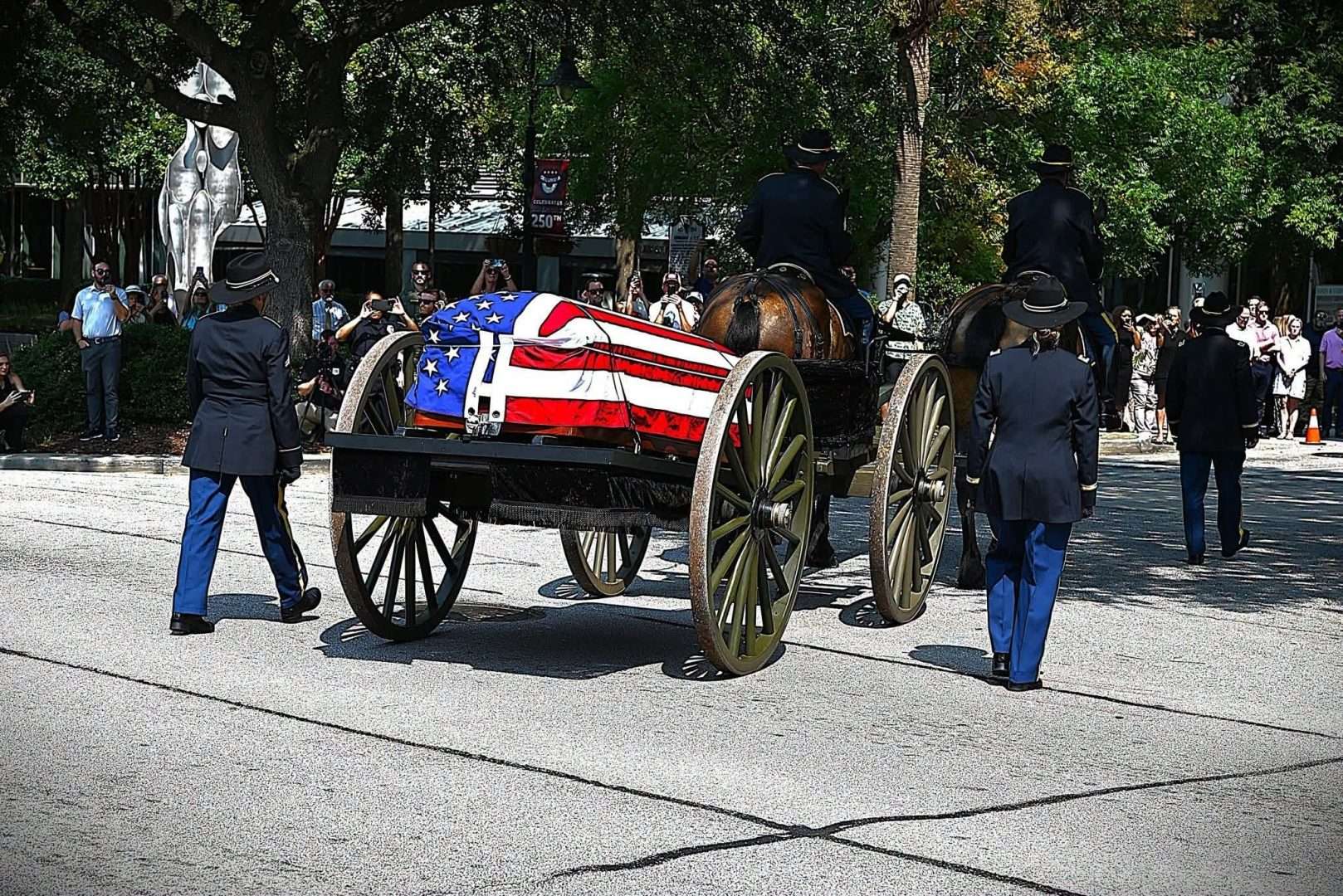
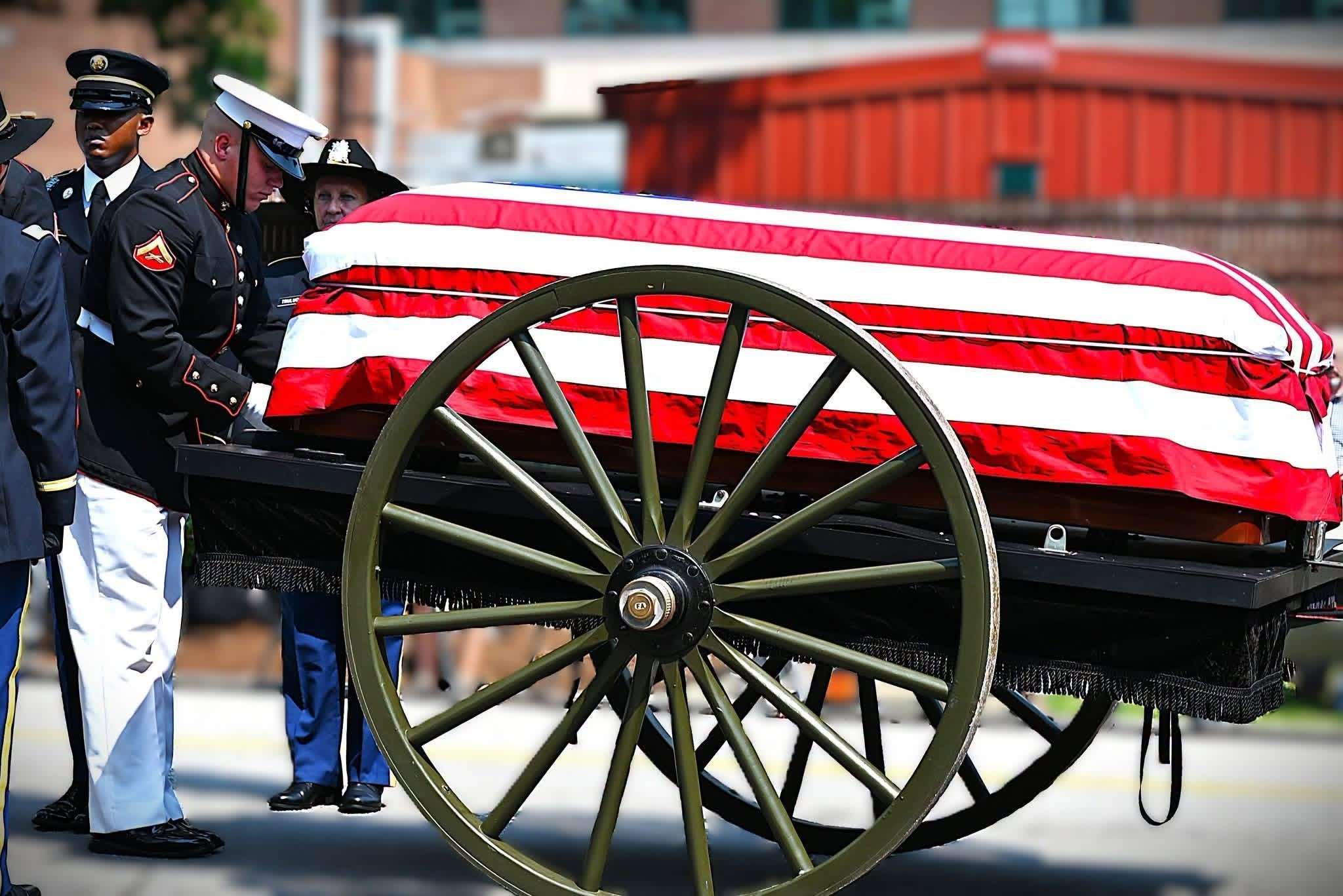
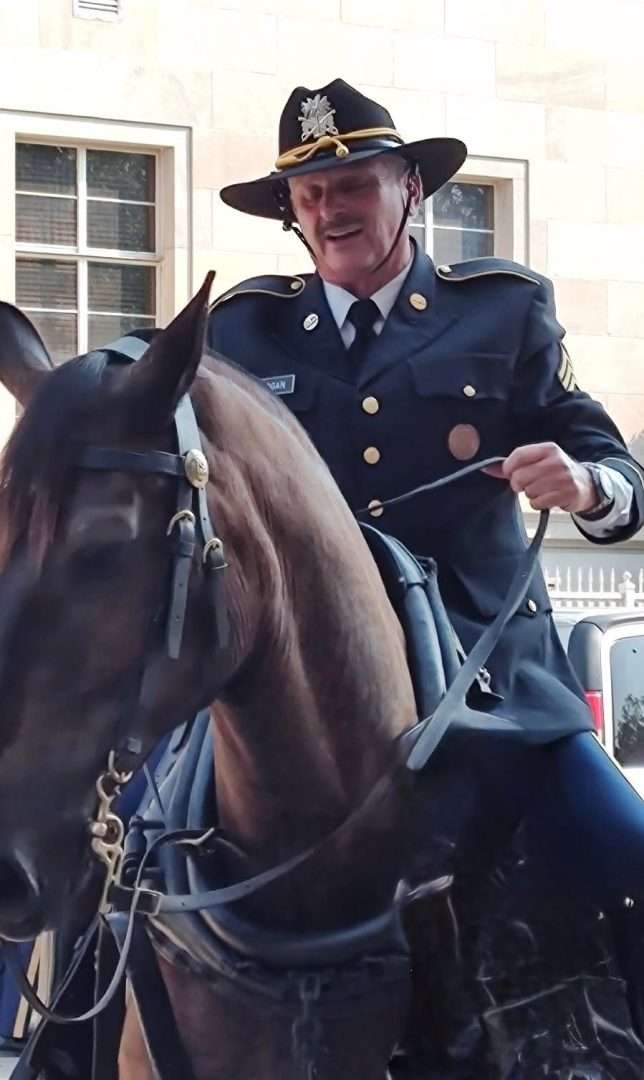
The South Carolina State Guard’s (State Defense Force) Caisson Detachment carried Graham’s flag-draped casket from the grounds of the South Carolina State House along Main Street to First Baptist Church of Columbia. State Guard personnel marched solemnly alongside the caisson as an F-16 formation from the South Carolina Air National Guard’s 169th Fighter Wing conducted a memorial flyover. Graham had previously served with the 169th Fighter Wing during his years in the South Carolina Air National Guard.
At First Baptist Church, family members, friends, colleagues, state leaders and South Carolinians gathered to pay their respects to one of the state’s most consequential political figures. Governor Henry McMaster, former Congressman Trey Gowdy and other longtime friends remembered Graham’s faith, humor, determination and lifelong devotion to the people of South Carolina. Following the service, Graham was transported to Pickens County for a private burial near the community where his extraordinary journey began.
Reflecting on its participation in the ceremonies, the South Carolina State Guard described the caisson as one of the nation’s oldest symbols of respect for a fallen leader. The Guard honored Graham not only as a statesman, but as a son of South Carolina whose service, conviction and devotion shaped the state for generations.
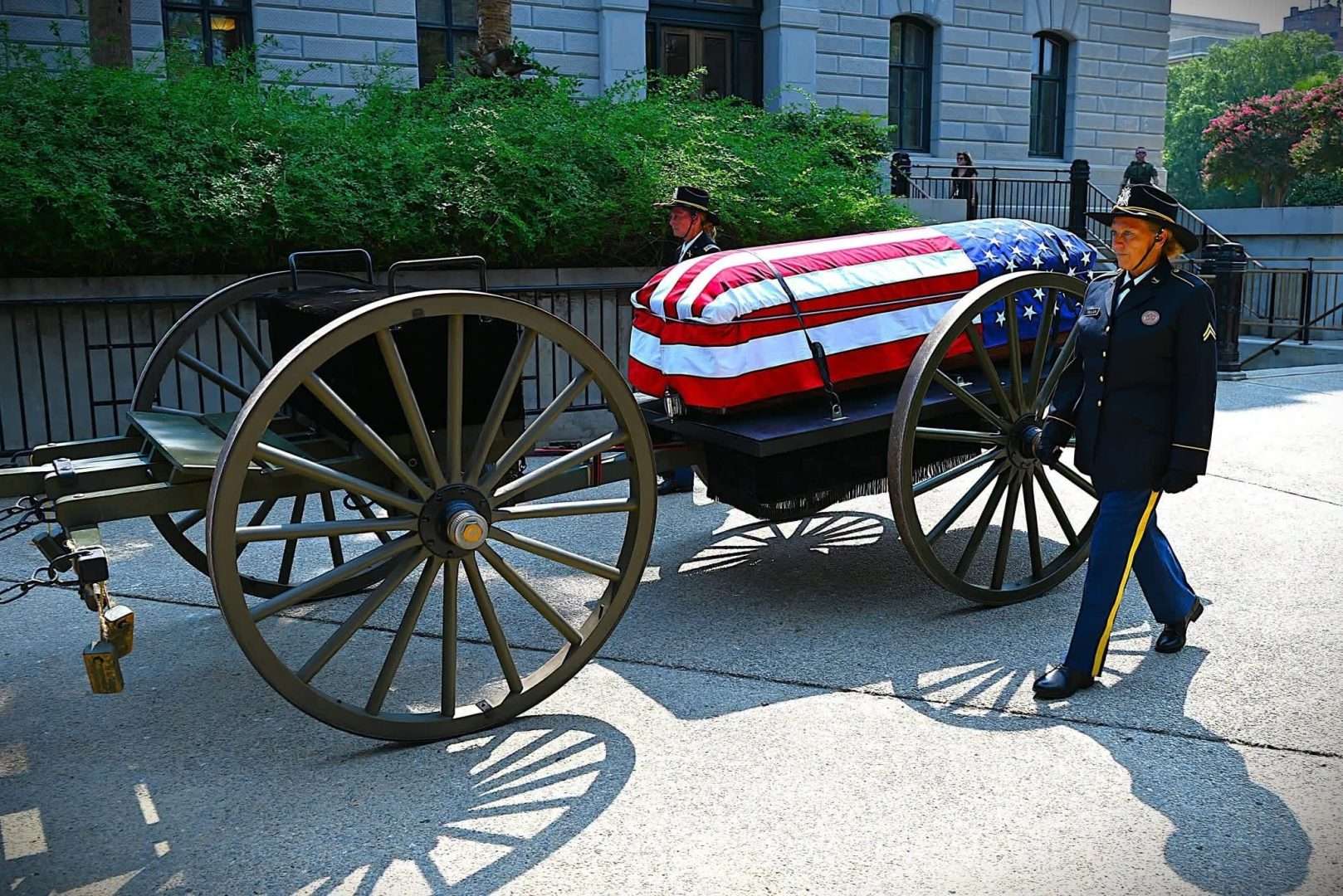
The South Carolina State Guard’s participation demonstrated the important ceremonial role State Defense Forces perform on behalf of their states. Whether responding during emergencies, supporting military and civil authorities or rendering final honors to distinguished public servants, these service members preserve traditions that connect today’s citizens with generations of military service.
Senator Lindsey Graham spent much of his life serving in uniform and elected office. His final journey through South Carolina, escorted by members of the South Carolina State Guard, provided a solemn and fitting farewell to a leader who never stopped fighting for the state he loved.
Today, the South Carolina State Guard had the profound honor of accompanying Senator Lindsey Graham to his final rest. The caisson, our oldest symbol of respect for a fallen leader, carried not only a statesman, but a son of South Carolina whose legacy shaped our state for generations. His service, his conviction, and his devotion to the people of South Carolina will endure. We stand in gratitude for a life lived in service and a leader who never stopped fighting for this state he loved.
Sources: Yahoo – WSOC-TV – BBC – Daily Caller – US Air Force – DRM News – South Carolina State Guard