Texas and Florida State Guards Continue to Demonstrate the Expanding Role of State Defense Forces in Operation Lone Star
Operation Lone Star is a state-directed border security mission initiated by Texas Governor Greg Abbott in March 2021 in response to increased unlawful border crossings and transnational criminal activity along the Texas-Mexico border. Unlike a federal military deployment, Operation Lone Star began as a Texas state mission under the authority of the Governor, integrating the Texas Department of Public Safety with the Texas Military Department. Texas military leadership stated that the Governor’s order mobilized members of the Texas Army National Guard, Texas Air National Guard and Texas State Guard (State Defense Force) to support state authorities.
Since its creation, Operation Lone Star has grown into one of the largest sustained state military and law-enforcement missions in the nation, employing observation posts, mobile patrols, aviation assets, engineering teams, temporary barriers and maritime operations along the Texas-Mexico border. It has also attracted assistance from numerous other states. By 2023, Texas reported that 14 states had deployed personnel or resources in support of its border mission. Florida became one of the most substantial contributors by providing personnel from the newly re-established Florida State Guard, which deployed under the Emergency Management Assistance Compact (EMAC) and began coordinating directly with the Texas National Guard, Texas State Guard and other state agencies.
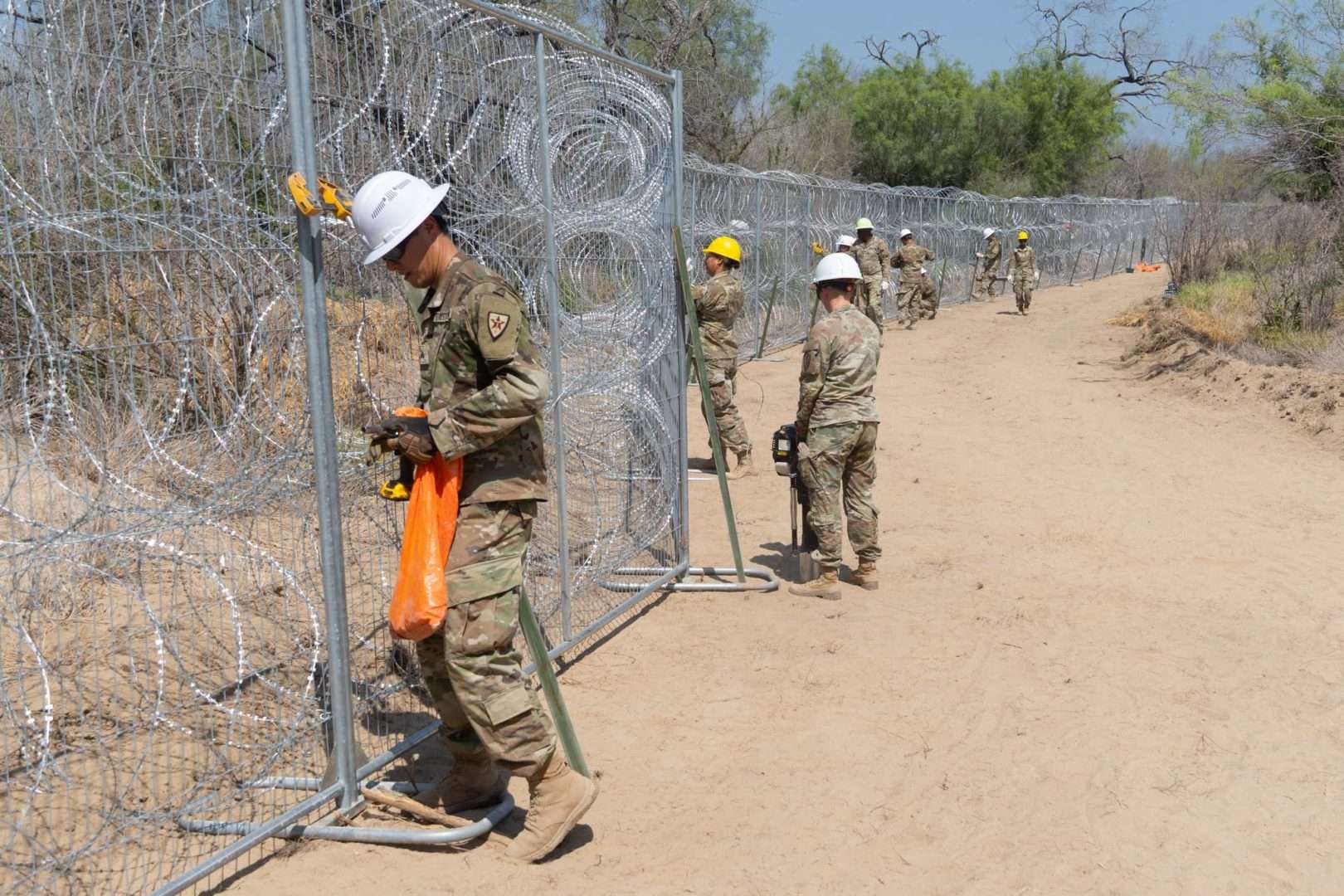
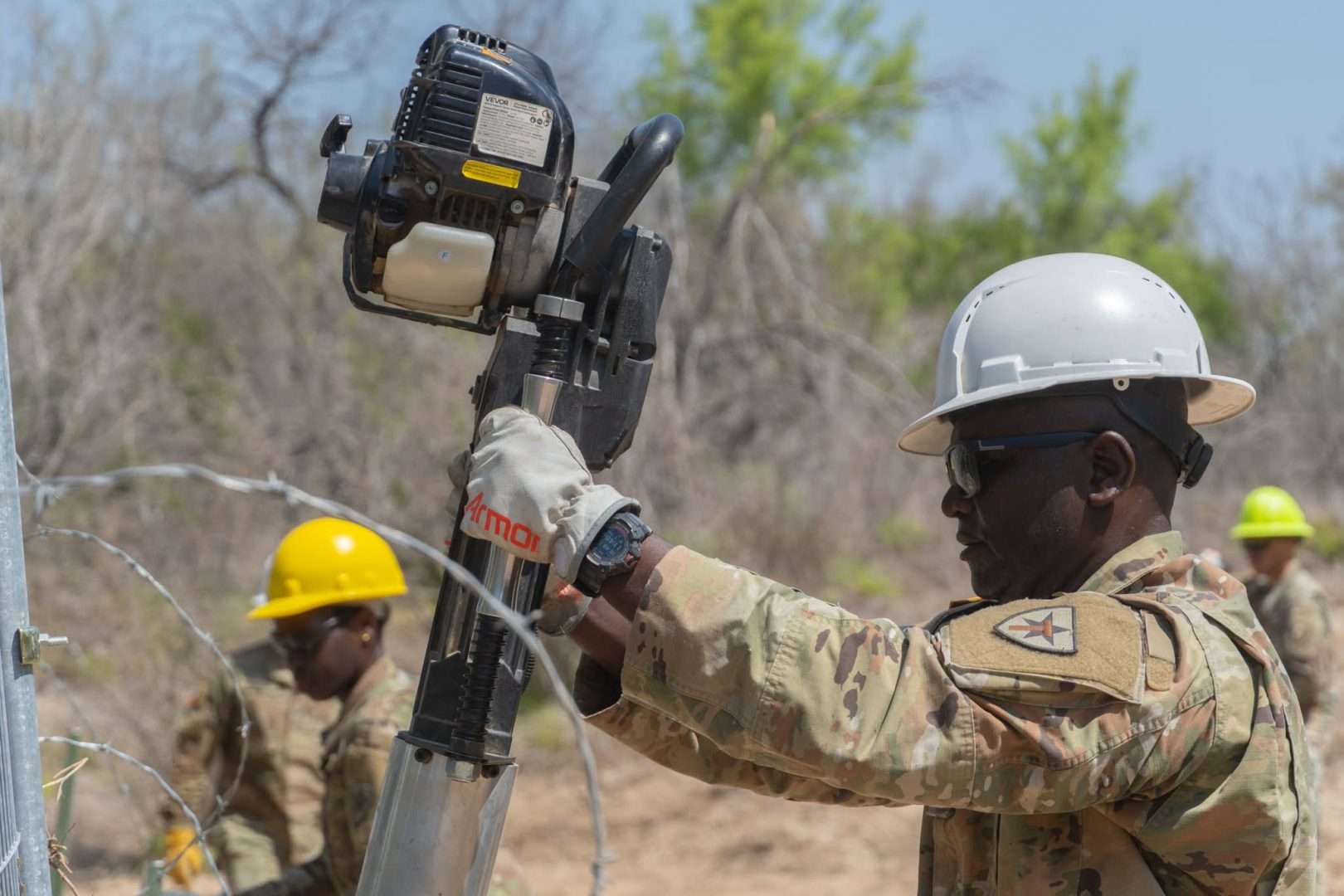
For the Texas State Guard, Operation Lone Star has become one of the clearest examples of how a State Defense Force can be integrated into a large, long-duration homeland security mission. StateDefenseForce.com has documented Texas State Guard Soldiers constructing strategic barriers as early as October 2021, while subsequent missions included engineering work, vegetation clearance, reinforcement of concertina wire and anti-climb barriers, surveillance support and assistance within emergency and operational coordination centers.
That role continues today. Even more significantly, Texas’ fiscal planning documents for the 2026–2027 biennium specifically state that the Texas State Guard and National Guard support Operation Lone Star by maintaining security points, conducting mobile land and river patrols, and constructing temporary fencing and barriers along the Texas-Mexico border.
Operation Lone Star is a Full Time, State Active Duty (SAD) mission, so the soldiers of The Texas State Guard and Florida State Guard are both compensated per their military rank.
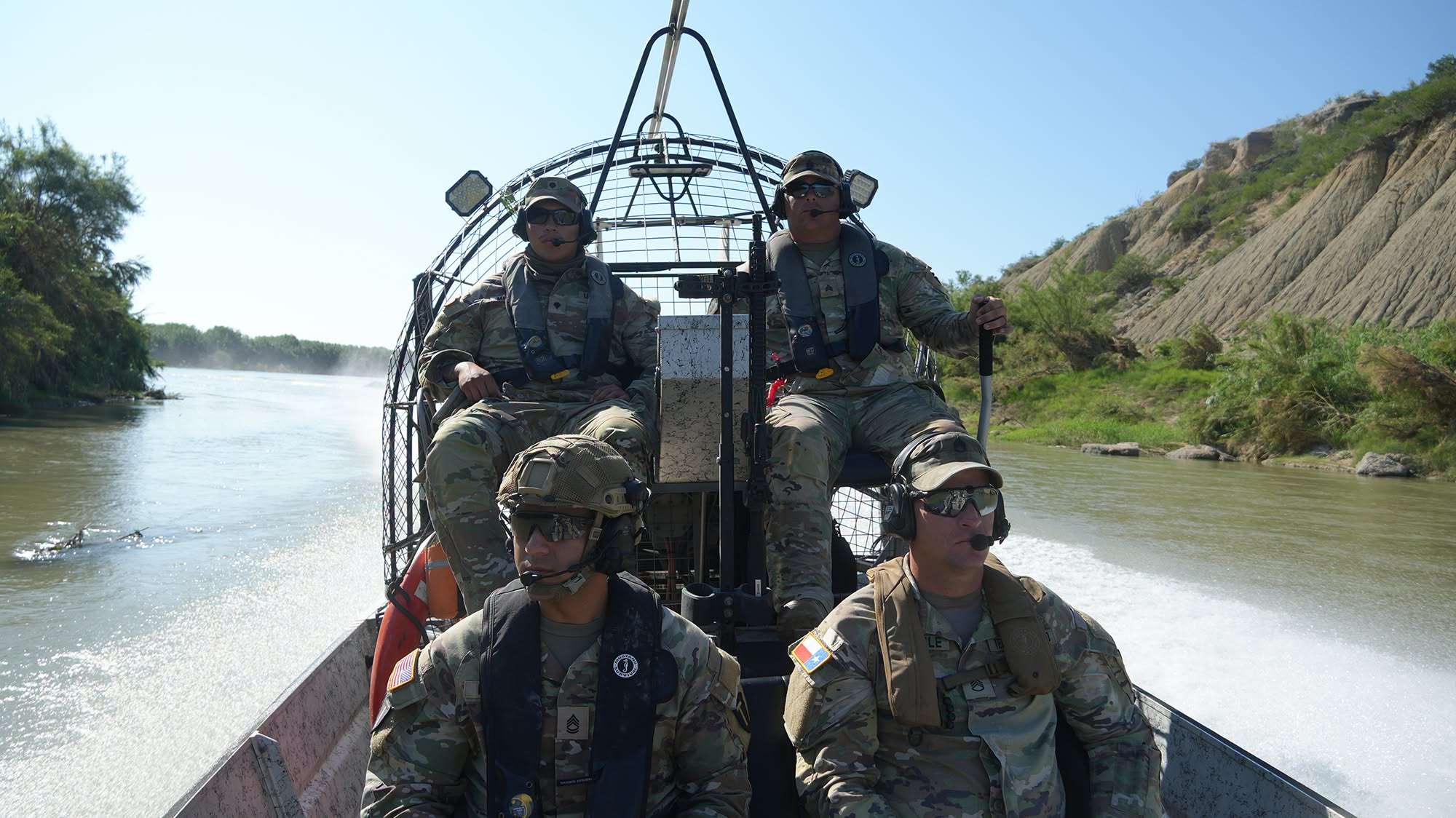
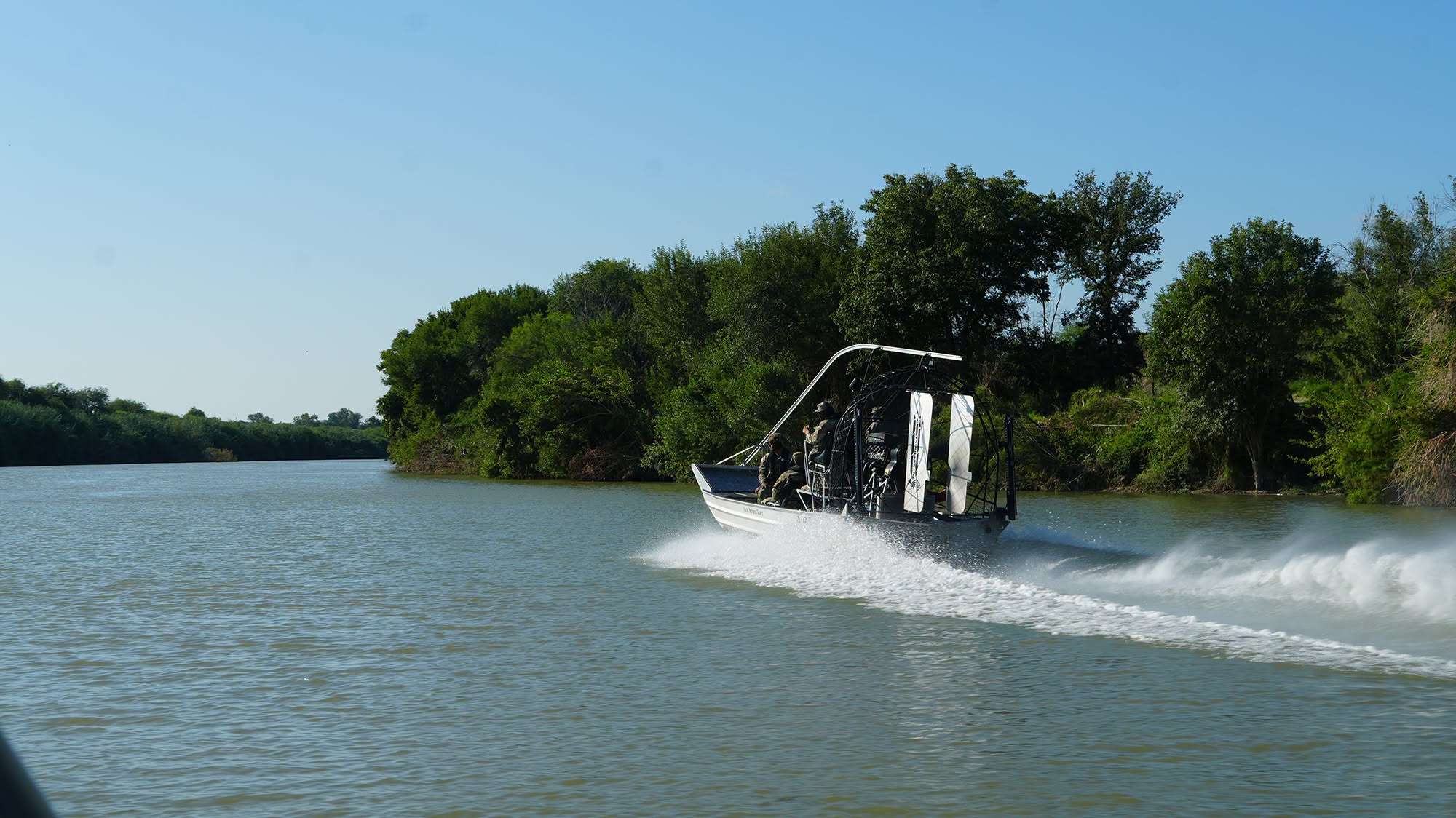
The riverine component is particularly significant. Operation Lone Star forces have used boats and other watercraft to patrol portions of the Rio Grande, monitor areas used for unlawful crossings and smuggling, and coordinate with law-enforcement partners. Texas Military Department reporting has previously described a dedicated river element operating Texas State Guard boats, while broader Operation Lone Star forces have employed boat teams to patrol hundreds of miles of river. While State Guard soldiers have been operating on waterways, State Guard engineers have been working on the extensive barrier systems erected along sections of the border.
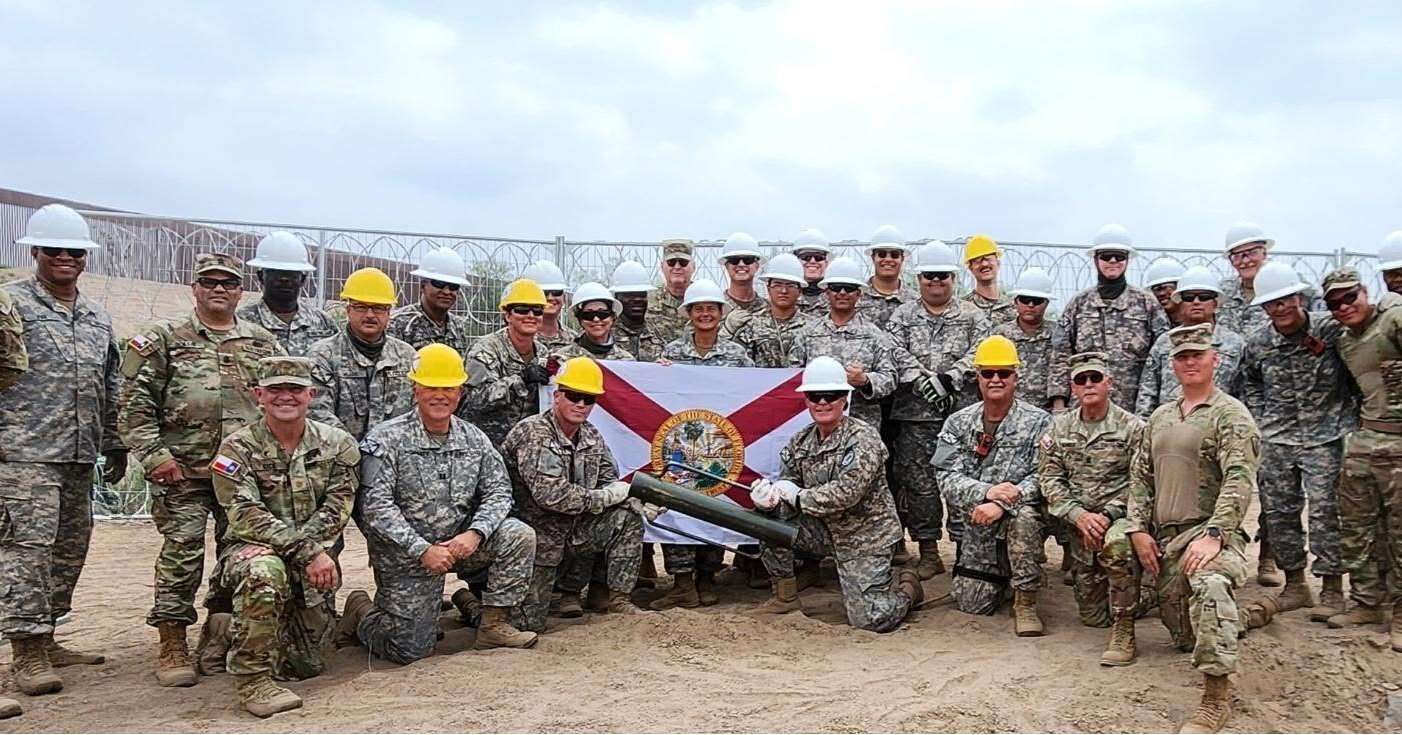
The Florida State Guard’s involvement represented an important expansion of the mission beyond Texas’ own State Defense Force. Florida initially deployed a five-person Florida State Guard Incident Management Team in February 2024 to establish command, control and coordination procedures, followed by additional personnel rotations. Later that year, more than 100 Florida State Guard Soldiers from the Crisis Response Battalion deployed to Eagle Pass, Texas, where they worked alongside the Texas Military Department, Texas Department of Public Safety and other partner agencies.
The scale of that deployment was considerable for an organization that had only recently been re-established. According to Florida’s official retrospective, Florida State Guard Soldiers installed approximately 12,000 feet of hasty and deliberate concertina wire, positioned more than three miles of panel walls, and helped construct additional deterrence infrastructure along the border. The Florida State Guard continues to list Operation Lone Star among the major activations of its Crisis Response Battalion.
The cooperation also demonstrates how State Defense Forces from different states can function alongside one another. Florida State Guard personnel did not arrive in isolation: they entered an established operation containing Texas State Guard personnel, Texas Army and Air National Guard units, Texas DPS officers, federal border agencies and military or law-enforcement personnel contributed by other states. For State Defense Forces, whose missions have historically centered on disaster response, logistics, communications, medical support and augmentation of their respective National Guards, Operation Lone Star has provided a sustained real world example of interstate operational cooperation.
Operation Lone Stars Affect on Illegal Activity At The Border
The scale of activity along the Southwest Border had already risen dramatically by the time Operation Lone Star began in March 2021. During Fiscal Year 2021, U.S. Customs and Border Protection (CBP) recorded approximately 1.73 million encounters along the Southwest Border, while U.S. Border Patrol alone recorded 1,659,206 apprehensions between ports of entry, compared with 400,651 the previous year, an increase of approximately 314 percent. This easily illustrates the extraordinary pressure facing federal, state and local authorities along the border at the time Operation Lone Star was launched.
By December 2024, however, the Texas Governor’s Office reported that illegal crossings into Texas had declined by more than 87 percent, a reduction Texas officials attributed to the state’s barriers, military deployments, surveillance operations and other measures implemented through Operation Lone Star. Federal statistics subsequently documented an even broader decline across the Southwest Border. In May 2025, U.S. Border Patrol recorded just 8,725 apprehensions between ports of entry, compared with 117,905 in May 2024, a 93 percent year-over-year decrease.
The decline has continued well beyond the peak years of the border surge. By 2025, CBP was describing Southwest Border apprehensions as being at historic low. The dramatic difference between the approximately 1.66 million Border Patrol apprehensions recorded in FY2021 and the dramatically lower totals recorded in 2025 and 2026 demonstrates how substantially conditions along the Southwest Border have changed since Operation Lone Star began.
Operation Lone Star has also produced substantial cumulative law-enforcement activity. Texas’ 2026 Report to the People, using state-reported figures through January 1, 2026, lists more than 536,900 migrant apprehensions, 61,700 criminal arrests and 49,900 felony charges. Texas also reported the seizure of the equivalent of more than 859 million lethal doses of fentanyl during its border-security efforts. The State of Texas also highlighted a reduction in crime and deaths as the operation progressed.
A Mission State Defense Forces Are Built to Perform
From the perspective of StateDefenseForce.com, Operation Lone Star also raises a broader question about how states should divide long term domestic missions between their National Guard and their State Defense Force.
The National Guard has an indispensable state mission, but its primary mission is its federal one. Ever since The Total Force Concept was applied in The 1970’s, The National Guard became a vital component of The US Military. The Army and Air National Guard are the only primary combat elements of the United States Army and United States Air Force. National Guard Soldiers and Airmen must remain trained, equipped and ready, not for hurricanes, filling sandbags, wildfires missions, but for deploying to critical conflict zones to support US Forces in theatre.
State Defense Forces occupy a fundamentally different position. Under 32 U.S.C. §109, states may establish their own defense forces, but those forces cannot be called, ordered or drafted into the Armed Forces of the United States. Their purpose is therefore inherently centered upon their state and the domestic missions assigned to them by their civilian leadership.
For that reason, StateDefenseForce.com believes many of the recurring missions being performed along the border, maintaining observation points, monitoring surveillance systems, constructing and repairing barriers, operating command posts, providing logistics support and conducting appropriately trained land and river patrols, are missions in which State Defense Forces should assume a substantially greater role. Doing so can allow those National Guard Soldiers and Airmen to devote more of their limited training time toward maintaining their federal combat readiness that is required by the US Army and US Air Force.
History demonstrates why that training time matters. During the wars in Iraq and Afghanistan, Army budget documents noted that Army National Guard formations had previously spent six months or more of their mobilized time conducting individual and collective training before overseas deployment, in addition to approximately 12 months in theater. This put a great deal of burden not only on each member of these units, but also created disruptions in US Strategic Force Allocation and Logistics.
So StateDefenseForce.com’s position on domestic response missions have changed. We now believe the National Guard should no longer be routinely relied upon to perform domestic response missions such as operating Points of Distribution, managing shelters, conducting routine search-and-rescue operations, distributing supplies, filling sandbags, etc. National Guard soldiers and airmen should focus all their time training and perfecting their MOS skills and experience so when they are deployed they are ready to encounter any situation that may arise.
Every day and every training period devoted to routine domestic-response missions is time that cannot be devoted to maintaining combat MOS proficiency, collective warfighting skills, aviation readiness, weapons qualification, and the Army and Air Force training requirements necessary for rapid federal mobilization. StateDefenseForce.com believes these recurring state missions should instead become a central responsibility of properly trained and equipped State Guards and State Defense Forces. These forces cannot be federalized and can therefore concentrate entirely on the needs of their states, allowing National Guard Soldiers and Airmen to focus their limited training time on maintaining the combat readiness required to deploy at a moment’s notice during a national emergency or overseas conflict.
The Texas State Guard and Florida State Guard demonstrate what those model look like everyday.
From constructing miles of barriers and monitoring the border to supporting command operations and conducting patrols on the waterways that form much of the Texas-Mexico boundary, these Soldiers have demonstrated that State Defense Forces can perform demanding homeland security missions alongside National Guard, state law-enforcement and federal partners.
StateDefenseForce.com commends the Soldiers of the Texas State Guard and Florida State Guard for their service and for the work they have performed alongside their partner agencies during Operation Lone Star. Their participation offers another powerful example of the capabilities State Defense Forces can provide their Governors, their states and their fellow Americans.
Wired to protect.
Texas Military Department Service Members continue fortifying the southern border with concertina wire. These barriers are visual and physical deterrents for transnational crime along the Texas border.
Service Members conduct patrols with air boats to safeguard the southern border as part of Operation Lone Star’s mission to protect Texans and stop transnational crime.
We’ve installed over 10,000 ft of barriers along the Texas border, and we have 22 million reasons to keep going!
We will continue to protect the 30+ million Texans, 22+ million Floridians, and 336+ million Americans from the unconscionable threats of illegal immigration.