Puerto Rico State Guard Strengthens Disaster Response and Lifesaving Capabilities During Annual Training 2026
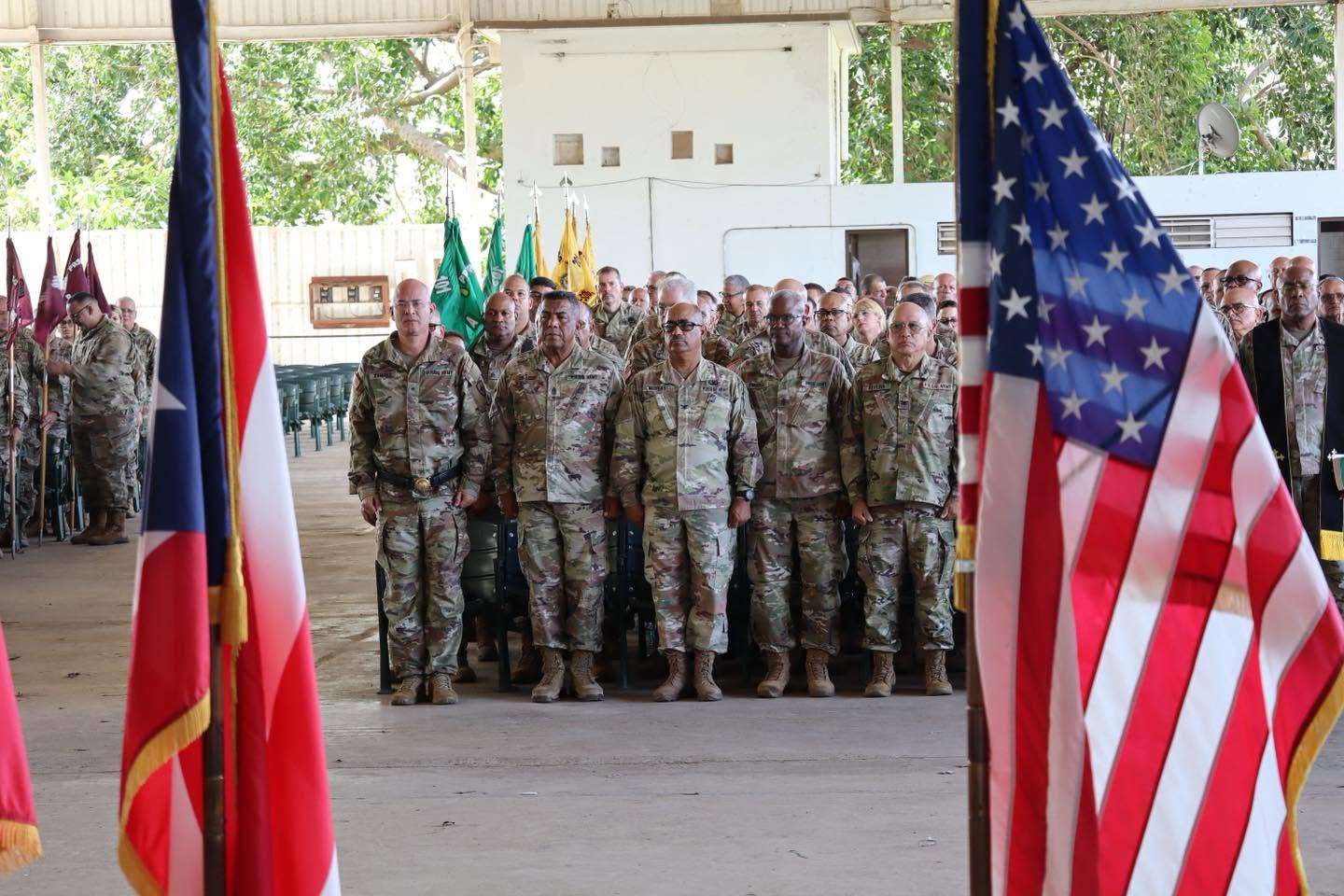
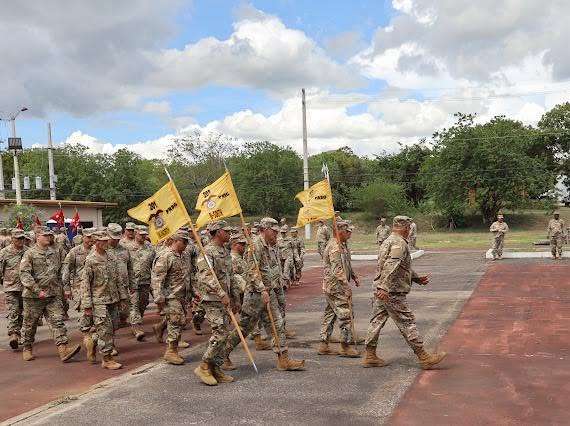
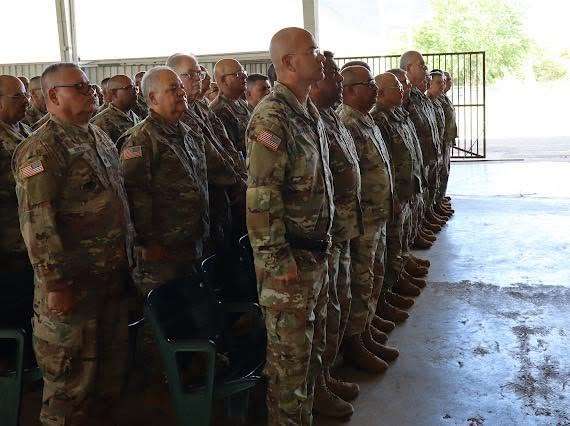
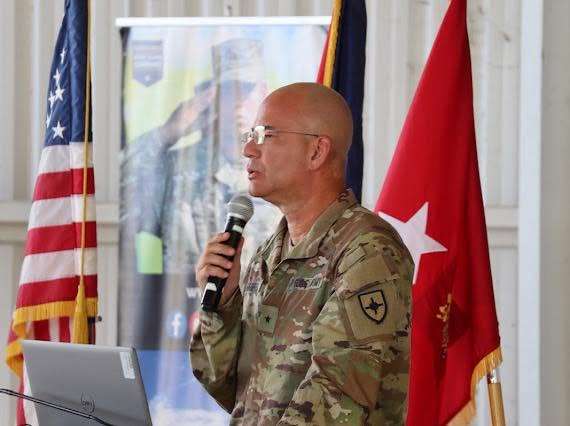
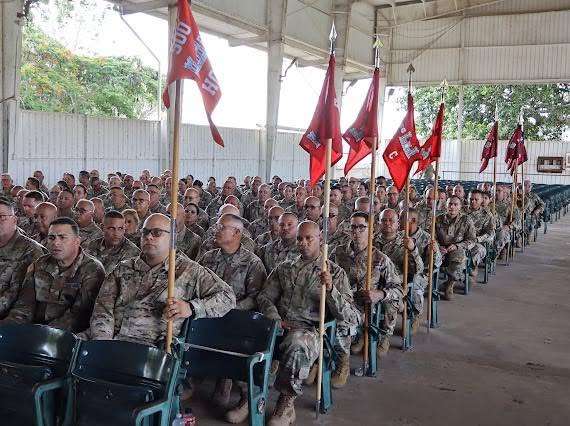
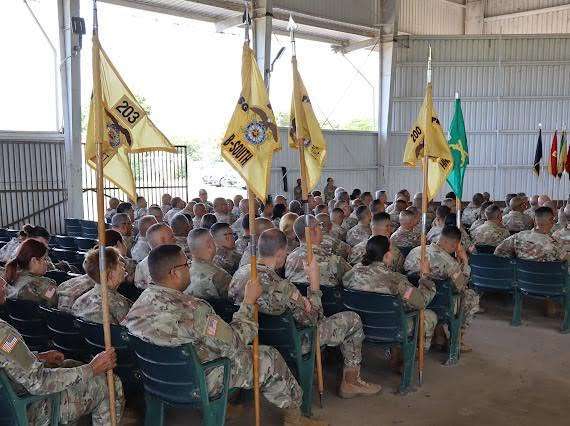
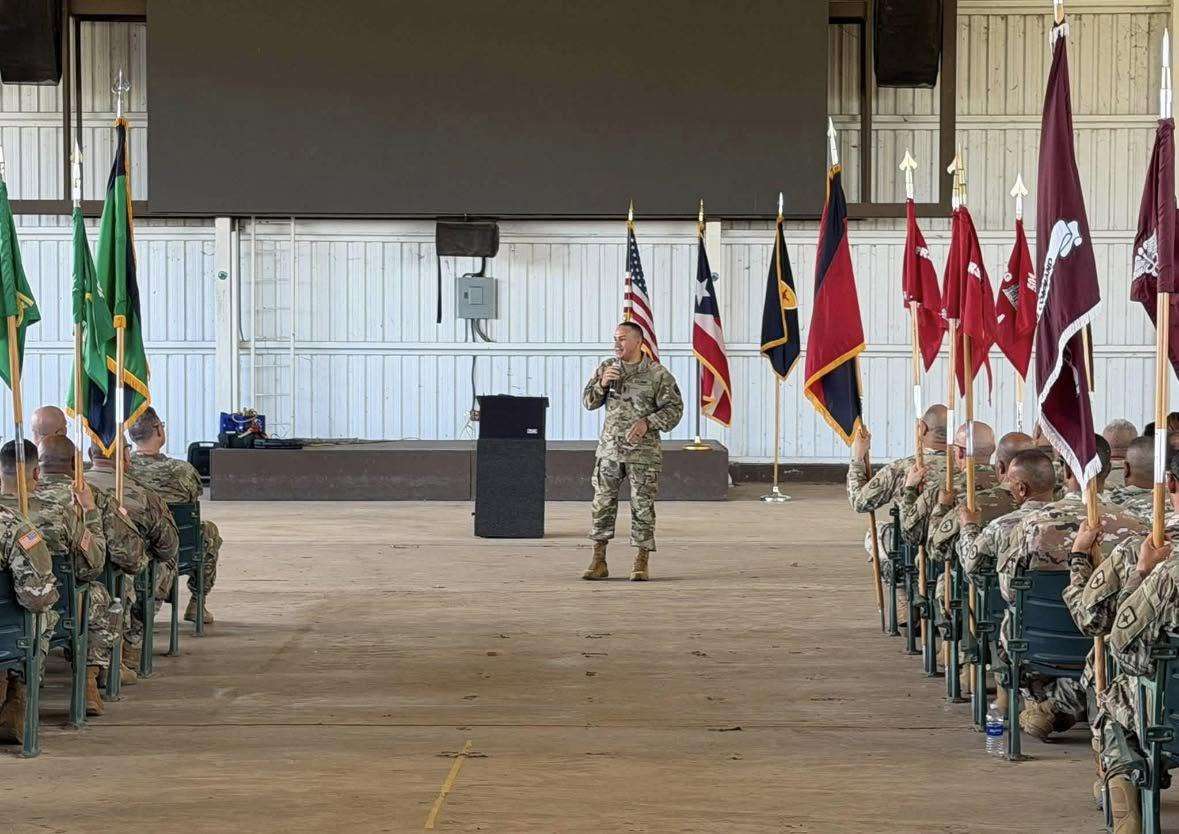
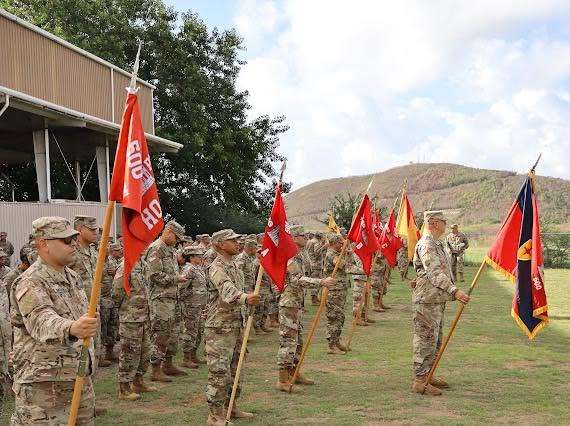
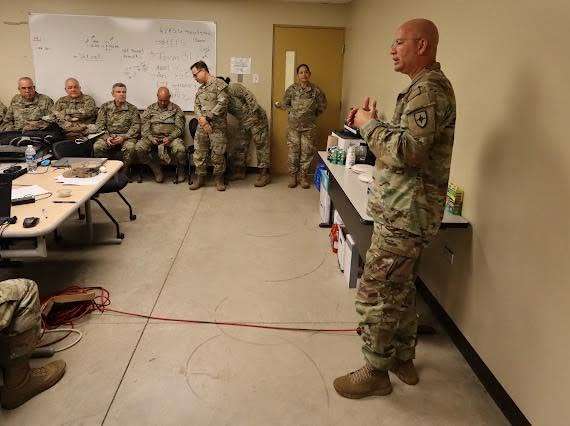
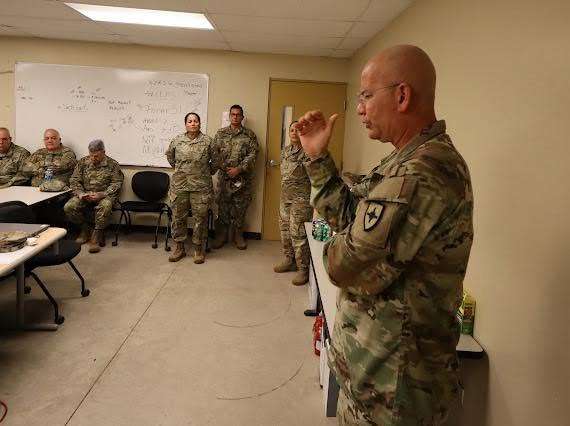
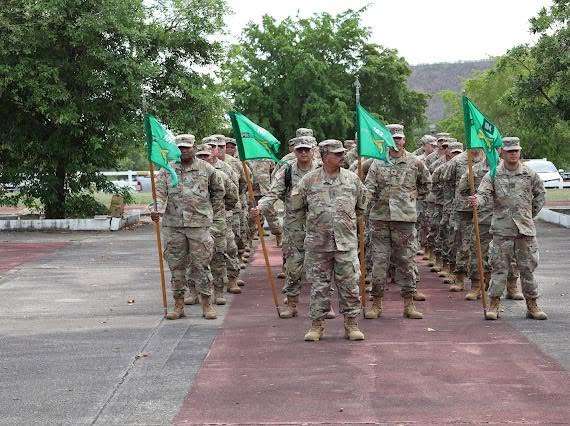
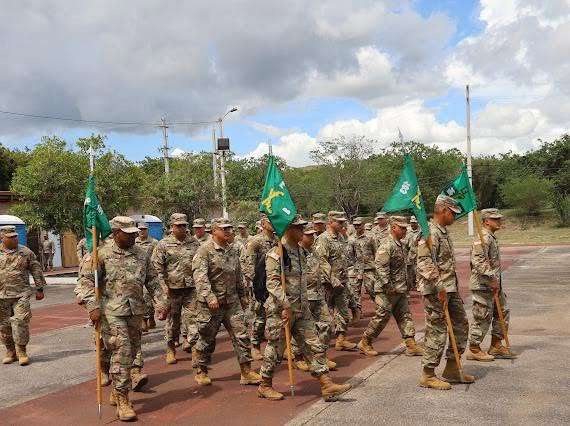
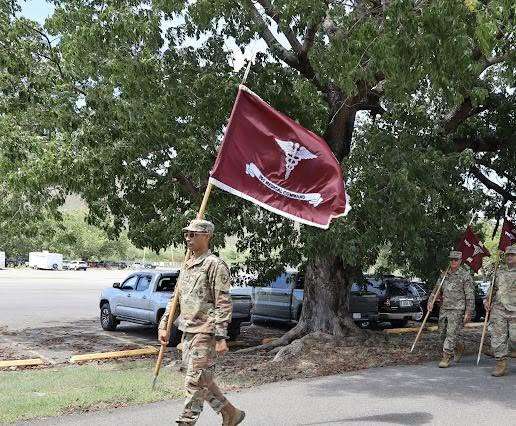
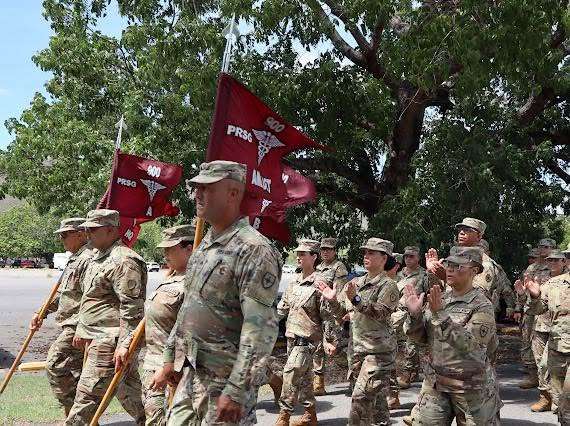
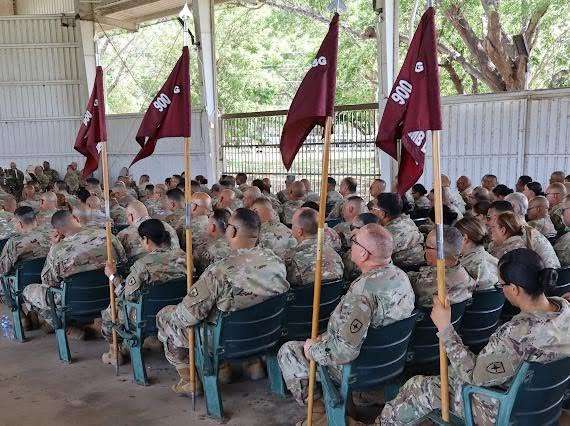
On October 1, 2026, Brigadier General Edrick Ramírez, Commanding General of the Puerto Rico State Guard (State Defense Force – PRSG), officially opened the Command’s Annual Training (AT-2026) at Camp Santiago Joint Training Center in Salinas, Puerto Rico. Addressing the assembled soldiers and airmen, Brigadier General Ramírez outlined the Command’s Strategic Plan for the coming years, highlighting several initiatives intended to strengthen the organization and expand its operational capabilities.
Among these priorities were new administrative programs for military personnel specializing in Human Resources (42A), expanded online military education and professional development, and the formation and restructuring of units to better align with Puerto Rico’s evolving emergency response missions.
Every year, State Defense Forces across the nation conduct Annual Training, with many organizations dedicating one to two weeks to sharpening the skills and expanding the experience of their personnel in their respective Military Occupational Specialties (MOS) and assigned missions. These intensive training periods allow soldiers to build upon the knowledge acquired throughout the year, validate their operational capabilities, and participate in realistic exercises designed to prepare them for deployment during a state emergency. For the Puerto Rico State Guard, whose 2026 Annual Training was conducted from October 1–4, the emphasis was on strengthening the military capabilities that Puerto Rico depends upon when hurricanes, earthquakes, and other disasters threaten the lives and safety of its residents.
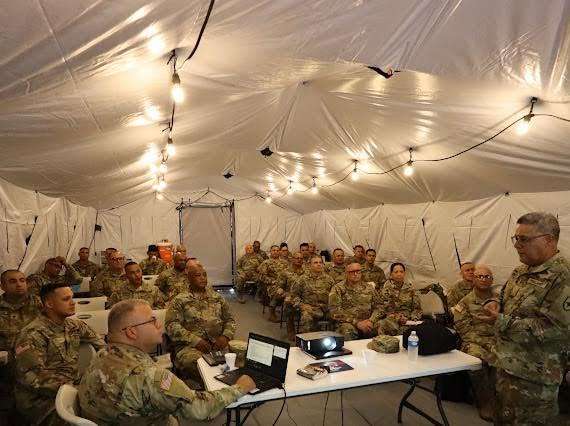
Annual Training also provided an opportunity to strengthen relationships with organizations that support military personnel and veterans. During the training period, the Puerto Rico State Guard welcomed Veterans Advocate Agustín Montañez, Esq., who addressed service members regarding the mission and services of Puerto Rico’s Office of the Veterans Advocate (OPV). His presentation highlighted resources available to support veterans and increase awareness of their rights and benefits. Mr. Montañez also met with the Command’s Judge Advocate General (JAG) personnel to discuss potential future initiatives between the two organizations, with the goal of expanding support and assistance for veterans serving within the State Guard.
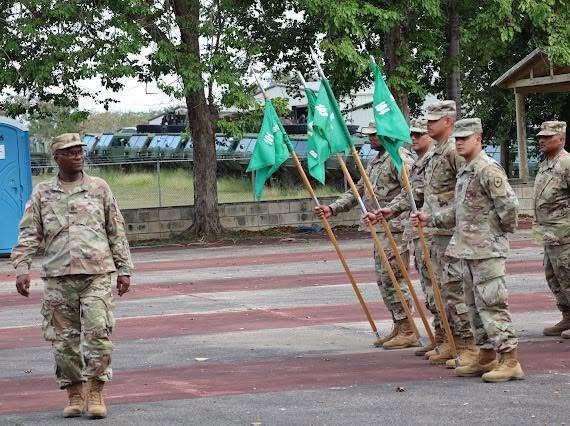
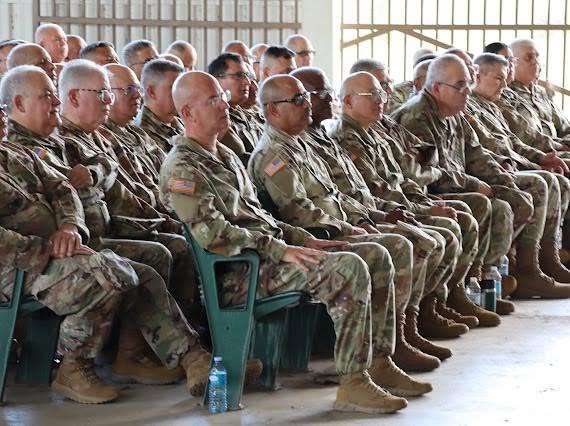
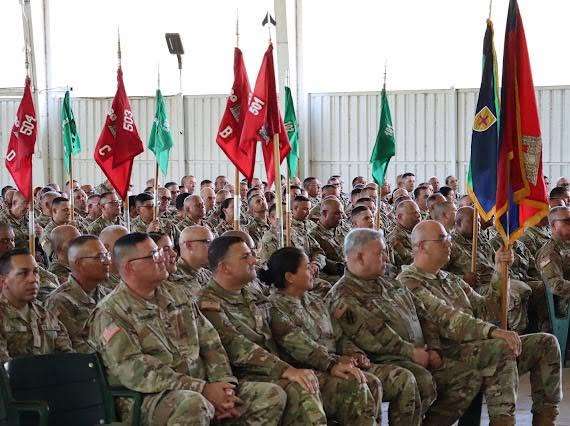
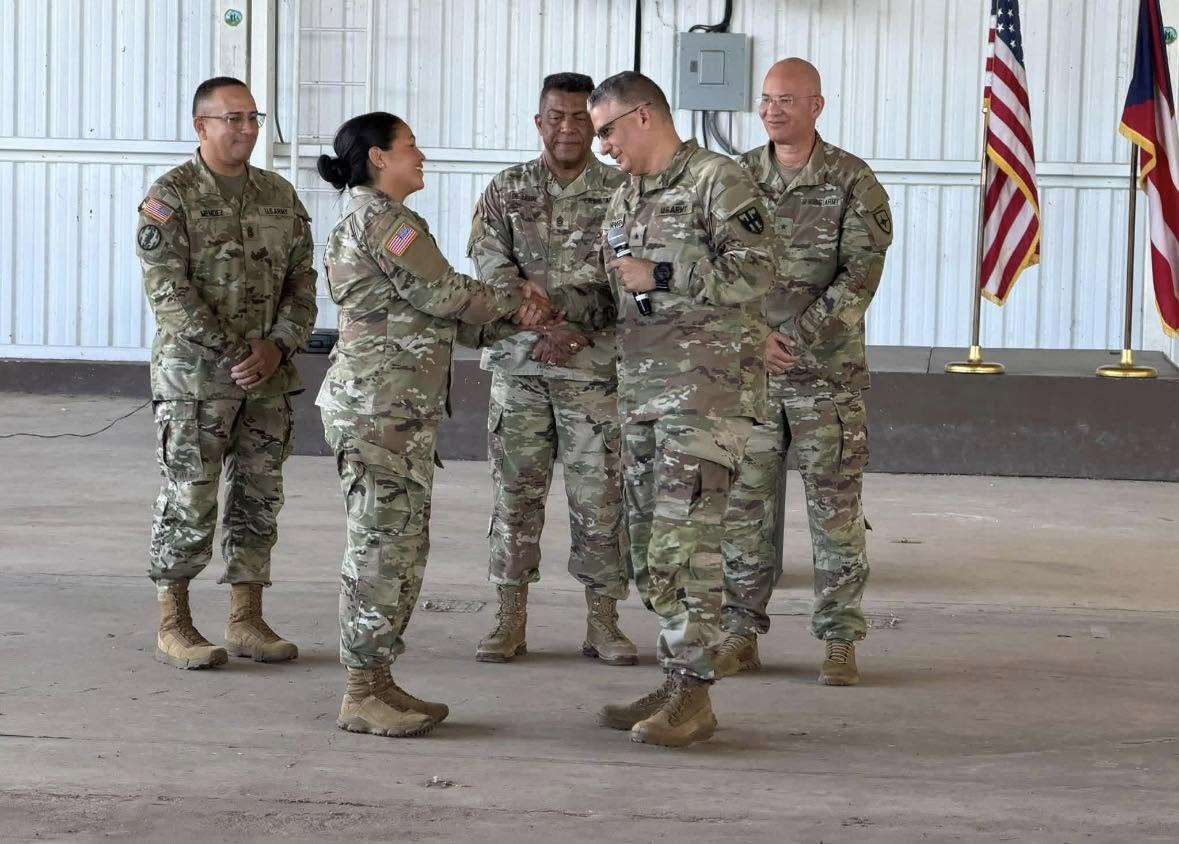
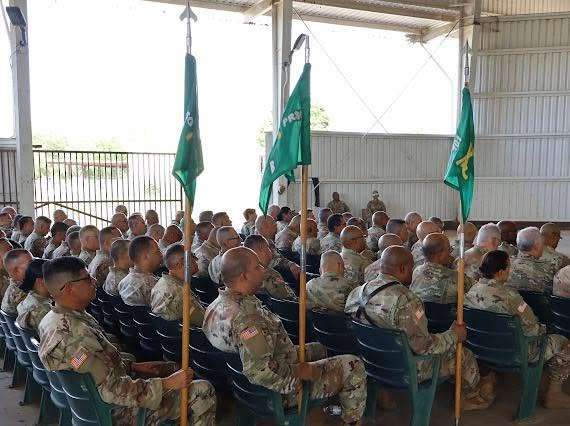
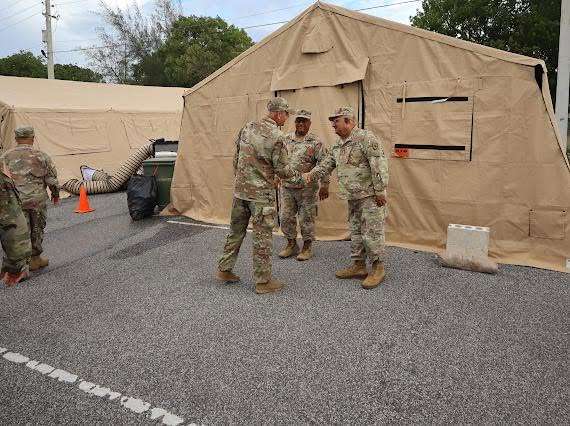
On October 2, the Adjutant General of Puerto Rico, Brigadier General Carlos Rivera Román, and State Command Sergeant Major Juvencio Méndez visited Camp Santiago and joined Brigadier General Ramírez in addressing the assembled troops. Their remarks emphasized military readiness, dedication to assigned missions, and the importance of service to Puerto Rico.
Civil Support Battalion: Preparing to Deliver Lifesaving Supplies During Disasters
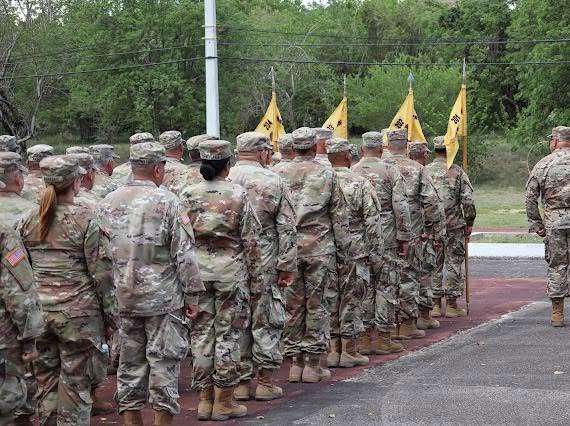
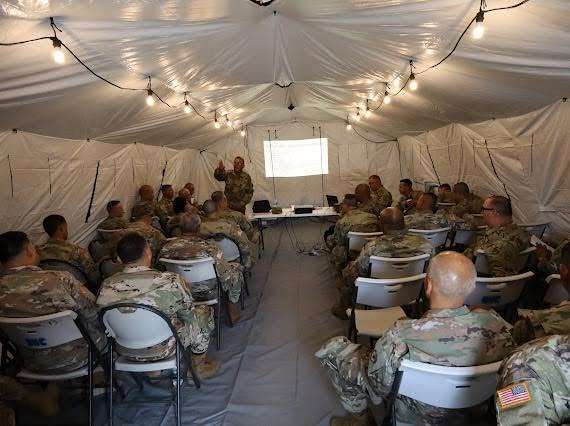
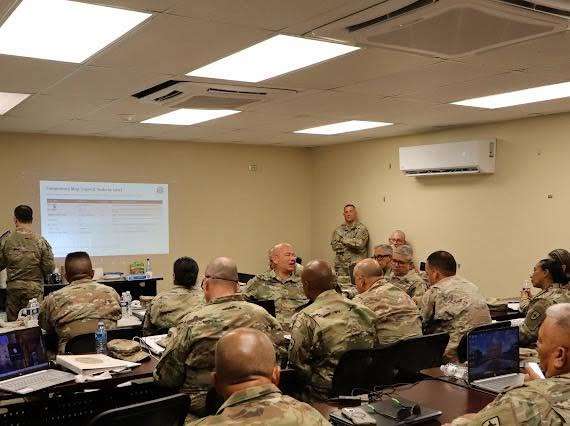
Among the major units participating in Annual Training was the Puerto Rico State Guard’s 200th Civil Support Battalion (CSB), whose personnel perform some of the most important logistical and humanitarian assistance missions during natural disasters. Approximately 175 soldiers participated in specialized instruction and certification programs covering the management and operation of Regional Staging Areas (RSA), also known as regional support hubs, and the establishment and operation of Points of Distribution (POD).
Regional Staging Areas are critically important logistical facilities strategically positioned throughout Puerto Rico to receive, organize, and coordinate the movement of emergency supplies during disasters. When a major hurricane devastates the island, communities can quickly find themselves isolated by damaged roads, widespread flooding, and destroyed infrastructure. Supermarkets become inaccessible, deliveries can cease, and residents may lose access to clean drinking water, food, and other essential supplies. It is during these emergencies that the Puerto Rico State Guard’s Civil Support Battalion becomes an essential component of the island’s humanitarian relief operations.
Soldiers assigned to these facilities help receive shipments of drinking water, emergency food supplies, and other critical commodities delivered by responding government agencies. They coordinate the unloading, organization, inventory accountability, and onward movement of these supplies to municipalities and local distribution facilities. Working alongside the Puerto Rico National Guard, the Federal Emergency Management Agency (FEMA), emergency management officials, and municipal authorities, these soldiers help ensure resources reach the communities that need them most. Their mission is not simply to move boxes or unload trucks, it is to maintain an organized logistical network capable of supporting thousands of residents whose survival may depend upon timely humanitarian assistance.
The importance of this mission became unmistakably clear during Hurricane María in September 2017. The hurricane devastated Puerto Rico, crippling the island’s electrical infrastructure, damaging transportation networks, and creating an extraordinary humanitarian emergency. In its 2022 report examining the federal response to Hurricanes Harvey and María, the U.S. Commission on Civil Rights documented how FEMA and other federal agencies transported emergency food and water to Regional Staging Areas throughout Puerto Rico. The report identified the Puerto Rico State Guard as the organization receiving commodities at these facilities for further coordination and distribution to the island’s 78 municipalities.
This historical example demonstrates the importance of maintaining a trained and organized military force capable of managing emergency logistics during a catastrophic disaster. Without effective regional distribution systems, desperately needed humanitarian supplies can remain stranded in warehouses and staging areas while families in isolated communities continue waiting for assistance.
An equally important mission undertaken by the Civil Support Battalion involves establishing and operating Points of Distribution (POD). Unlike Regional Staging Areas, which function primarily as regional logistical hubs, PODs serve as local distribution locations where residents can obtain emergency necessities, including bottled water, food, and other critical supplies. Depending on the disaster and the resources provided by responding agencies, these locations may also support the distribution of essential medical and public-health supplies.
Consider a community devastated by a powerful hurricane. Electricity has been unavailable for several days, grocery store shelves are empty, refrigeration has failed, and residents are running dangerously low on drinking water. A properly established POD can become a lifeline for families who have exhausted their remaining supplies. Puerto Rico State Guard soldiers can assist in organizing incoming commodities, directing residents through designated distribution lanes, monitoring inventory, and coordinating replenishment requests to ensure humanitarian assistance continues reaching the community.
Operating these facilities also requires careful attention to safety, security, and accountability. Soldiers must help safeguard supplies from theft or unauthorized removal, maintain organized distribution procedures, coordinate vehicle and pedestrian traffic, and ensure that assistance is distributed safely and fairly. When supplies begin running low and residents become increasingly desperate, maintaining an orderly environment becomes especially important. Effective coordination between Civil Support personnel, Military Police, and civilian emergency management authorities helps prevent confusion, protect residents, and ensure that limited resources are distributed according to established emergency priorities.
500th Engineering Battalion: Restoring Communities and Protecting Critical Infrastructure
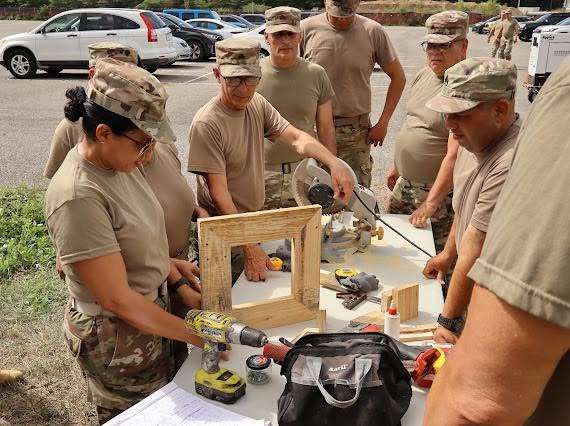
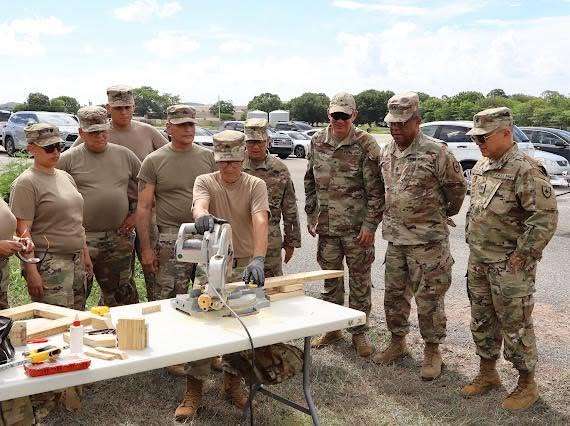
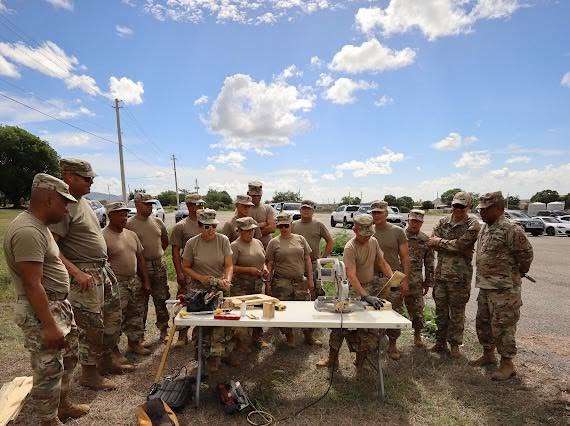
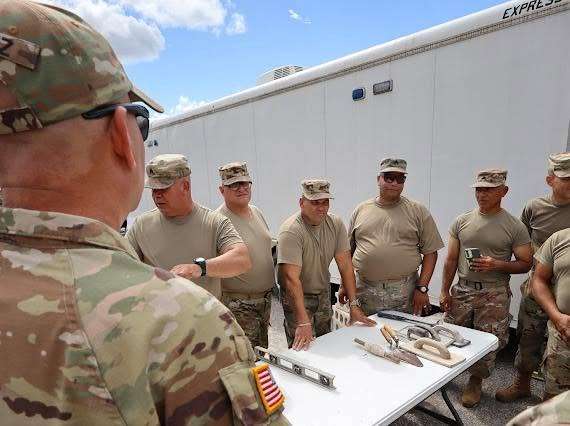
Another significant component of Annual Training involved the 500th Engineering Battalion, whose soldiers underwent specialized practical exercises covering Vertical Construction Engineering, Critical Infrastructure Risk Assessment (CIRA), and Heavy Equipment Operations. These highly technical missions provide Puerto Rico with an additional engineering resource capable of supporting disaster recovery, infrastructure assessments, and emergency construction projects.
Vertical Construction Engineering involves the construction, repair, and rehabilitation of buildings and other above-ground structures. Following a major hurricane or earthquake, homes, emergency response facilities, municipal buildings, and other essential structures can suffer extensive damage. Engineering personnel with the appropriate qualifications assist with structural repairs, replacement of damaged building components, installation of roofing and protective materials, and restoration of facilities needed for emergency operations.
The Puerto Rico State Guard has previously demonstrated these capabilities during actual disaster recovery missions. Following Hurricane Fiona in September 2022, soldiers from Company 502 of the 500th Engineering Battalion participated in the reconstruction of a family home in Vega Alta. The residence had sustained damage from an earlier fire that was subsequently aggravated by the hurricane. During the October 20–23 mission, State Guard soldiers helped replace damaged support components, repair walls, and install new doors and shutters. For the family affected, the mission represented far more than a military engineering assignment: it was an important step toward restoring a safe and livable home following a devastating emergency.
Equally important is the battalion’s Critical Infrastructure Risk Assessment (CIRA) mission, which supports efforts to identify potential dangers and vulnerabilities affecting infrastructure essential to public safety. Puerto Rico’s electrical substations, hospitals, water treatment facilities, emergency operations centers, and communications networks are particularly vulnerable to the destructive effects of hurricanes, flooding, and earthquakes. Assessing visible damage and identifying potential risks can provide emergency management officials with valuable information when determining where resources and specialized response teams are most urgently needed.
For example, following a major hurricane, a damaged electrical substation could leave thousands of residents without electricity, while a compromised water treatment facility could interrupt access to safe drinking water across several communities. A hospital suffering structural damage could find itself unable to operate at full capacity precisely when emergency medical services are most desperately needed. Through CIRA and impact damage assessment missions, properly trained State Guard personnel can help document hazardous conditions, identify potential vulnerabilities, provide essential observations to emergency management authorities and provide engineers to help restore functionality of utility servicess.
Heavy Equipment Operations represented another major component of the Engineering Battalion’s Annual Training. Soldiers received instruction involving the proper use, handling, and safe operation of construction equipment and specialized tools, with particular emphasis on preventing accidents and following operational safety procedures. During an actual disaster, qualified heavy equipment operators may be tasked with assisting in debris clearance, moving construction materials, supporting damaged infrastructure restoration, and preparing areas required for emergency response operations.
These capabilities become especially valuable when fallen trees, collapsed structures, and widespread debris prevent emergency vehicles from reaching affected communities. Every blocked roadway can delay the arrival of ambulances, firefighters, search and rescue teams, and humanitarian relief convoys. Properly trained engineering personnel and equipment operators can help restore access and accelerate recovery operations, potentially making a critical difference for residents awaiting emergency assistance.
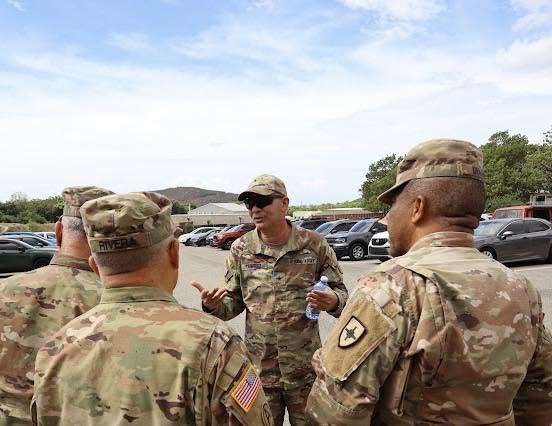
During the engineering exercises, Brigadier General Edrick Ramírez visited the training areas and received briefings concerning the activities being conducted, the technical skills developed, and the battalion’s overall training progress. The exercises reinforced the Engineering Battalion’s mission of maintaining personnel capable of supporting Puerto Rico’s emergency response, disaster recovery, and infrastructure requirements.
Military Police Battalion: Protecting Emergency Operations and Maintaining Security
The Puerto Rico State Guard’s 100th Military Police Battalion also participated in specialized training designed to strengthen its ability to support security and emergency operations throughout the island. Soldiers conducted tactical and operational exercises involving traffic control, checkpoint establishment, installation security, access control, patrolling, and other military security responsibilities.
Military Police units fulfill an important role during natural disasters, particularly when damaged infrastructure, large-scale evacuations, and shortages of essential supplies create complicated security and transportation challenges. These soldiers can support authorized security operations at military installations, emergency logistics facilities, and other locations requiring controlled access and protection.
One example of their importance involves securing a Point of Distribution during a major hurricane response. When hundreds of families arrive seeking drinking water and food, the movement of vehicles and pedestrians must be carefully controlled to prevent accidents, congestion, and disorder. Military Police personnel can support the protection of humanitarian supplies, help establish secure access routes, and coordinate with civilian law enforcement and emergency management agencies to maintain a safe environment.
If emergency commodities become scarce, their presence can also help protect distribution personnel and support orderly operations while additional supplies are requested. These missions are not simply about maintaining security, they are about ensuring humanitarian assistance can continue reaching vulnerable residents without unnecessary disruptions, confusion, or preventable safety incidents.
Advanced Individual Training: Developing the Next Generation of Military Specialists
Annual Training also marked an important milestone in the Puerto Rico State Guard’s continuing efforts to strengthen its administrative and operational capabilities.
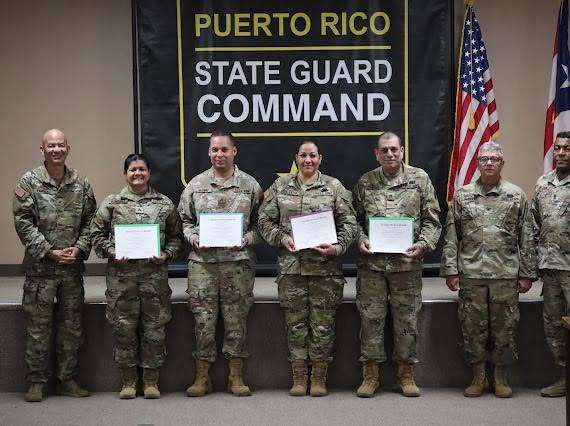
On October 3, 2026, the Command also celebrated the graduation of its second Advanced Individual Training (AIT) 42A – Human Resources Specialist class at Camp Santiago. The program prepares military personnel to perform essential human resources, personnel administration, and operational support responsibilities at the company, battalion, and major subordinate command levels.
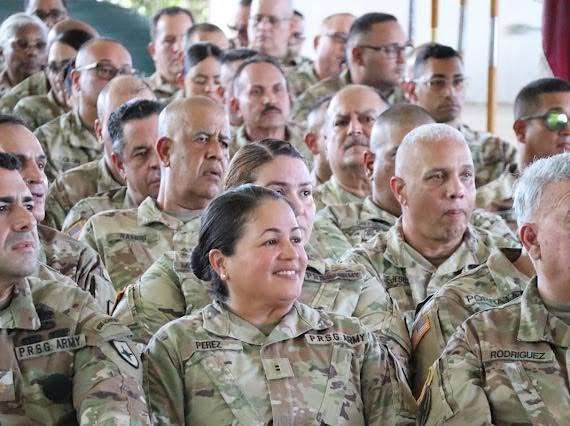
The course was led by CW2 (PR) Myrna Pérez, assigned to the Command’s J1 personnel section, whose leadership and professional experience played an important role in the successful completion of the program. Brigadier General Edrick Ramírez attended the graduation alongside Command Sergeant Major Rafael De León, the Chief of Staff, and the Deputy Commander, recognizing the accomplishments and dedication of the newly qualified specialists.
Although administrative specialties may not attract the same attention as engineering, security, or medical operations, their importance becomes particularly apparent during a large-scale military activation. Personnel specialists help maintain accurate accountability of deployed troops, process military documentation, support command administrative requirements, and ensure commanders have the personnel information necessary to organize and sustain operations. During a major emergency involving hundreds of mobilized soldiers, effective personnel management becomes a critical component of mission readiness.
900th Medical Command: Training to Save Lives When Disaster Strikes
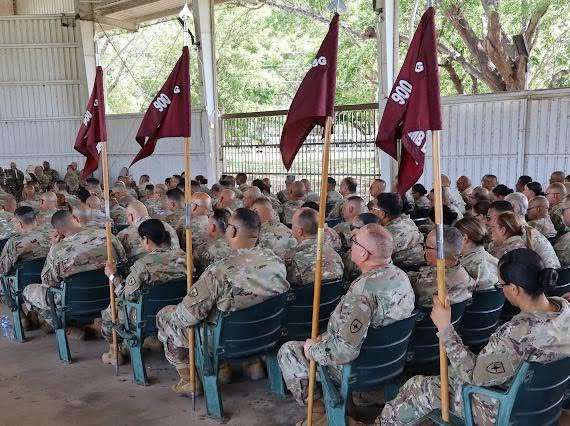
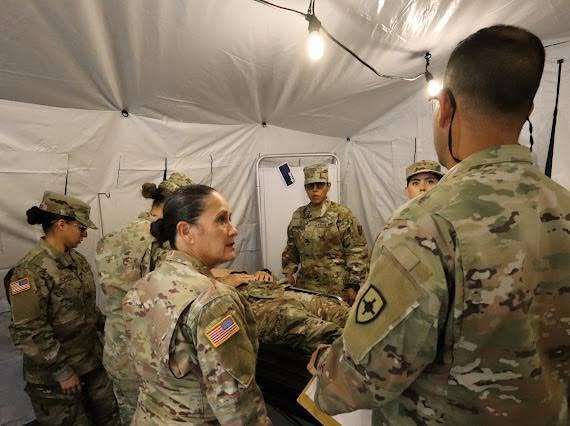
Perhaps among the most consequential training activities conducted during AT-2026 were those performed by the Puerto Rico State Guard’s 900th Medical Command. Approximately 150 military personnel participated in specialized exercises, including physicians, nurses, paramedics, Physician Assistants, Emergency Medical Technicians (EMTs), and other healthcare professionals whose civilian experience and medical qualifications provide Puerto Rico with an invaluable emergency response resource.
When a catastrophic hurricane or earthquake strikes, the consequences extend far beyond destroyed buildings, flooded neighborhoods, and damaged electrical infrastructure. Hospitals can lose power, emergency departments may become overwhelmed, ambulances may be unable to reach isolated communities, and critically injured residents can find themselves without immediate access to lifesaving medical care. In these circumstances, the ability to rapidly establish additional medical treatment capabilities and coordinate emergency healthcare operations becomes a matter of life and death.
This is precisely why the Puerto Rico State Guard’s Medical Command plays such an important role in the island’s emergency preparedness. Its personnel bring professional medical expertise into an organized military structure capable of supporting the Puerto Rico National Guard, the Department of Health, emergency medical services, and other responding agencies during disasters and public health emergencies.
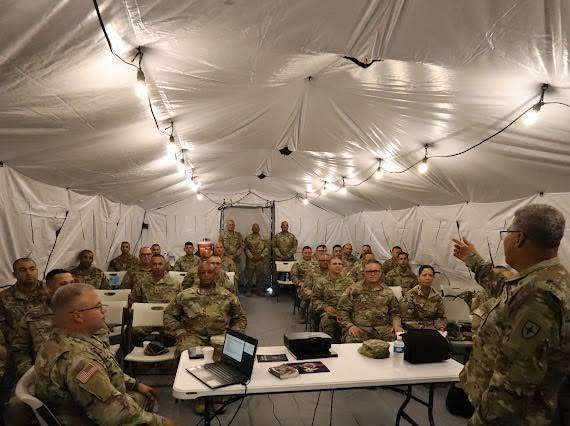
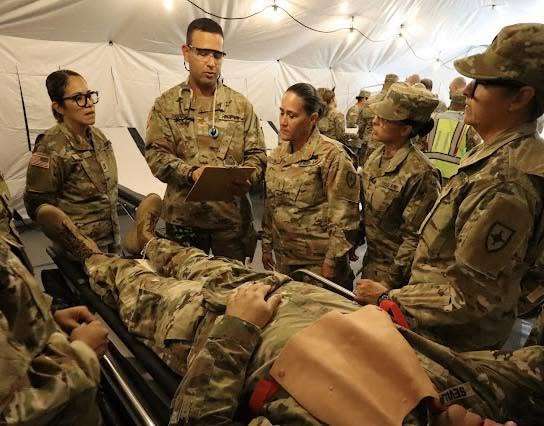
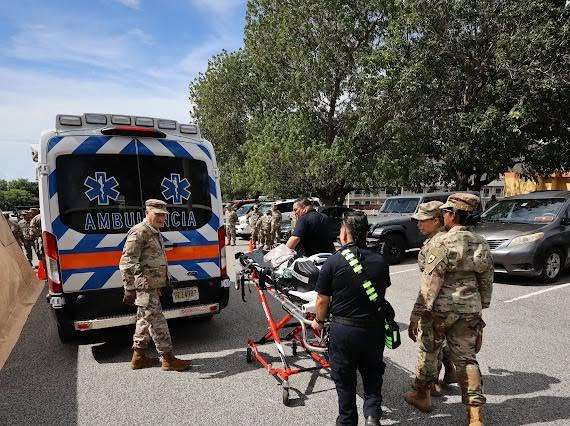
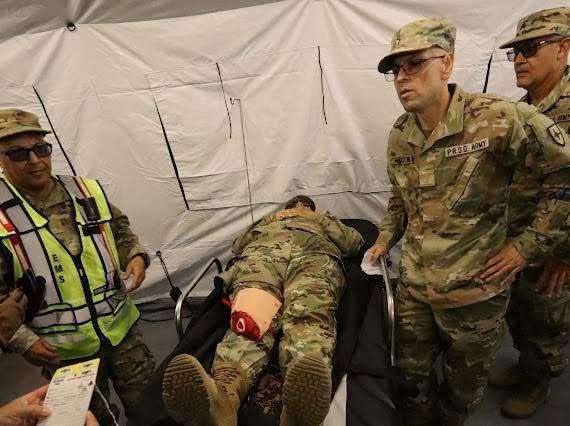
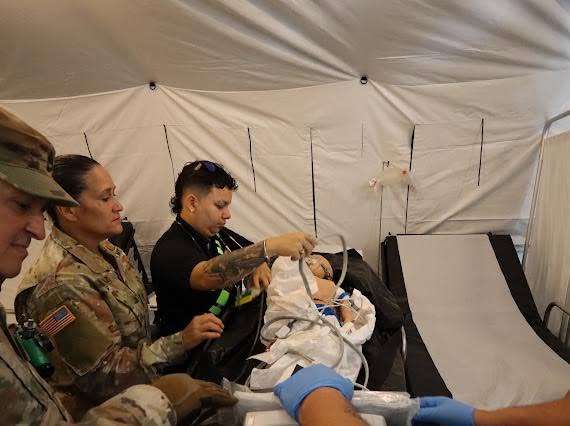
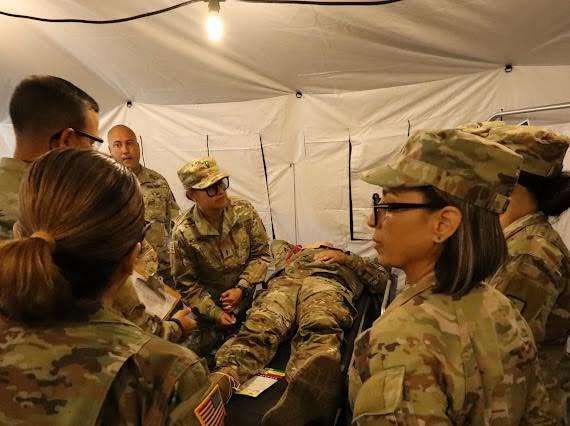
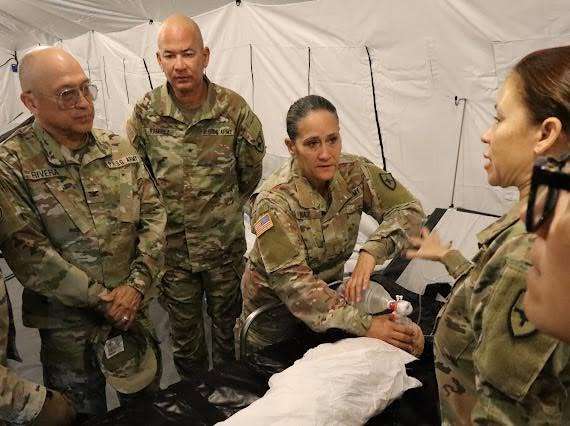
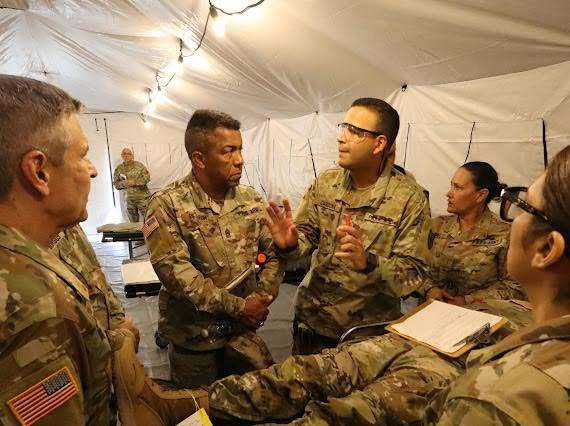
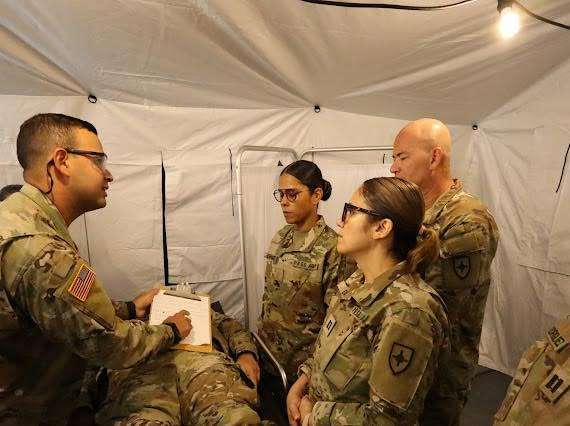
During Annual Training, Medical Command personnel participated in a series of operational exercises highlighted by a Mass Casualty Incident (MCI) simulation and preparatory exercises based on Hospital Emergency Response Training for Mass Casualty Incidents (HERT). These exercises concentrated on patient triage, emergency medical treatment, disaster coordination, and the ability to manage large numbers of casualties under demanding operational conditions.
Mass casualty incidents present some of the most difficult challenges emergency medical professionals can encounter. When the number of injured patients exceeds the immediately available medical resources, healthcare personnel must rapidly evaluate injuries, establish treatment priorities, and coordinate patient movement to ensure that those facing the greatest immediate danger receive urgent care.
Imagine a powerful earthquake striking Puerto Rico and causing multiple buildings to collapse. Emergency responders arrive to discover dozens of injured residents, some suffering from severe bleeding, fractures, crush injuries, or respiratory distress. Nearby hospitals may already be overwhelmed or damaged themselves. In such circumstances, a properly trained medical response team must rapidly determine which patients require immediate lifesaving intervention, which can safely await treatment, and which require urgent evacuation to more advanced medical facilities.
These decisions are frequently made under extraordinary pressure, with limited equipment, disrupted communications, and an overwhelming number of patients requiring assistance. The ability to conduct effective triage, stabilize critically injured individuals, and organize patient care is not developed in the middle of a catastrophe. It is developed through repeated training, practical exercises, and the professional experience of the medical personnel assigned to these missions.
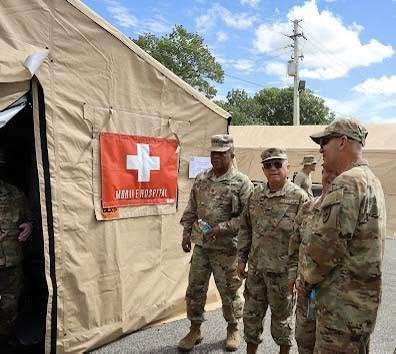
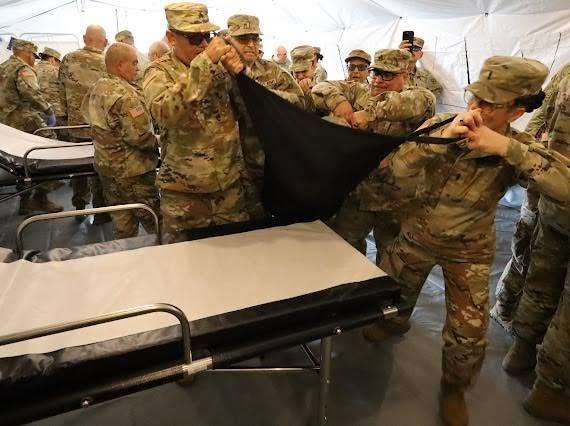
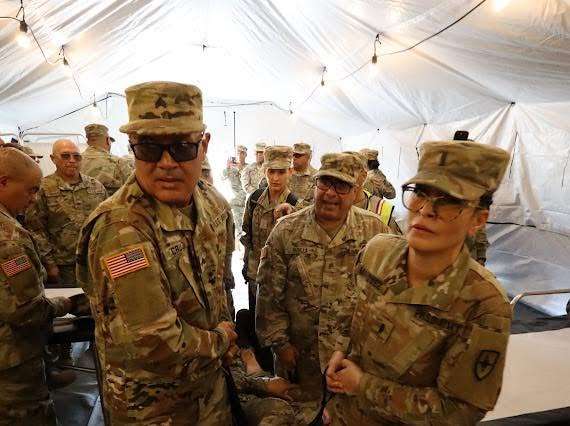
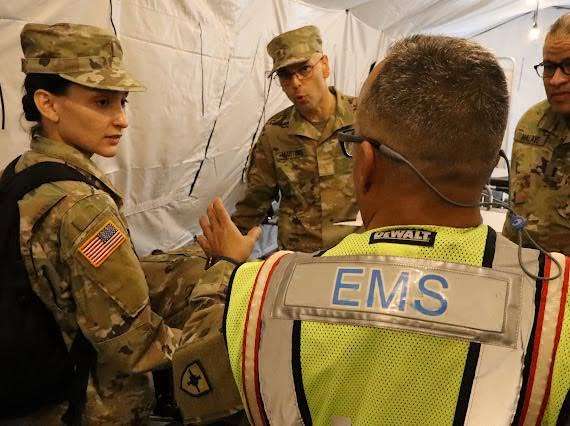
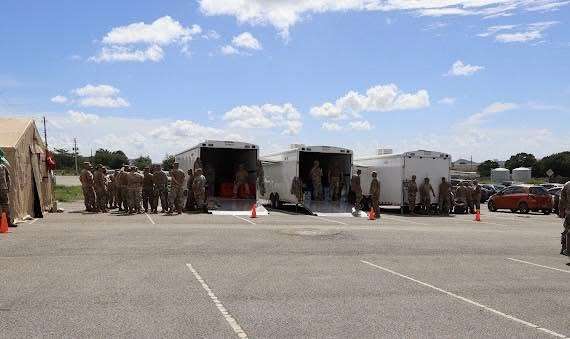
As part of AT-2026, Medical Command personnel also deployed approximately three mobile field hospitals, demonstrating their capability to establish additional medical treatment facilities during emergency operations. These facilities can provide essential medical support when existing healthcare infrastructure is overwhelmed, inaccessible, or temporarily unable to operate at normal capacity. Additional personnel from Puerto Rico’s emergency medical services community participated in the exercises, further strengthening coordination between military medical teams and civilian emergency responders.
The significance of these mobile medical capabilities cannot be overstated. Following a devastating hurricane, a community that has lost access to its nearest functioning hospital may have injured residents who cannot safely wait for distant medical assistance. A deployed field medical facility, staffed by qualified healthcare professionals and properly equipped for its assigned mission, can help bridge that gap by providing triage, emergency stabilization, and coordination for further treatment or evacuation.
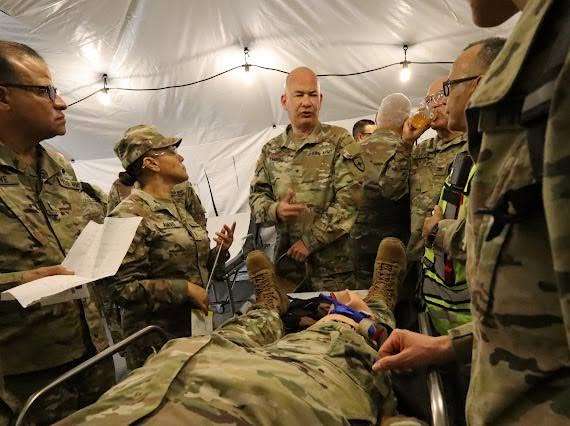
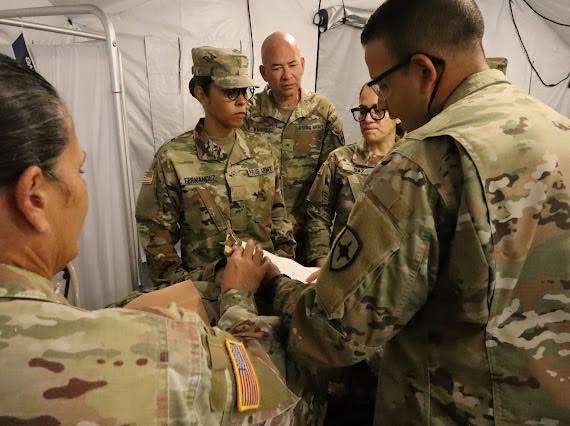
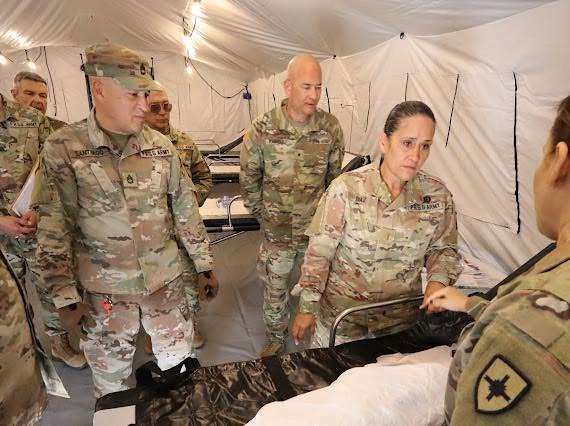
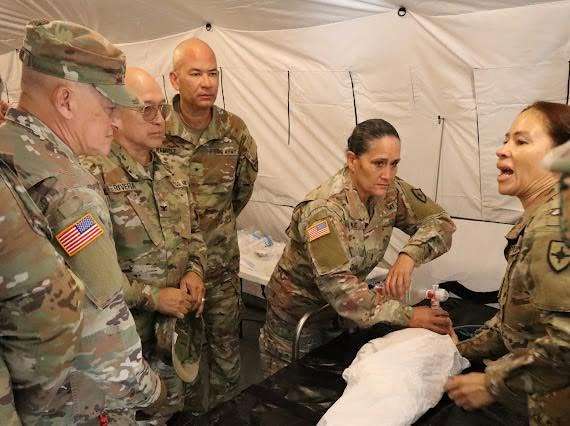
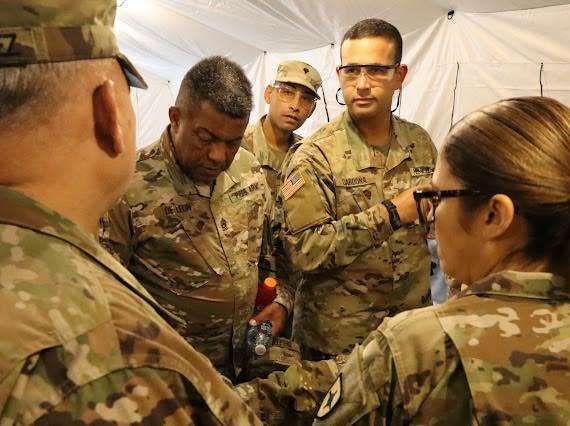
Brigadier General Edrick Ramírez personally visited the Medical Command’s training location to observe the exercises, evaluate deployed medical capabilities, and review the performance and readiness of participating personnel. Following the training, an After Action Review (AAR) was conducted to identify operational strengths, deficiencies, and opportunities for improvement.
These reviews are particularly important because they allow commanders and medical professionals to examine how personnel, equipment, communications, and treatment procedures performed under simulated emergency conditions. Identifying problems during training provides an opportunity to correct them before a real disaster places lives at risk.
For the doctors, nurses, paramedics, EMTs, and other medical professionals serving in the Puerto Rico State Guard, Annual Training represents far more than a military requirement. It is an opportunity to refine the skills, teamwork, and operational procedures that may one day determine whether a critically injured child, an elderly resident, or an entire family receives lifesaving medical assistance in time.
Every successful emergency medical intervention begins long before a disaster occurs. It begins with the training, discipline, and dedication of the medical professionals who prepare themselves to answer the call.
Annual Training: A Commitment to Readiness, Service, and Sacrifice
The Puerto Rico State Guard’s Annual Training demonstrates why these intensive exercises remain essential to the effectiveness of State Defense Forces throughout the United States. While Army National Guard and Air National Guard units must spend their training time to develop their combat and combat-support missions, State Defense Forces concentrate primarily on the military capabilities their states and territories require during emergencies. Their missions include search and rescue, humanitarian assistance, emergency medical operations, logistics, infrastructure support, and other specialized activities designed to protect lives and property.
This focus allows State Defense Forces to serve as important early-response resources when disasters strike. Many State Defense Forces have demonstrated the ability to begin responding within one to two hours of notification, while National Guard formations require 48 to 72 hours to organize and deploy. This important distinction is that a trained State Defense Force provides governors and emergency management officials with another organized military resource that can be mobilized to support communities during the critical opening stages of an emergency.
Perhaps the most remarkable aspect of this commitment is the personal sacrifice made by the men and women who serve. Puerto Rico State Guard personnel generally perform their monthly drills and Annual Training without military pay. These soldiers and airmen maintain civilian careers, support families, and fulfill everyday responsibilities while voluntarily dedicating significant portions of their personal lives to military service. For many, participating in Annual Training requires taking time away from work, using personal vacation days or other leave arrangements, and sacrificing precious time with their spouses, children, and loved ones.
Yet they continue to serve because they understand what is at stake. When a hurricane makes landfall, an earthquake devastates a community, or another emergency threatens the people of Puerto Rico, these soldiers and airmen want to ensure that their island has a trained, capable, and organized military response force ready to assist. Their willingness to train without the expectation of military compensation reflects a profound commitment to public service and to the protection of their fellow citizens.
The soldiers and airmen of the Puerto Rico State Guard are not simply preparing for the next emergency. They are preparing to be there when their fellow Puerto Ricans need them most delivering desperately needed supplies, restoring damaged communities, protecting critical infrastructure, and providing lifesaving medical care. Their dedication exemplifies the vital role America’s State Defense Forces play in protecting the communities they have sworn to serve.
AT-2026: preparados para las misiones de hoy y construyendo la fuerza del futuro.
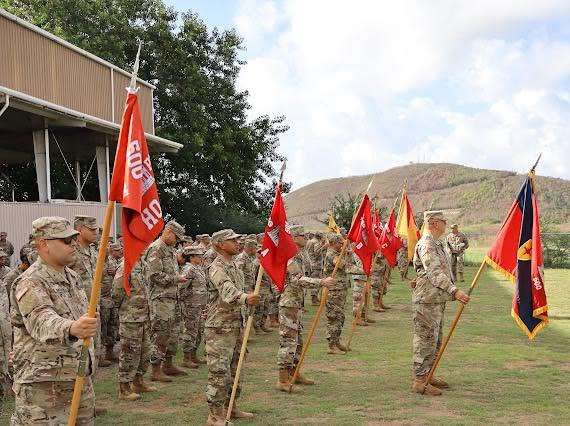
On Thursday, October 1, 2026, the Puerto Rico National Guard, State Command began its Annual Training (AT-2026) at Camp Santiago Joint Training Center in Salinas, Puerto Rico.
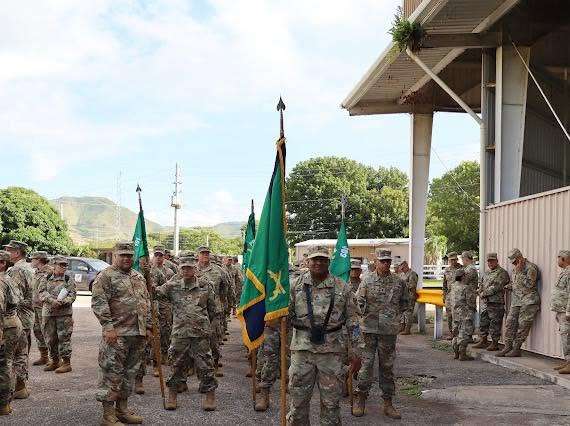
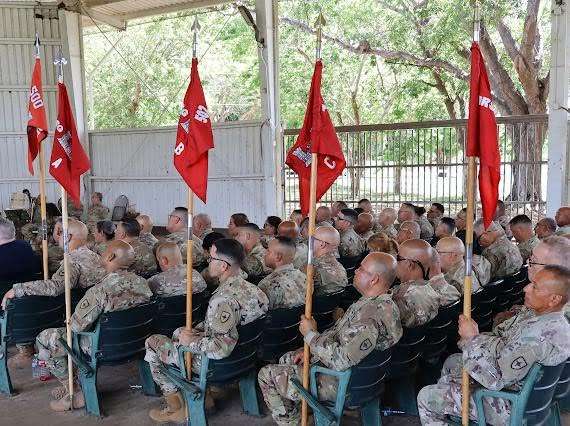
The various units of the State Guard Command assembled for this training period, focused on validating their readiness and the training received throughout Fiscal Year 2026.
Brigadier General Edrick Ramírez, Commanding General of the PRNG, State Guard Command, delivered a welcome message to the troops and provided an overview of key elements of the Command’s Strategic Plan for the coming years. Among the major initiatives, he highlighted the implementation of new administrative programs for 42A personnel, the expansion of online education and training, and the formation and restructuring of units to align with the State Command’s new missions and operational requirements.
AT-2026: Ready for today’s missions while building the force of the future.
During Annual Training week, held in October 2026, the PRNG, State Guard Command welcomed Veterans Advocate Agustín Montañez, Esq.
During his visit, he provided a brief overview of the mission and services of the Office of the Veterans Advocate (OPV), highlighting the resources available to support our veteran members and promote awareness of their rights and benefits.
Mr. Montañez also met with the PRNG, State Command’s legal team (JAGs) to discuss future initiatives between the Office of the Veterans Advocate and the State Command aimed at strengthening support for our veterans.
We thank him for his visit and his continued commitment to those who have served Puerto Rico and our Nation.
On October 2, 2026, during the Puerto Rico National Guard, State Guard Command Annual Training, we welcomed the Adjutant General of Puerto Rico, Brigadier General, Carlos Rivera Román, and State Command Sergeant Major, CSM Juvencio Méndez.
Together with Brigadier General, Edrick Ramírez, Commanding General of the PRNG, State Guard Command, they addressed our men and women, emphasizing the importance of readiness, commitment to the mission, and service to Puerto Rico.
During the visit, CW2 (PR) Myrna Pérez was recognized with a Coin of Excellence for her outstanding service as a Warrant Officer and her valuable contributions in support of Puerto Rico National Guard, State Active Duty missions.
The visit provided an opportunity to engage directly with our troops and recognize the dedication and commitment of those who serve Puerto Rico every day.
From October 1–4, 2026, the Civil Support Battalion (CSB) of the PRNG, State Guard Command conducted a series of training exercises and professional development activities as part of Annual Training 2026, held at Camp Santiago, Salinas, Puerto Rico.
During this training period, approximately 175 soldiers received specialized training and certifications focused on the management and operation of Regional Support Areas (RSA) strategically located throughout Puerto Rico, as well as the establishment and operation of Points of Distribution (POD).
Training was conducted by specialized personnel from various state and federal agencies, enhancing military personnel’s capabilities in logistics, interagency coordination, supply distribution, and community support during emergencies and disasters.
These training initiatives reflect the PRNG State Command’s commitment to maintaining a trained and mission-ready force capable of supporting government agencies in emergency response and recovery operations
During the Annual Training (AT-2026) of the Puerto Rico State Guard Command, held from October 1–4, 2026, at Camp Santiago, Salinas, the Engineering Battalion conducted various practical exercises and training activities aimed at strengthening its operational capabilities.
The training focused on Vertical Construction Engineering, Critical Infrastructure Risk Assessment (CIRA), and Heavy Equipment Operations. Additionally, personnel received training on the proper use and handling of construction equipment and tools, with particular emphasis on accident prevention and compliance with operational safety standards.
As part of these activities, Brigadier General Edrick Ramírez, Commanding General of the PRNG State Guard Command, visited the troops and received a briefing on the exercises conducted, skills developed, and overall training progress.
These activities contribute to strengthening the Engineering Battalion’s technical proficiency and operational readiness to support state missions, emergency response operations, and infrastructure projects throughout Puerto Rico.
On October 3, 2026, the Puerto Rico State Guard Command celebrated the graduation of its second Advanced Individual Training (AIT) 42A – Human Resources Specialist class, held at Camp Santiago, Salinas.
This program prepares new specialists to perform essential personnel administration, human resources management, and operational support duties at the company, battalion, and major subordinate command levels.
The AIT 42A program was led by CW2 (PR) Myrna Pérez, a Warrant Officer assigned to the Command’s J1 section, whose leadership and experience were instrumental in the successful completion of this second class.
The graduation was attended by Brigadier General Edrick Ramírez, Commanding General of PRNG State Command accompanied by CSM Rafael De León, the Chief of Staff, and the Deputy Commander, who recognized the commitment and achievements of the newly qualified specialists.
During the Puerto Rico State Guard Command’s Annual Training (AT-2026), held from October 1–4, 2026, at Camp Santiago, Salinas, the Military Police Battalion participated in various tactical and operational exercises designed to enhance military capabilities.
Training activities included traffic control, checkpoint operations, installation security, access control, patrolling, and security operations, among other Military Police duties.
These exercises provided an opportunity to validate skills acquired during Fiscal Year 2026 and strengthen operational readiness in support of state missions, emergency response operations, and security missions throughout Puerto Rico.
rom October 1–4, 2026, the Medical Command of the Puerto Rico State Guard Command conducted its Annual Training (AT-2026) at Camp Santiago, Salinas, with approximately 150 soldiers participating, including physicians, nurses, paramedics, Physician Assistants (PAs), and other healthcare professionals.
Training included multiple operational exercises, highlighted by a Mass Casualty Incident (MCI) simulation and preparatory exercises based on Hospital Emergency Response Training for Mass Casualty Incidents (HERT), focusing on triage, emergency medical care, coordination, and disaster response.
As part of the exercise, approximately three(3) mobile field hospitals were deployed, with additional participation from state emergency medical services personnel.
Brigadier General Edrick Ramírez, Commanding General of the PRNG-State Guard Command, visited the training site to observe operations, personnel performance, and deployed medical capabilities firsthand.
Following the exercises, an After Action Review (AAR) was conducted to identify strengths, deficiencies, and areas for improvement, enhancing operational readiness and preparing the Medical Command for future state missions and emergency response operations.