Georgia State Defense Force Strengthens Homeland Defense Readiness During Operation Vigilant Guard 26-1
From December 2–5, 2025, the Georgia State Defense Force took part in Vigilant Guard 26-1 at the Pelham Range Complex in Anniston, Alabama, as part of a large-scale homeland defense and disaster response exercise led by the Georgia Department of Defense. Vigilant Guard is a recurring national-level exercise series designed to test and refine how military, emergency management, and civilian agencies respond to catastrophic incidents. For Georgia, the exercise brought together the Georgia Army National Guard’s 201st Regional Support Group and its Chemical, Biological, Radiological, Nuclear (CBRN) Task Force, the Georgia Emergency Management Agency, federal partners, civilian organizations, and the Georgia State Defense Force, all operating within a simulated complex, multi-domain crisis environment.
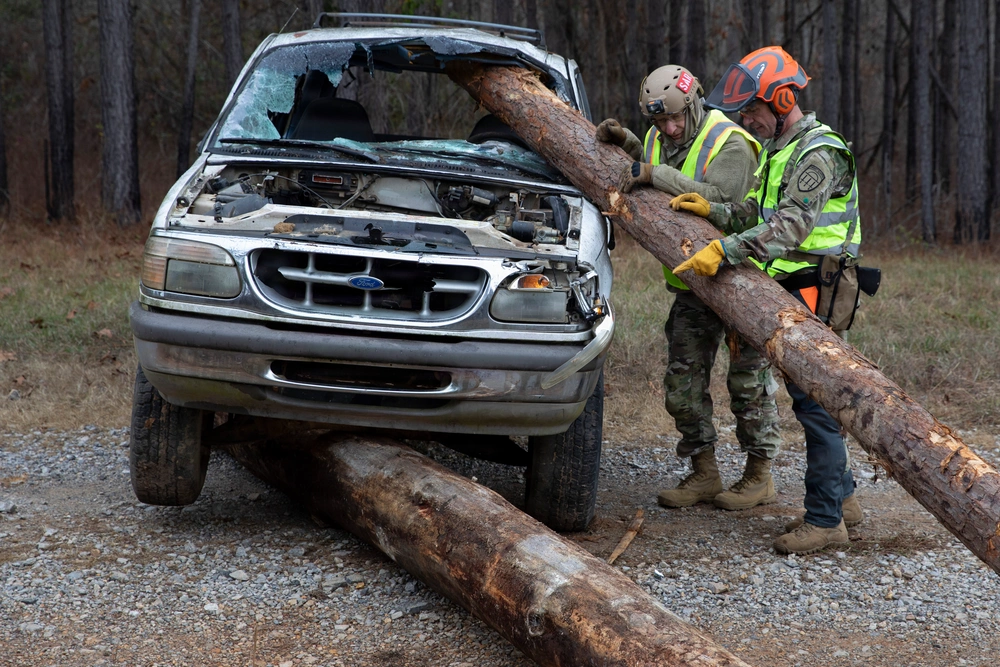
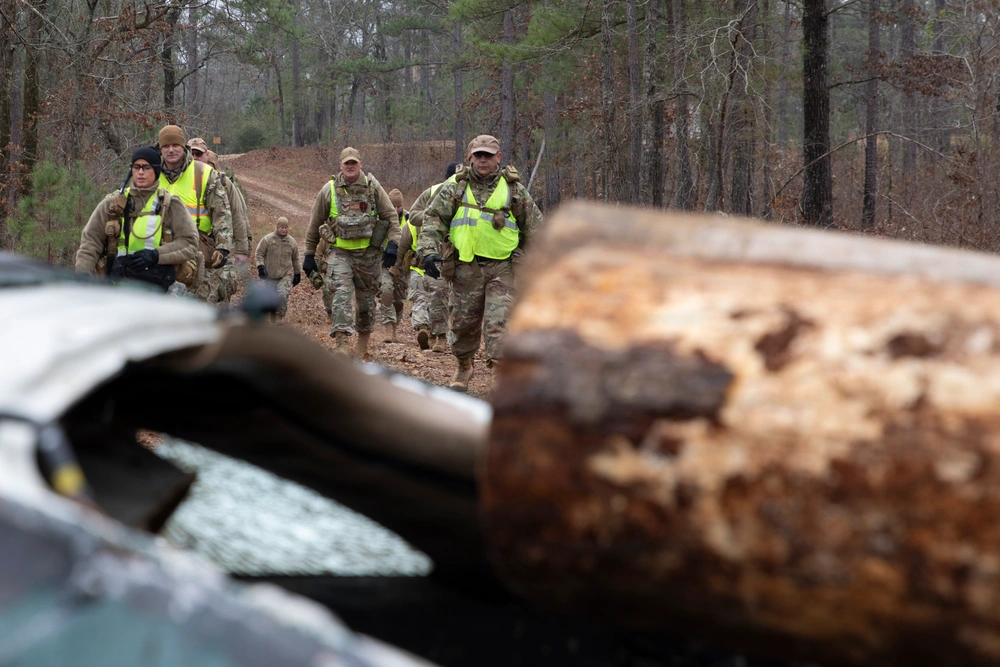
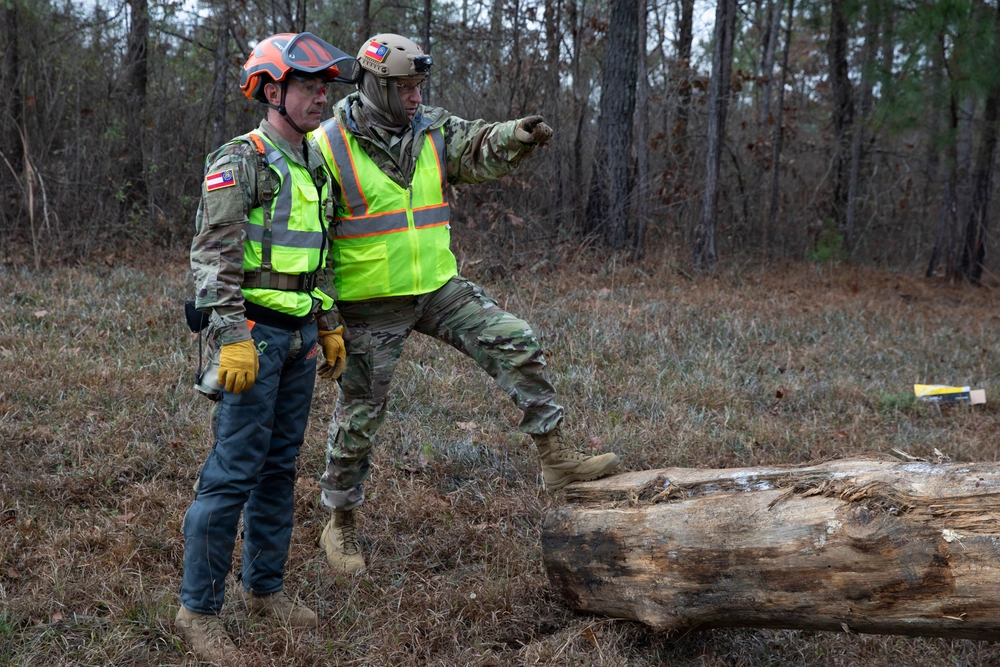
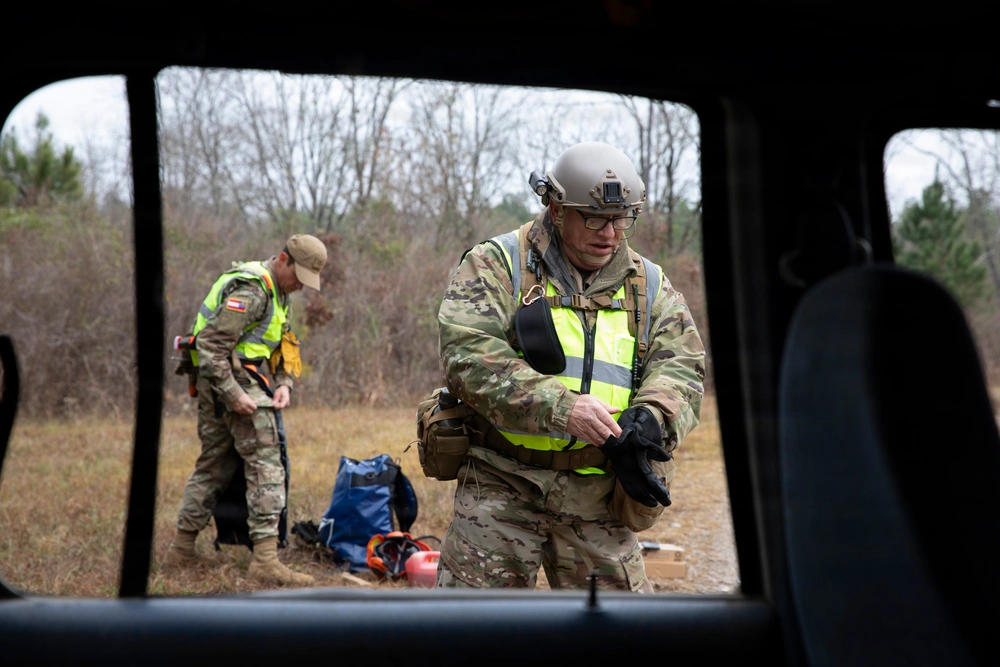
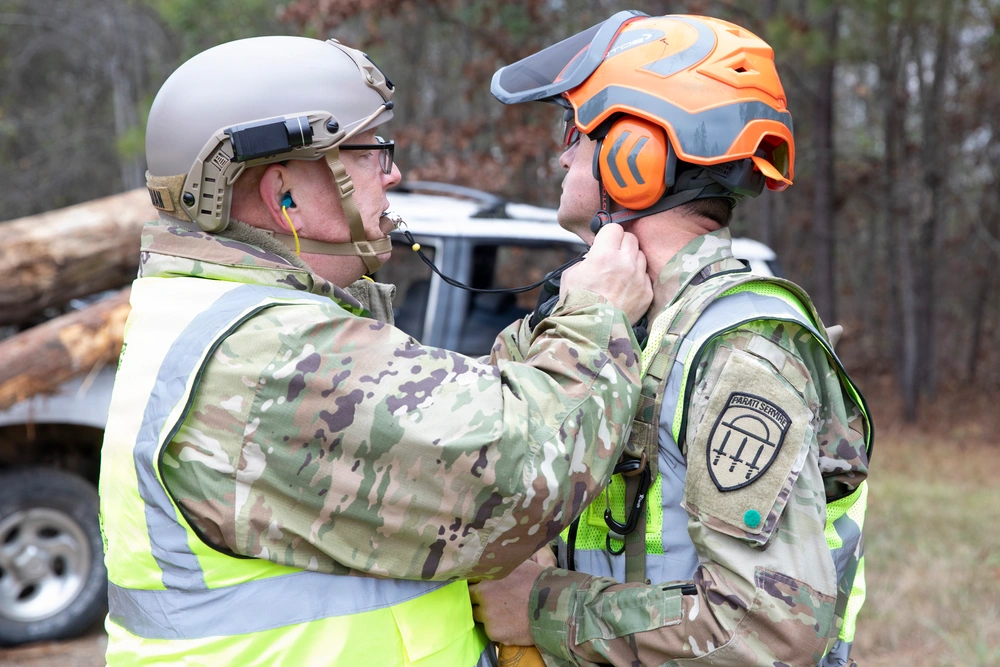
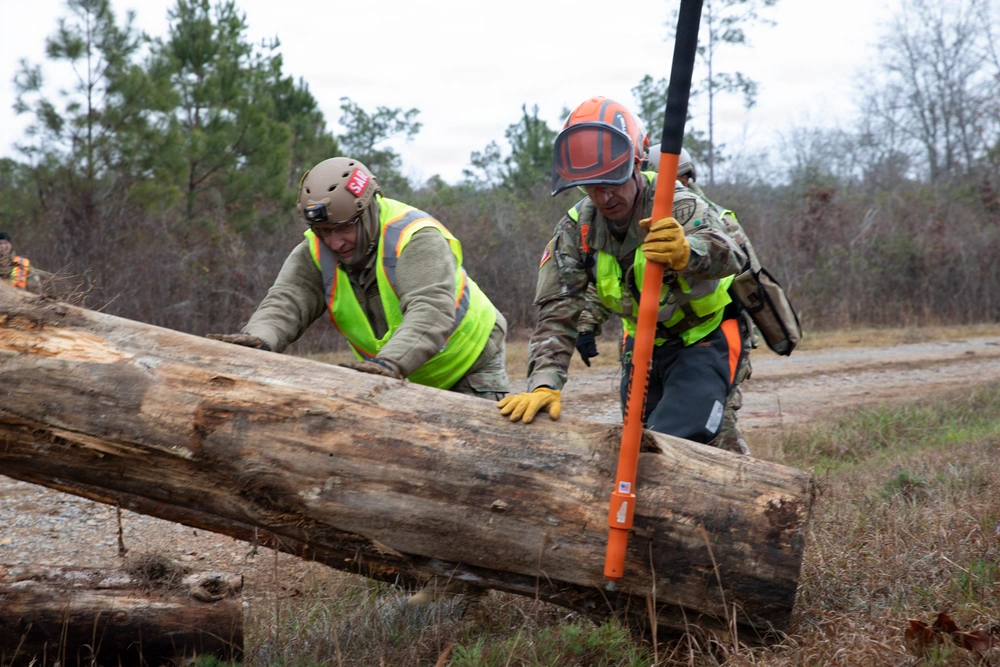
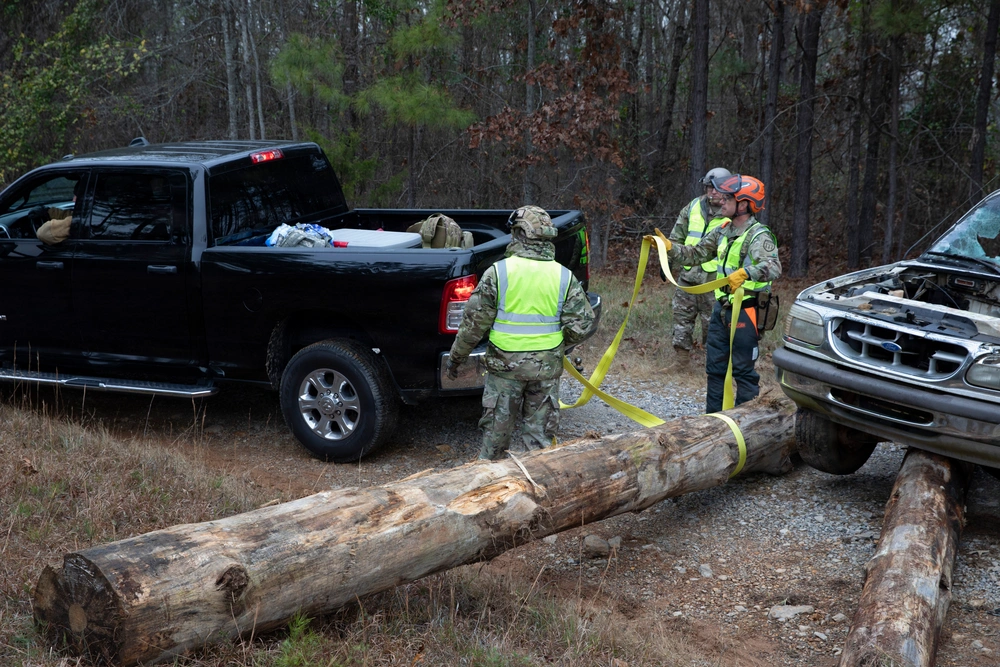
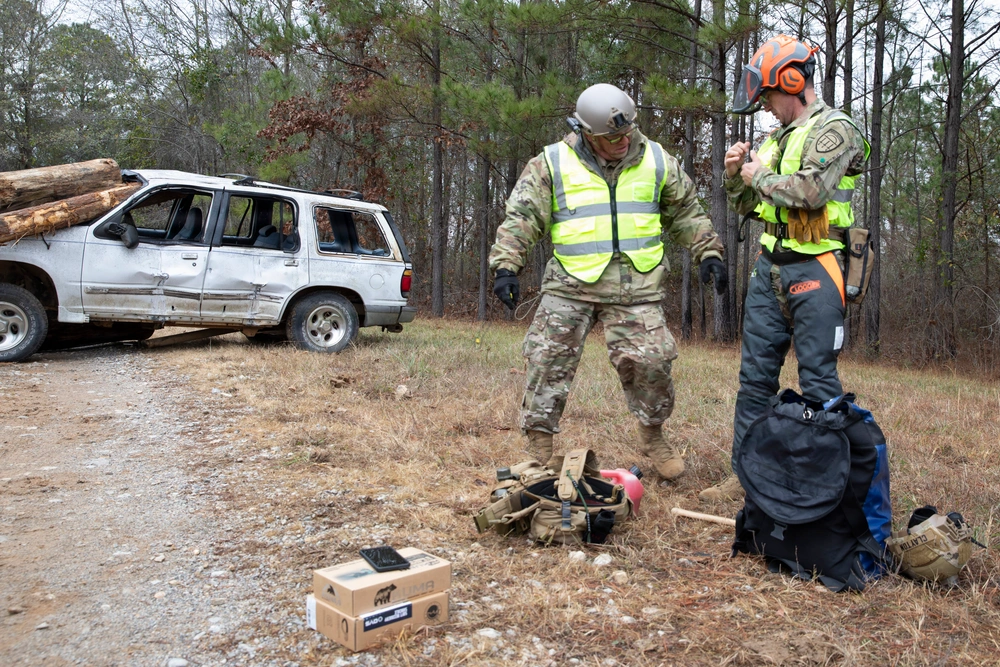
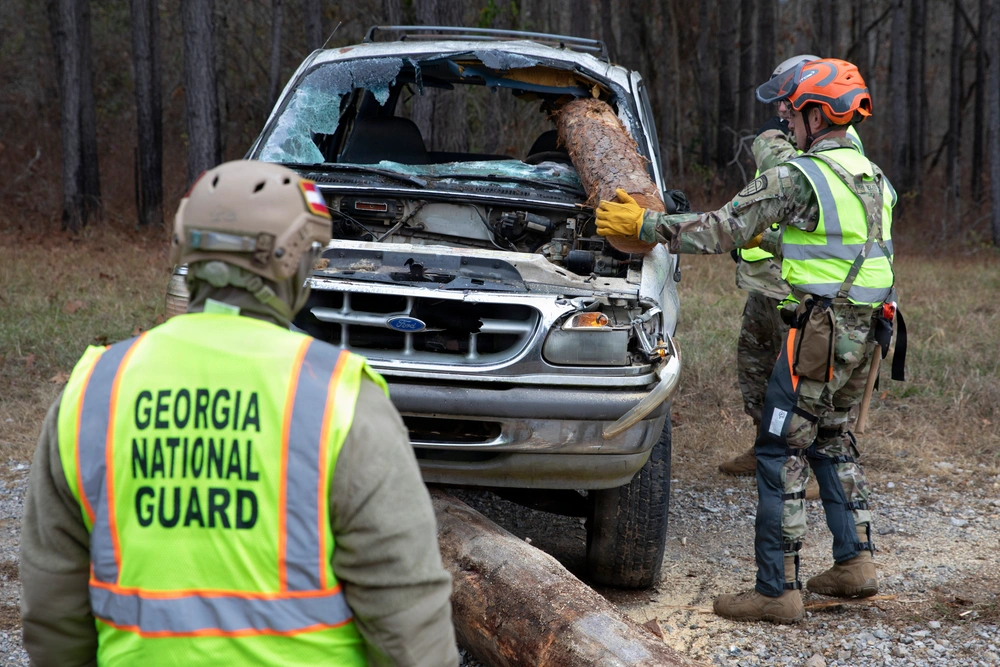
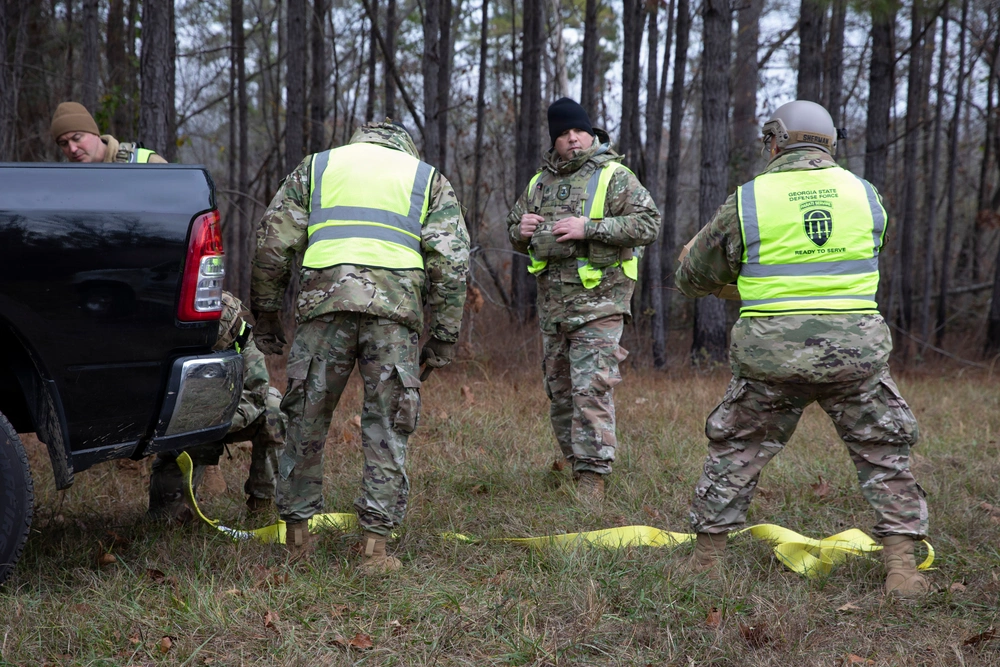
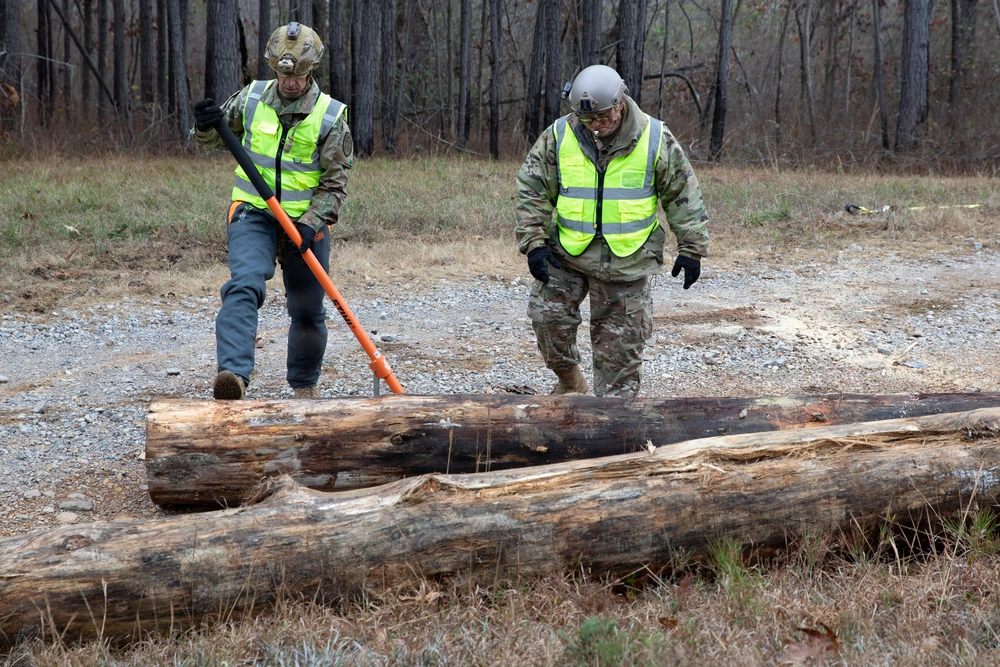
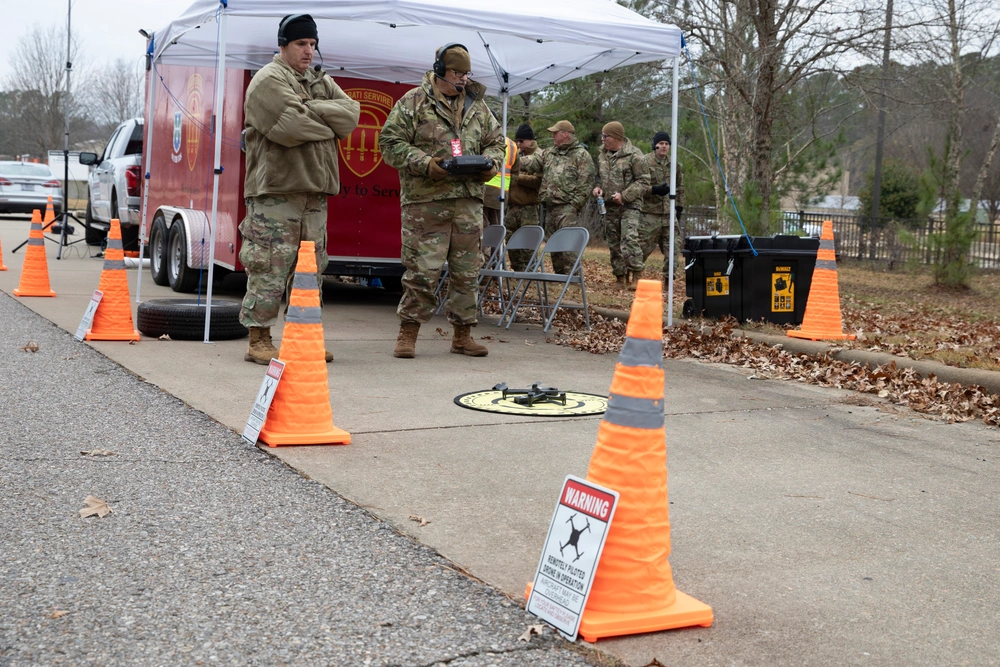
During Vigilant Guard 26-1, the Georgia State Defense Force served as an integral force multiplier supporting homeland response operations. GSDF personnel were tasked with route clearance, mobility support, and reconnaissance operations, missions that are critical during real-world disasters when debris, abandoned vehicles, and damaged infrastructure can delay life-saving response efforts. Operating alongside National Guard units, GSDF teams cleared simulated fallen trees and disabled vehicles from key routes, conducted safety checks in contaminated environments, and used remotely operated drones to perform route reconnaissance. These actions demonstrated how State Defense Forces can rapidly augment National Guard and civilian responders, particularly when Guard units may be stretched thin or deployed elsewhere.
The exercise emphasized interoperability, one of the most important elements of modern homeland defense. Vigilant Guard allowed Georgia DoD forces to rehearse how Joint Forces Headquarters coordinates with GEMA, federal agencies, and local responders under stressful, time-sensitive conditions. For the Georgia State Defense Force, this meant operating within established command structures, integrating communications, and executing missions that directly supported the broader operational picture. Training in this environment ensures that when a real disaster occurs, GSDF personnel are already familiar with how their role fits into the larger response effort rather than learning those relationships for the first time during a crisis.
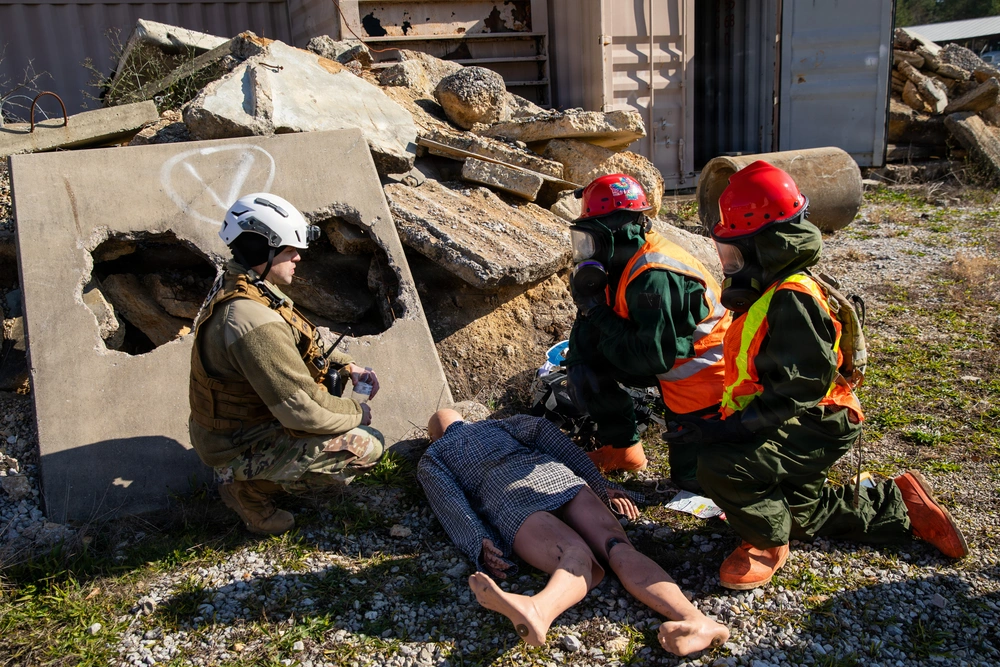
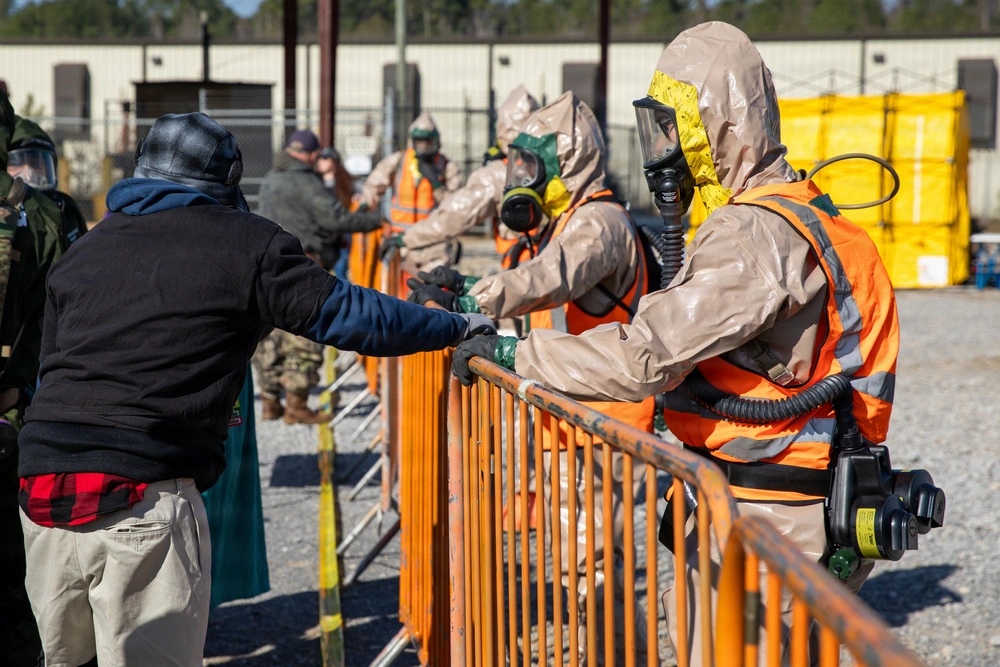
A key focus of Vigilant Guard 26-1 was preparation for high-impact scenarios, including large-scale CBRN incidents and natural disasters. While National Guard units trained on decontamination, casualty extraction, medical treatment, and force protection, the Georgia State Defense Force focused on enabling those missions by maintaining access routes, identifying hazards ahead of response elements, and supporting logistics and movement. These are precisely the types of tasks State Defense Forces are well-suited for: missions that free up National Guard units to concentrate on specialized or high-risk operations while ensuring the overall response continues to move forward.
Training events like Vigilant Guard are especially important in the current homeland security environment, where states must be prepared for everything from severe weather and infrastructure failure to industrial accidents and deliberate attacks. State Defense Forces, which operate under the authority of their governors and are not subject to federal deployment, provide states with a dedicated, in-state capability that can respond immediately. By participating in complex exercises such as Vigilant Guard 26-1, the Georgia State Defense Force validates its ability to operate effectively alongside National Guard and civilian partners, reinforcing its role as a critical component of Georgia’s layered homeland defense strategy.
Vigilant Guard 26-1 concluded successfully on December 5, 2025, with all participating organizations completing their training objectives without degradation to personnel or equipment. Lessons learned from the exercise will be incorporated into future training cycles, further improving readiness and coordination across the Georgia Department of Defense. For the Georgia State Defense Force, the exercise underscored the importance of continual training, interoperability, and preparedness, ensuring that when Georgia faces a real-world emergency, trained and capable forces are ready to respond in defense of the state and its citizens.
GA DoD Stays Vigilant During Homeland Response Exercise
ANNISTON, ALABAMA, UNITED STATES 12.05.2025 Story by Sgt. Thomas Norris 124th Mobile Public Affairs Detachment
U.S. National Guardsmen with the 201st Regional Support Group (RSG)’s Chemical, Biological, Radioactive, Nuclear (CBRN) Task Force, Georgia Army National Guard, and the Georgia State Defense Force (GSDF) conducted Vigilant Guard 26-1 in Anniston, Alabama from Dec. 2-5, 2025. The Georgia DoD conducted the training in order to train and refine their Standard Operating Procedures (SOP) in a Deployment Readiness Exercise.
The Vigilant Guard training event was designed to enhance National Homeland Defense Readiness by rehearsing interoperability between the Georgia Department of Defense (DoD), the Georgia Emergency Management Agency (GEMA), and federal and civilian partners. The 201st RSG fortified the skills needed to save lives in a simulated large-scale catastrophe.
“It is helpful to see how your role interacts and integrates to the larger mission overall.” says U.S. Air Force Lt. Col. Ben Goins, an internal medicine physician with the CBRN Assistance Support Element (CASE) teams.
The CBRN Task Force was assisted by volunteers from other states as well as civilian role-players as they practiced their skills. They practiced decontamination procedures, search and rescue, casualty extraction and medical treatment while the CASE team and the National Guard Quick Response Force trained in security operations to enhance force protection. Simultaneously, GSDF personnel cleared abandoned cars and fallen trees from a simulated route and used remotely operated drones to practice route reconnaissance operations.
“It was great training for our servicemembers, especially for the DECON (Decontamination) element which is the 1160th [Transportation Company] taking on that new responsibility,” said U.S. Army Staff Sgt. Yocoyani Villela, a manager for the CASE teams.
Vigilant Guard honed interagency cooperation in the event of a catastrophic CBRN incident or large-scale natural disaster. It also reinforced the Georgia DoD’s capabilities in supplementing GEMA and local responders on a short notice.
“I think this helps any soldier, whether it be senior enlisted or junior enlisted, just for the well-being of watching somebody, learning the training, in regard to if somebody needs some kind of assistance,” said U.S. Army Staff Sgt. Victor Rodriguez, a motor vehicle operator with the Rome-based 1160th Transportation Company.
Vigilant Guard 26-1 successfully ended on December 5, after completing their training objectives with no degradation to personnel or equipment. Lessons that were learned from the event will be integrated into future training and real-world scenarios, enhancing force readiness for any eventuality.
Georgia State Defense Force personnel assess a simulated obstacle during Vigilant Guard 26-1 at the Pelham Range Complex, Anniston, Alabama, Dec. 4, 2025. The Ga. Department of Defense conducts Vigilant Guard 26-1 to improve National Homeland Defense Readiness, by exercising the Ga. DoD Joint Forces Headquarters (JFHQ) to execute State/Territory Homeland Defense plans in a simulated environment, rehearse JFHQ interoperability with federal and civilian partners, in response to a complex, multi-domain attack. (U.S. Army National Guard photo by Sgt. Thomas Norris)
Georgia State Defense Force personnel operate a remotely controlled drone to locate and assess a simulated route during Vigilant Guard 26-1 at the Pelham Range Complex, Anniston, Alabama, Dec. 4, 2025. The Ga. Department of Defense conducts Vigilant Guard 26-1 to improve National Homeland Defense Readiness, by exercising the Ga. DoD Joint Forces Headquarters (JFHQ) to execute State/Territory Homeland Defense plans in a simulated environment, rehearse JFHQ interoperability with federal and civilian partners, in response to a complex, multi-domain attack. (U.S. Army National Guard photo by Sgt. Thomas Norris)
Georgia State Defense Force personnel approach a simulated obstacle while performing route reconnaissance during Vigilant Guard 26-1 at the Pelham Range Complex, Anniston, Alabama, Dec. 4, 2025. The Ga. Department of Defense conducts Vigilant Guard 26-1 to improve National Homeland Defense Readiness, by exercising the Ga. DoD Joint Forces Headquarters (JFHQ) to execute State/Territory Homeland Defense plans in a simulated environment, rehearse JFHQ interoperability with federal and civilian partners, in response to a complex, multi-domain attack. (U.S. Army National Guard photo by Sgt. Thomas Norris)
Georgia State Defense Force personnel remove a tow strap from a vehicle during Vigilant Guard 26-1 at the Pelham Range Complex, Anniston, Alabama, Dec. 3, 2025. The Ga. Department of Defense conducts Vigilant Guard 26-1 to improve National Homeland Defense Readiness, by exercising the Ga. DoD Joint Forces Headquarters (JFHQ) to execute State/Territory Homeland Defense plans in a simulated environment, rehearse JFHQ interoperability with federal and civilian partners, in response to a complex, multi-domain attack. (U.S. Army National Guard photo by Sgt. Thomas Norris)
More Photos of George State Defense Force troops from the exercise: